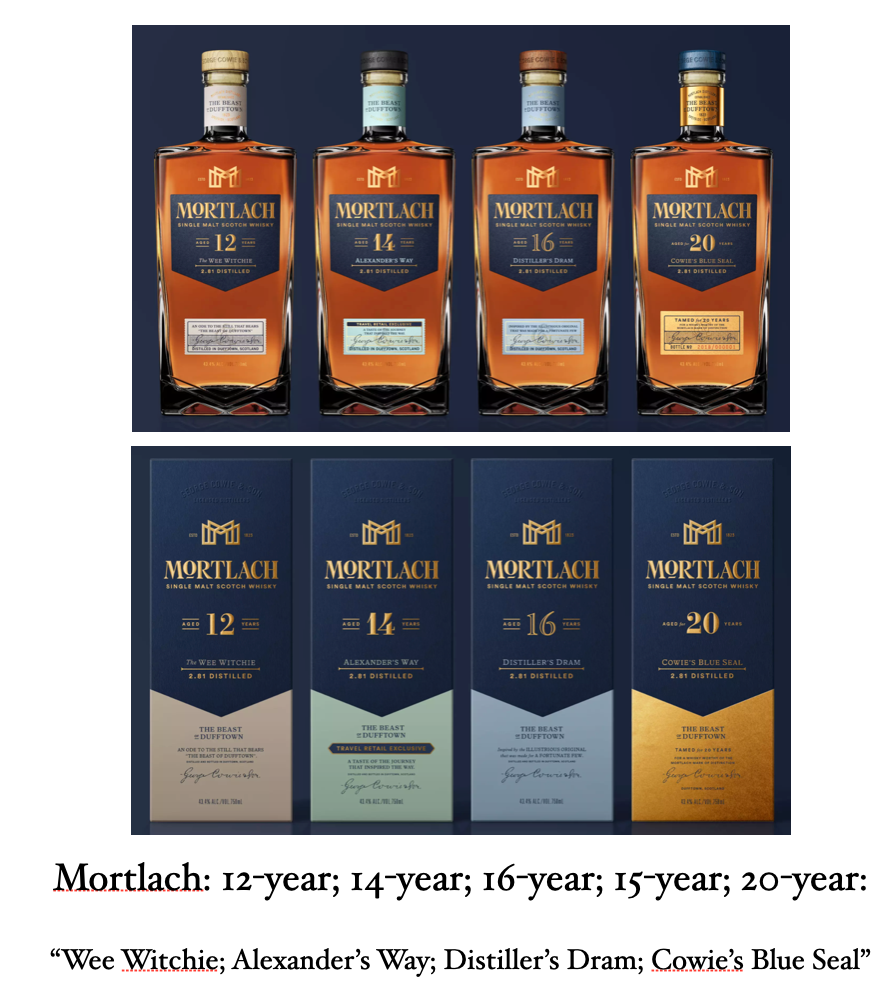
Alexander Cowie

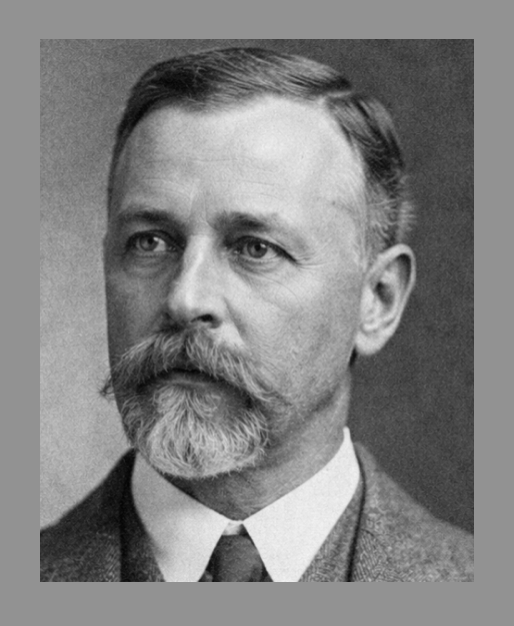
Alexander Mitchell Cowie was born 14 May 1861, in Mortlach, Banffshire, the son of George Cowie and Margaret Mitchell. The Cowies lived in the same parish landscape that held Dufftown, and, just down the road, Mortlach Distillery. Alexander’s father, George, previously a co-owner at Mortlach, attained it outright in 1867, so his family’s public identity in Dufftown was always tightly tied to the distillery. Yet Alexander took a route that put him, not in a stillhouse, but in a university classroom for many years in another career: medicine. He studied at the University of Aberdeen, earning an M.B. in 1881 and a C.M. in 1884.
By the late 1880s, Cowie was in Hong Kong, where he was a registered physician, and gained a professional address in the city’s busy commercial center on Queen’s Road. His Hong Kong career was not merely as a practicing doctor; he also served as a Lecturer in Clinical Medicine at the Hong Kong College of Medicine during the period when that institution was training local practitioners and shaping the colony’s medical culture. He was also appointed a Justice of the Peace in Hong Kong in 1891, placing him in the civic machinery of the colony rather than only its clinics. Those years in Hong Kong form one of the few clearly documented windows into his life away from Dufftown. They also explain why whisky narratives describe him, sometimes disapprovingly, as an “outsider” to distilling, a moniker he struggled to overcome at home.
Cowie returned to Scotland amid a family crisis. He was called back after the untimely death of his older brother, and then took on the distillery alongside his father, never returning to Hong Kong. When, in 1896, his father George died, Alexander became the figure running Mortlach in his own right. In Dufftown, Cowie’s public footprint expanded quickly. He was made a Justice of the Peace in Banffshire in 1896, and served as a member of Banff County Council in 1898. He was also connected with Dufftown’s Stephen Cottage Hospital, where he was Chairman of a directing body, explicitly identified as “Alexander Mitchell Cowie, Dullan Brae, Dufftown.” These designation show the civic-minded side of Cowie; not only a distillery proprietor, but a man expected to sit at the head of community trusts.
Mortlach’s modern identity as a whisky is as a dense, muscular spirit, and an intentionally complex still arrangement that embodies that is associated with Cowie’s tenure. He devised the distillery’s unusual method often described as “2.81” distillation (a shorthand for an intentionally irregular and multi-path process rather than a simple double or triple run). This innovation first occurred in the late 1890s, and linked the re-tooling to collaboration with the distillery engineer/architect Charles C. Doig. Operationally, the point was not numerical novelty for its own sake, but in order to impart repeatable heaviness and depth which contributes to Mortlach’s “meaty” reputation, and it required a system that could be defended in practice: specific still shapes, specific routings, and a disciplined approach to how spirit was collected and recombined. Multiple distillery histories also credit Cowie with pushing improved transport connections, often described as a rail link/siding connecting the distillery more directly into Dufftown’s rail network so that the place could function as an industrial exporter rather than a local supplier.
Cowie married Sylvia Margaret Mitchell in 1987. Alexander and Margaret had three children. Their son, George, was born 26 February 1899. George became a 2nd Lieutenant in the Royal Flying Corps, but was tragically killed in action serving in The Great War in 1917, aged only 18 years. Cowie’s daughters were Isabella, born in 1901, but she died as a toddler. Their youngest daughter, Sylvia, born in 1905, was the only one of their three children who lived a normal lifespan.
By the early twentieth century, Cowie’s name remained attached to Mortlach, not only as a proprietor but, finally, as a respected benchmark figure; so much so, that later special bottlings and auction catalogues describe private stocks bottled for him. Cowie continued to own and operate Mortlach until he sold it in 1923 to Sir Alexander Walker of John Walker & Sons/DCL. Cowie lived long enough to see the distillery pass from family control into the wider blending and corporate world that would make Mortlach’s spirit a valued blending component of major Scotch brands, where it remains to this day.
Dr. Alexander Mitchell Cowie died 24 December 1940, at the age of 80 at Glenrinnes, Banffshire, very near the Cowie family estate in Dufftown.
Sources:
Biographical Dictionary of Medical Practitioners in Hong Kong: 1841–1941, “Cowie, Alexander Mitchell”, rev. March 16, 2014, hkmd-1941.blogspot.com
WW1 Lives, “2nd Lt. George Cowie” , ww1lives.com
“Deed of Mortification” (Archive.org PDF), “The Provision and Endowment of Old Age Pensions in Mortlach and Glenrinnes”, 1901, ia601603.us.archive.org
The Distillers’ Charity Auction (PDF)/Catalogue, whiskyexperts.net
Difford’s Guide, “Mortlach Distillery”, diffordsguide.com
Contributed by Tracy McLemore, Fairview, Tennessee USA