Charles Colvill

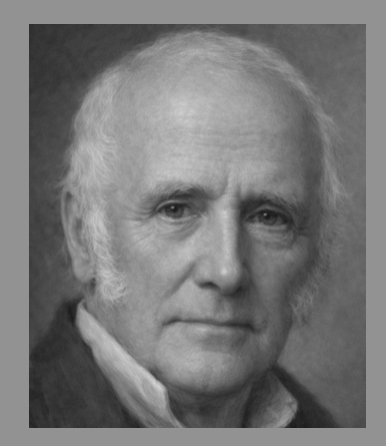
There are no known photographs of Charles Colvill known to exist. Above
is an AI-generated image of him based on facts known about him life.
Charles Colvill stands near the beginning of one of the most dramatic transformations in Scotch whisky history: the rise of Campbeltown from a modest fishing and trading port into the most concentrated whisky-producing town in the world during the nineteenth century. His life bridged the transition from informal local distilling to the regulated commercial whisky industry that would dominate Scotland for generations.
Colvill was born in 1770 in Campbeltown, the son of Archibald Colville and Elizabeth Templeton Colville. He grew up in a large household with five brothers and two sisters, part of the tight-knit community that defined life on the Kintyre peninsula during the late eighteenth century. Campbeltown in those years was a working harbortown where fishing, farming, and coastal trade sustained most families. The young Colvill became a cartwright, building and repairing the wooden carts essential to moving goods along Kintyre’s rough roads and between farms, warehouses, and the busy waterfront. That trade placed him at the center of everyday commerce. Cartwrights supplied the equipment that connected agricultural production to markets and shipping. Colvill’s work would have involved timber shaping, iron fittings, and the constant maintenance required to keep wagons moving in the harsh coastal climate.
Colvill started his family about this time. On 12 August 1798 he married Janet Dunlop, who was twenty-one years old at the time of the marriage while he was twenty-eight. Their household eventually included nine children. The size of the family reflected both the norms of the era and the importance of family labor and continuity in small industrial enterprises.
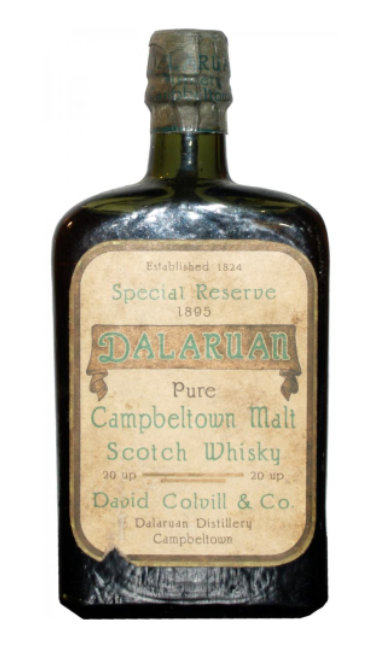
During an 1818 trip to Islay, a chance encounter redirected the cartwright’s path. Colvill found lodging scarce and ended up sharing a room with a visiting excise officer. The officer spoke at length about whisky production on the island and about the profits being made by licensed distillers operating within the expanding regulatory framework created by the British government. The conversation made a lasting impression. When Colvill returned to Campbeltown, he decided to leave behind the uncertain life of an itinerant cartwright and turn toward the emerging world of legal distilling. In 1824, Colvill founded Dalaruan Distillery. The new distillery stood near the center of town and quickly became part of the surge of whisky production that reshaped Campbeltown during the nineteenth century. By the 1830s the town supported nearly thirty operating distilleries, creating an industrial cluster unmatched anywhere else in Scotland. Dalaruan’s early operations were built from the practical components that defined nineteenth-century whisky production. Local bere barley formed the backbone of the mash. Malting took place on site, with barley steeped in water drawn from Crosshill Loch, a source shared by several Campbeltown distilleries. Hydrometers measured fermentation strength, hogsheads stored the spirit, and yeast arrived from Glasgow’s Greenhead Brewery.
Unfortunately, Colvill did not live long enough to see the full scale of his beloved creation. He died in Campbeltown on 15 April 1828, only four years after founding the distillery. Yet the enterprise continued through the family line. The Colvill name remained closely tied to the distillery’s management across subsequent decades, reflecting a pattern common in Campbeltown where distilleries often remained family-influencedbusinesses tied to local merchantnetworks.
Later observers confirmed the persistence of that family connection. When the Victorian whisky writer Alfred Barnard toured Britain’s distilleries in the 1880s, he visited Dalaruan and recorded that the managing partner at the time, Charles Colvill Greenlees, was the founder’sgrandson. That single statement captured the continuity of the Colvill family within the enterprise more than half a century after the founder’s death. By Barnard’s visit, Dalaruan had grown into a large industrial operation. The distillery possessed extensive malting floors and peat-fired kilns, allowing it to process substantial quantities of barley. Its mash tun handled large charges of malt, while the still house contained three copper pot stills producing a steady stream of spirit. Gravity-assisted design moved liquid through the production stages efficiently. Bonded warehouses stored nearly 3,000 casks, and Barnard recorded annual output at roughly 112,000 gallons. The modest enterprise founded in 1824 had become a major contributor to Campbeltown’s whisky economy.
The distillery’s success reflected the broader prosperity of the town. During the late nineteenth century Campbeltown whisky traveled widely, reaching markets throughout Scotland, London, and the British Empire. The harbor that once handled fishing boats and coastal traders became a shipping point for thousands of casks of malt whisky each year. Dalaruan survived challenges along the way. In July 1896 a major fire broke out at the distillery and threatened to destroy the complex. The alarm was reportedly raised by a lookout aboard the moored naval vesselHMSNorthampton, allowing firefighters to respond before the flames consumed the entire site. The incident demonstrated both the vulnerability of industrial distilleries and the vigilance required to protect them.
Yet the industry that had brought prosperity to Campbeltown eventually contracted sharply. Changing market conditions, overproduction, and the disruptions of the early twentieth century tied to The Great War led to widespread closures across the town. Dalaruan ultimately fell victim to that downturn, and few Campbeltown distilleries, including Dalaruan, survived the twentieth century. In 1925, it went into liquidation, then changed hands and held on a few more years, but was finally forsaken. Its buildings were unceremoniously demolished in 1926, replaced by housing that still stands occupying the site. Its remaining stocks were sold off at closure
The trajectory of Dalaruan ultimately mirrors the larger arc of Campbeltown itself: rapid expansion during the nineteenth century, industrial maturity by the Victorian era, and steep contraction in the twentieth. Yet the origins of that story trace back to the decision of one man who chose to abandon his cartwright’s trade after a conversation about whisky on Islay: Charles Colvill did not live to witness the towering warehouses, three-still plant, and thousands of casks that eventually defined Dalaruan. What he left behind was more enduring than buildings. He established a distillery that carried his family’s name through generations of management and through the golden age of Campbeltown whisky. Even after the stills fell silent, the story of Dalaruan preserved the memory of the craftsman who helped launch Campbeltown’s transformation from a coastal town into one of the great whisky capitals of the nineteenth century.
Sources:
The Lost Distillery Company, “Dalaruan Distillery”, (site copyright 2020), lost-distillery.com
Whiskipedia, “Dalaruan Distillery, Campbeltown” (reproduced text, Barnard section), Alfred Barnard, 1887
Wikitree genealogy, “Charles Colville (1770–1828)”, wikitree.com
AscotOnScotch, “The Lost Distillery Company Dalaruan Classic Selection v Archivist’s Selection”, 16 April 2020, ascotonscotch.com
Contributed by Tracy McLemore, Fairview, Tennessee