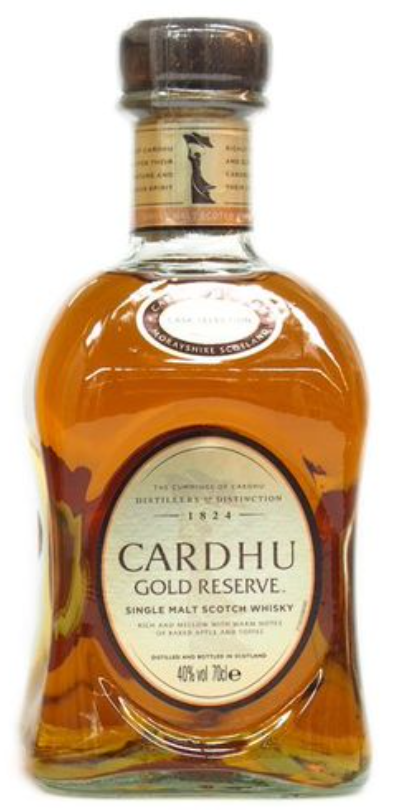
Elizabeth Cumming

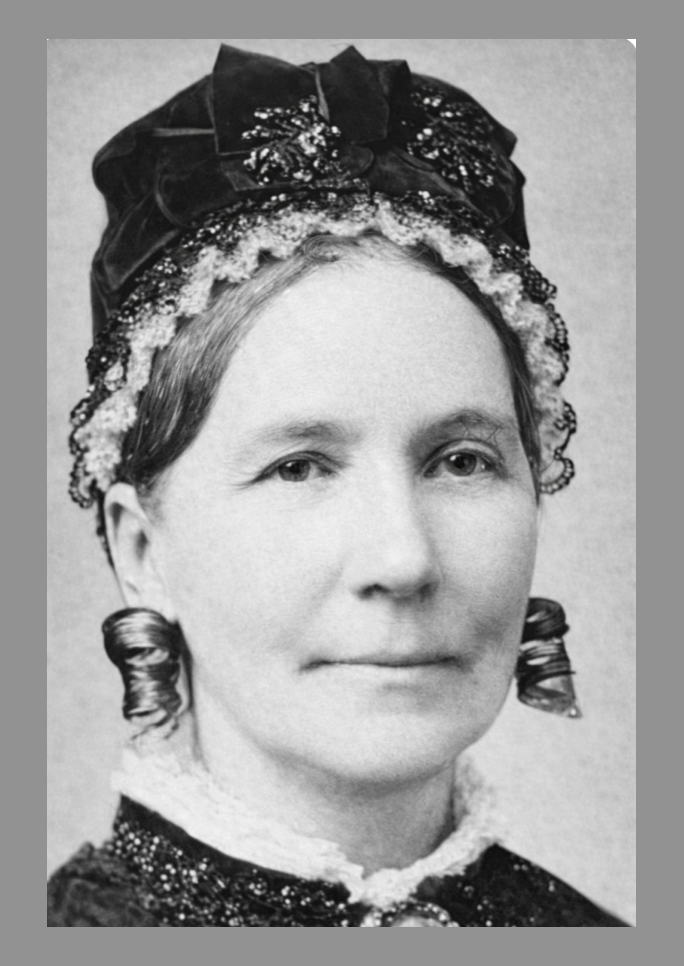
Elizabeth Cumming entered the whisky story at Cardow (later known as Cardhu) through marriage, motherhood, and the hard arithmetic of rural life in Speyside. By the time her name appeared in the public record as the woman who rebuilt and then sold one of Scotland’s most important malt distilleries, she had already lived through the kind of private pressure that rarely survives in neat business histories: the running of a farm, the raising of children, and the sudden responsibility of keeping an enterprise alive when both of the men who had been expected to carry it forward were suddenly gone.
Elizabeth Robertson was born May 18, 1827, in the tiny hamlet of Knockando in Moray. In 1859, she married Lewis Cumming, Sr., and the newlyweds set up house in Cardow, where Lewis went to work for his father, John as a farmer/distiller. In the early 1860s, Cardow was still closely tied to the rhythms of farm production and local trade, small enough to be described in the language of “farm and distillery” rather than a modern industrial enterprise where the two are neatly compartmentalized. After John died, Lewis managed the small businesses successfully enough, but when he passed away in 1872, their son Lewis Cumming, Jr., quietly assumed control of the operation. Tragically Lewis, Jr., though, also died unexpectedly later that same year at the age of only 25. At that point, the distillery did not pass to a boardroom or a distant investor, by default, it passed to a still-grieving widow.
Elizabeth inherited in the most literal sense: the land, the responsibility, the books, and the people who depended on her still as well as the farm which fed it and her family. Contemporary retellings emphasize how abrupt and heavy the transition was. Elizabeth was left not only with a working business to manage, but with young children to care for; her household was shaken further when a young daughter died only days after her father, while Elizabeth was pregnant at the time with another son. There is no need to romanticize those facts to understand what they meant. In a community where labor was seasonal, cash flow was undoubtedly tight, and a distillery’s reputation depended on consistency, the loss of not one, but two successive male proprietors, plus an additional tragedy, could easily have meant insolvency and closure.
Elizabeth’s story is that it did not.
The first phase of her leadership was mastery. Victorian author Alfred Barnard plainly described Elizabeth: “She first qualified herself for the business,” studying malting and distilling and making herself familiar with the details, while also excelling at the administrative side of bookkeeping and correspondence that were required to keep a distillery credible in a rapidly professionalizing trade. It is important to note that in Speyside in the late nineteenth century, whisky was increasingly sold not just as locally consumed spirit but as a component prized by blenders. To supply that demand, a distillery had to be steady, scalable, and well-managed. Elizabeth’s tenure is remembered precisely because she pushed her distillery in that direction. Her most consequential decision came in the mid-1880s, when she effectively chose the future over sentiment. Cardow distillery, as it then stood, was becoming antiquated. The family did not own the land on which the older distillery was built, and the plant itself was in bad need of update and expansion. Elizabeth secured tenure over adjoining land and set about constructing a new distillery designed to modernize and increase capacity dramatically. The change was not cosmetic. It was a deliberate rebuild aimed at meeting demand and protecting the brand’s long-term viability. Accounts of the period describe the contrast between old and new: the older buildings as primitive and straggling, the new works as a handsome, modern “pile of buildings.” The point, though, was output. Under Elizabeth’s direction, capacity rose sharply, her project later reported as having tripled production as the distillery shifted into a far more ambitious scale.
She did not stop at bricks and boards. She is also credited with registering “Cardhu” (which means “black rock” in Gaelic) as a trademark in the 1890s, a move that reads like instinctive modern brand protection. In an era when reputation traveled by merchant networks and blending houses, a name that could be defended mattered. It was also a way of asserting continuity: even as she rebuilt, she anchored the whisky to an identifiable identity.
Those years of expansion brought Cardhu deeper into the bloodstream of Scotch blending. Cardhu’s spirit was valued for blending purposes, and one of the clearest signs of its importance is the attention it attracted from major players. Corporate approaches came. At one point, a large concern attempted to secure supply by buying the distillery outright; yet Elizabeth refused, stating that she could not entertain the idea because it would not do justice to her family. That refusal is easy to admire, but it also suggests something more practical: she believed the asset would grow, and that control mattered.
Eventually, family circumstances changed. Her second son, John Fleetwood Cumming, was forced to abandon medical studies in Aberdeen and return to the business. The distillery was both livelihood and inheritance, and the weight of it landed on the next generation sooner than expected. Finally, Elizabeth relented and in September 1893, agreed to sell Cardhu to John Walker & Sons for a substantial sum, structured not only as payment but as an arrangement designed to keep the family involved. Accounts of the sale emphasize that it included continuing roles and security: John Fleetwood received a seat on the board and remained in charge locally, while Elizabeth retained her house and farm. The terms underline what mattered to her. She was not simply cashing out. She was converting a family enterprise into long-term stability while preserving the Cummings’ day-to-day authority and social standing. The sale also positioned the distillery to survive volatility that might have wrecked a concern not run by a tough, wily operator. The late nineteenth century saw booms and shocks in Scotch whisky, and alignment with a powerful blender helped keep production steady through downturns. In that sense, Elizabeth’s last major business act was protective: she placed Cardhu inside a structure large enough to weather the storms that would come.
Not long after the sale, in 1894, Elizabeth Cumming died at the age of 67. Local memory held onto her not only as a shrewd businesswoman but as a beloved community figure: generous, practical, and trusted, someone people turned to as a kind of informal, matriarchal problem-solver. Another period description that was quoted in later sources stressed that “her own hand was in everything,” and that the success of the business reflected wise and far-seeing management on her part from the very beginning.
That line is the best closing for Elizabeth Cumming because it refuses to shrink her into a symbol. She was not a mascot of “women in whisky” inserted retroactively into a male history. She was a proprietor who learned the work, made capital decisions, protected a name, and negotiated a sale that secured her family’s future while preserving operational continuity. Cardow, now known thanks to her as Cardhu, still endures as a distillery whose story is inseparable from the women who kept it alive and then pushed it forward. Elizabeth’s legacy sits in that hinge moment when Scotch whisky was becoming modern; when a small farm distillery was forced to become a factory without losing the character that made its spirit worth buying in the first place.
Sources:
Scotch Whisky magazine, “Whisky heroes: The Cumming family, Cardhu”, Richard Woodard, 03 October 2019, scotchwhisky.com
Edinburgh Whisky Academy, “Pioneering Scotch whisky women of the past & present”, August 16, 2023, edinburghwhiskyacademy.com
FamilySearch, “Lewis Cumming”, ancestors.familysearch.org
FindaGrave/ Elizabeth Robertson Cumming, https://www.findagrave.com/memorial/214528811/elizabeth-cumming
Contributed by Tracy McLemore, Fairview, Tennessee USA