George Christie


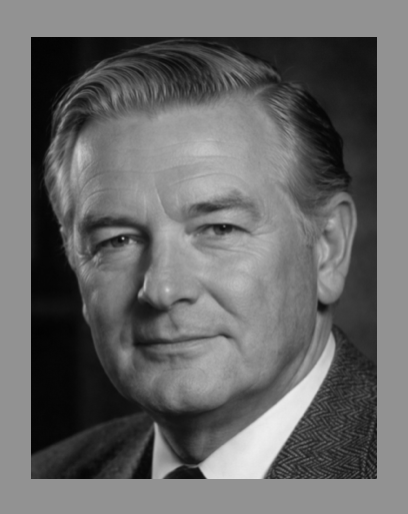
There are no known photographs of George Christie known to exist. Above
is an AI-generated image of him based on facts known about him life.
George Christie belonged to the small circle of twentieth-century Scottish whisky entrepreneurs who pursued distilling not merely as a business venture but as a lifelong ambition. Christie’s story unfolded over decades, and it culminated in the creation of one of the most unusual modern Scotch distilleries: the Speyside Distillery near Kingussie. Speyside was built gradually by hand and deliberately kept small, reflecting Christie’s philosophy that patience and craftsmanship mattered more than speed or scale.
Before pursuing his dream of creating a malt whisky distillery, Christie developed experience in the broader Scotch whisky industry. By the 1950s he had already become involved in the distilling business and had helped establish a grain whisky operation in Clackmannan known as the North of Scotland grain distillery. That enterprise provided both the technical experience and the financial base that would later support his ambitions in single-malt whisky production. Christie’s family was also connected to whisky production through subsequent generations. His son, Ricky Christie, later became involved in the business and would eventually participate in ownership and management roles related to the Speyside Distillery and whisky bottlings associated with it.
Christie conceived the idea of building his own single-malt distillery in 1954, which was a period in which the Scotch industry was dominated by blends. At that time, relatively few new distilleries were being constructed. But Christie’s concept was unusual: he envisioned a small, traditional Speyside distillery that emphasized craftsmanship rather than industrial output. So in 1956, Christie purchased Old Milton House and the surrounding land near the River Tromie outside the village of Kingussie in the Scottish Highlands. The site had historical significance. Decades earlier it had been associated with the original Speyside distillery that had operated between 1895 and 1911; yet only after Christie acquired the property did he discover this connection. It was a coincidence that strengthened his resolve to build a distillery on the site.
Christie began planning the distillery in earnest in 1960. In 1962, he commissioned a local stone mason, Alex Fairlie, to begin construction. The two men worked slowly and carefully, transforming the old barley-mill site into a functioning distillery built largely from local stone. Unlike many modern whisky projects financed by large corporations, Christie’s distillery advanced gradually. The work proceeded in stages as funding became available, and construction continued for more than two-and-a-half decades. The distillery buildings were finally completed in 1987. Even then, whisky production did not begin immediately. Christie spent additional time preparing the equipment and infrastructure required for distilling before spirit finally ran from the stills in December 1990.
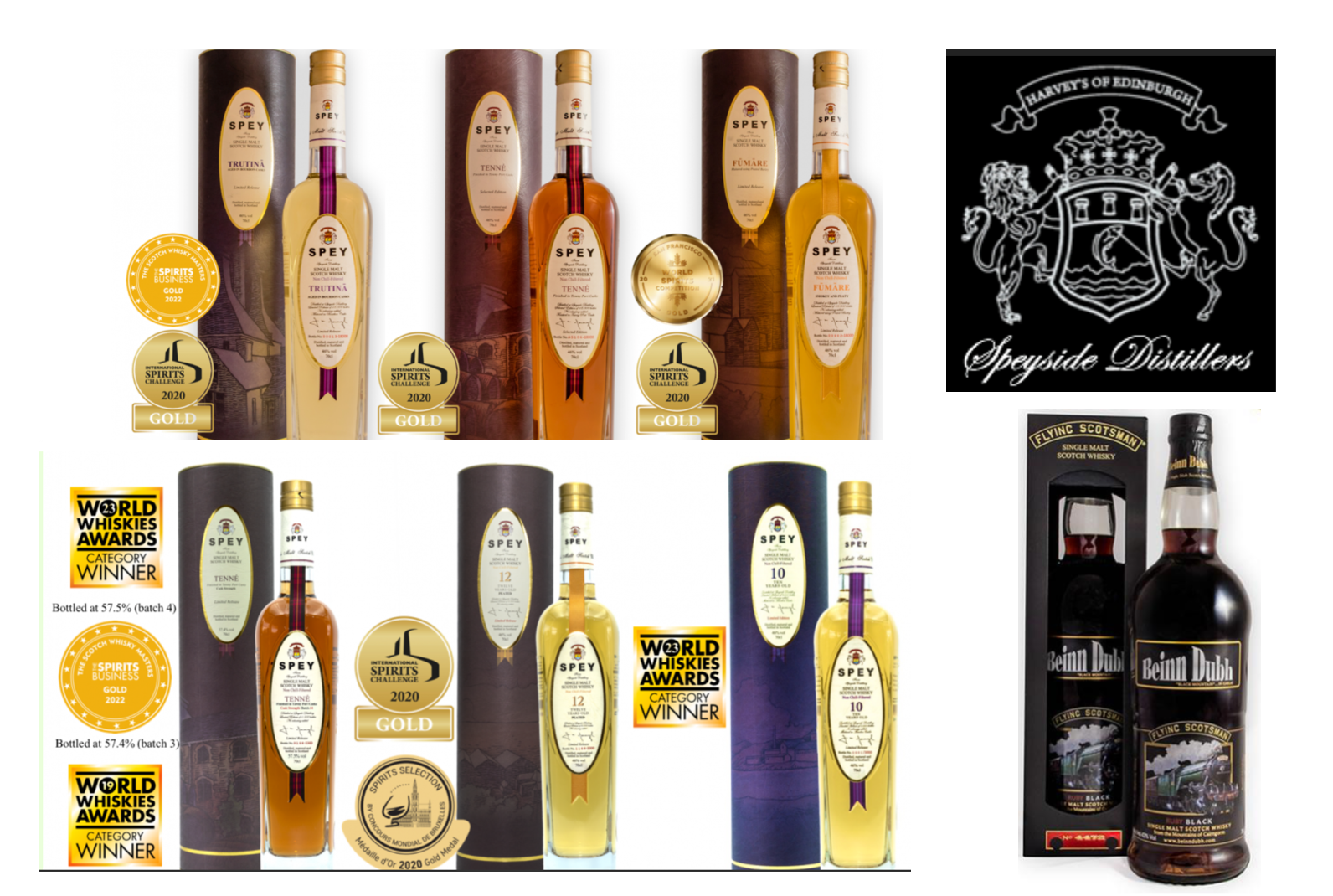
The design of the distillery reflected Christie’s deliberate rejection of large-scale production. Only two copper pot stills were installed—one wash still and one spirit still—and they were among the smallest in Scotland. With an annual capacity of roughly 600,000 liters of alcohol, the operation remained firmly within the category of small craft-scale distilling. Meanwhile, the water used in production came directly from the River Tromie, a tributary of the River Spey. Malted barley was mashed in a Glenspey mash tun, one of the last units installed by Newmill Engineering before that company closed. Together with traditional fermentation vessels and dunnage warehouses, the equipment formed a classic small-distillery layout focused on quality rather than volume. After the first spirit was distilled in 1990, Christie began laying down whisky for maturation in warehouses in Glasgow. Like many new distilleries, Speyside required several years before it could release a mature single malt. That first whisky from distillery was released in 1993 under the name Drumguish, a young single malt that introduced the distillery to whisky drinkers. Later releases followed, including The Speyside 8-year-old and The Speyside 10-year-old, which appeared in the late 1990s and early 2000s. The distillery eventually produced several whisky brands, including Spey, Beinn Dubh, and other limited releases.
Christie’s work at Speyside became a family endeavor. His son Ricky Christie participated in the business and later became associated with whisky bottlings and the management of cask stocks connected to the distillery.
By the late 1990s the distillery had matured enough to attract outside investment. In 2000 the Speyside Distillery Company was sold to a group of private investors that included Ricky Christie, along with Ian Jerman and Sir James Ackroyd. This transition marked a turning point in the distillery’s history. While the founding vision remained rooted in Christie’s small-scale approach, the new ownership helped expand the whisky’s international presence. Unfortunately, George Christie did not live to see the full international growth of the Speyside brand. He died in 2000, the same year the distillery ownership changed hands. Nevertheless, by the time of his death, Christie had already accomplished something remarkable in that few modern Scotch distilleries can claim such a prolonged and personal creation story as George Christie did with Speyside.
The distillery continued operating for decades after Christie’s death. In 2012 it was purchased by Harvey’s of Edinburgh, whose leadership expanded the brand internationally, particularly in Asian markets such as Taiwan. More recently, the original site ceased production following a change in lease arrangements, and plans were announced to construct a new distillery nearby. The whisky already produced there now represents the output of what some observers describe as a “lost distillery.”
In an industry that often measures success in output and market share, George Christie’s achievement was something different. He spent more than thirty years turning a dream into reality, leaving behind a distillery whose story reflects the long memory and slow rhythms of Scotch whisky itself.
Sources:
Speyside Distillery, “Heritage”, speysidedistillery.co.uk
Whisky.com, “Speyside Distillery:Whisky Database”, www.whisky.com/whisky-database/distilleries/details/speyside-spey.html
ScotchWhisky.com, “Speyside Distillery History”, scotchwhisky.com/whiskypedia/1891/speyside/
Master of Malt Blog, “Speyside Distillery…’Lost Distillery’”, Adam O’Connell, June 16, 2025
Highland Discovery, “Speyside Distillery”, highland-discovery.com/point-of-interest/speyside-distillery
Whisky Loving Pianist, “Speyside Distillery”, October 12, 2016, whiskylovingpianist.wordpress.com
Contributed by Tracy McLemore, Fairview, Tennessee