Harold Currie

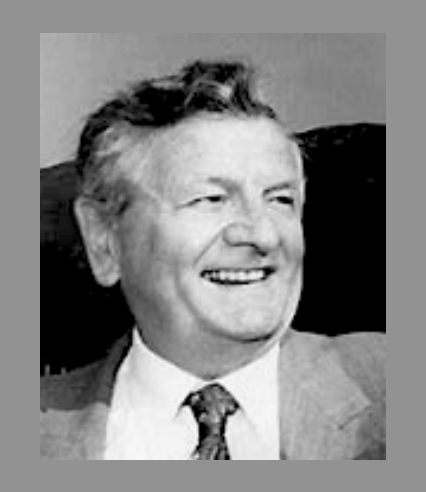
Harold “Hal” Currie’s most visible legacy in bringing legal distilling back to the Isle of Arran was the culmination of a life that had already been shaped by war, by hard commercial training, and by decades spent inside the machinery of the Scotch trade. By the time he stood at Lochranza in the summer of 1995 to toast the first spirit off the stills, he was not an idealistic newcomer chasing a late-life dream. He was a seasoned operator who understood what it took to build a whisky business that could survive the long, cash-hungry wait between distillation and maturity.
Currie was born in Liverpool in 1924. He came of age at the moment when young men did not get to “choose” adulthood gradually. On reaching 18, he enlisted with the Royal Armored Corps, and in 1944 he joined the 4th County of London Yeomanry. His war record placed him in one of the conflict’s defining crucibles: in the days after the D-Day landings, he fought alongside the “Desert Rats” of the 7th Armored Division in brutal tank actions in Normandy. Accounts of that battle emphasize the cost at roughly half his regiment lost. Later, Currie would be remembered as the last living member of that regiment.
The war did not become a decorative line in his biography; it remained a point of reference into old age. In October 2015, France officially awarded him the Légion d’honneur, its highest military honor, for his role in the landings. That medal shows how long his wartime identity stayed present, and something that was acknowledged publicly not as nostalgia, but as national recognition.
After the war, Currie moved into the wine and spirits trade, joining Liverpool and Bristol merchants Rigby & Evans. In 1960, Sam Bronfman personally asked him to become joint managing director of the UK arm of the House of Seagram. It was a decisive step. Currie was no longer simply selling drink, he was managing brands, markets, and strategy at a level where decisions were made in years, not seasons. Seagram’s Scotch interests would become central to his working life. Currie took over the company’s Scotland operations as managing director of Chivas Brothers in Glasgow, and after Bronfman died in 1971, Seagram’s UK operations also fell to him. This was the heart of the modern whisky economy: blending, marketing, distribution, and the careful cultivation of reputation in export markets. Currie learned the discipline of scale while at Seagram’s, including how to protect supply, how to position a whisky, and how to make a brand travel.
At the same time, his life did not narrow into corporate routine. He met his wife, Barbara, at a dance, and during his Seagram years he moved his young family from Cheshire to Dalry in Ayrshire, a relocation that planted him more firmly in Scotland rather than keeping him as a senior executive commuting between worlds. At the time, Currie was also a keen football fan, and it became practical rather than purely social when he was asked to serve as chairman of St Mirren Football Club in Paisley. In 1974, in the club’s Glasgow office, he helped persuade a young Alex Ferguson to accept the manager’s post. Ferguson later recalled his own arrival, intent on turning the job down, then being stopped by a simple question about ambition—whether Ferguson’s then-club could ever truly become “big,” and why stay if the answer was no. Ferguson signed, and although Currie stepped down as club chairman two years later, but that episode reveals a consistent trait: he could read people quickly, and he could make the case for a hard decision without pause and without theatrics.
His whisky career continued to shift with the industry. Around the time Ferguson had moved to St Mirren, Pernod had purchased the House of Campbell Scotch whisky brand and asked Currie to become managing director. After Pernod and Ricard merged in 1975, he was promoted to head UK operations until retiring in 1982. Even then he did not fully disengage; he remained a consultant into the early 1990s.
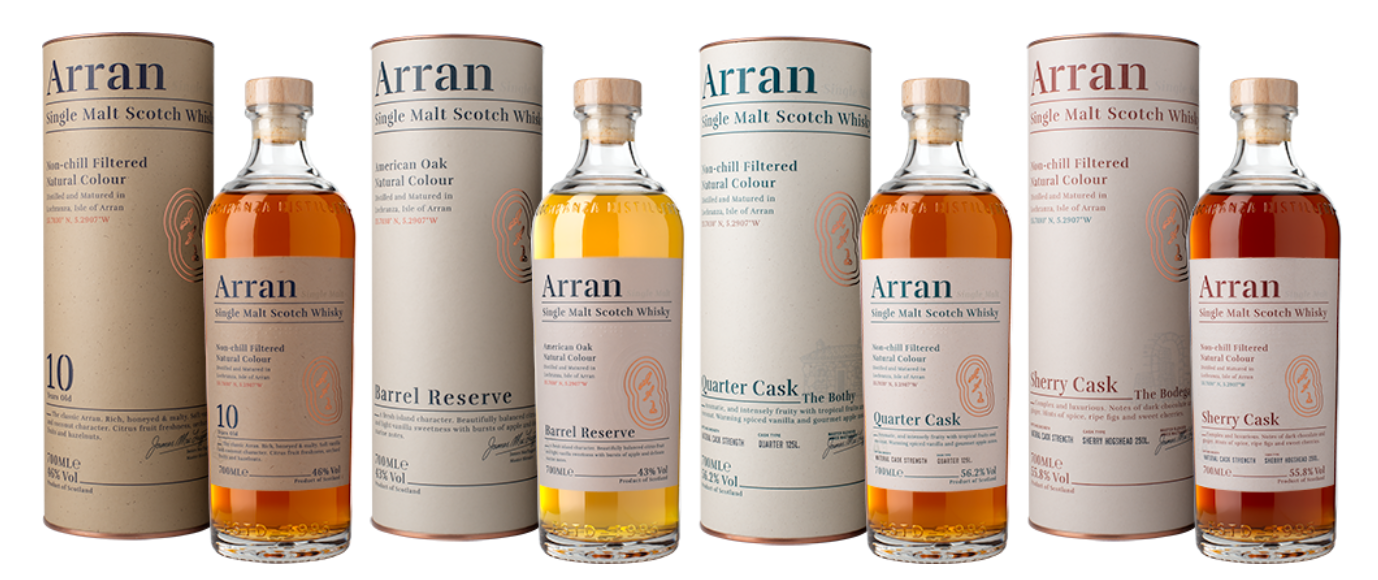
It was in his “retirement” period (retirement only in the sense of having left the big corporate posts), that the Arran chapter began. The seed came from architect David Hutchison, who owned property on Arran and proposed the idea of a new distillery on the island. Legal distilling had been absent there since the early 1800s, even though the island’s memory still held illicit stills. Currie and Hutchison saw in Arran not a museum piece, but a workable site: remote enough to feel distinct, accessible enough to function, and capable of supporting a modern distillery business. So work began on the Lochranza distillery site on 16 December 1994. The build itself became part of the story because it collided, immediately, with the realities of place, nature, law, and timing. A pair of golden eagles nested on the hillside above the site, and construction paused for roughly two months in the spring so the birds could raise their young undisturbed. It was an early reminder that a new distillery in the 1990s would not be built by willpower alone, it would be built within a web of environmental and regulatory constraints as well.
Then, in late June 1995, the vision became spirit. At 2:29 p.m. on 29 June 1995, the first spirit legally distilled on Arran since the 1830s ran through the spirit safe at Lochranza. A formal opening followed on 17 August 1995. Those timestamps, down to the minute, have been preserved because they marked more than a production milestone. They marked the return of a legal craft to an island that had been without it for generations.
Currie was 70 years old when Arran opened. That fact sometimes gets presented as a charming twist, but in practice it clarifies the kind of founder he was. He was not discovering the whisky business late. He was bringing decades of trade knowledge to a small, new operation and using that experience to get it through the dangerous early years when enthusiasm is plentiful and cash is not. In early reporting after his death, the distillery’s leadership emphasized that he remained closely involved until the end. But also, Arran’s early timeline gave him another public moment that echoed in a different register the prestige-seeking instincts of earlier whisky founders. Just over two years after spirit first ran, on 9 August 1997, the visitor centre was officially opened by HM The Queen during a tour of the Western Isles aboard the Royal Yacht Britannia. To mark the event, hogsheads were set aside for Princes William and Harry, and they remained maturing in the distillery’s warehouse, casks with a story attached, quietly reinforcing the distillery’s sense of arrival.
In 1998, the distillery released its first official bottling: a three-year-old. The choice reflected the practical constraint of time, since Arran could not sell mature whisky before it had matured, yet it also showed a willingness to step into the market early, to build recognition while stocks aged.
Currie died on 15 March 2016 at the age of 91. He left behind Barbara and four sons: John, David, Andrew, and Paul, bringing the story back, in the end, to family rather than industry.
Arran exists because someone decided to build when it was easier not to, and Currie’s story explains why that decision was credible. He had lived through the most violent test of nerves a young man could face, then spent decades learning how to move whisky through the world. When he finally turned to Lochranza, Hal Currie brought both forms of experience; endurance and practical know-how to an island that had not seen legal spirit flow in more than 15 decades.
Sources:
ScotchWhisky.com, “Arran founder Harold Currie…”, Becky Paskin, 21 March 2016
Arran Whisky official site, “Our Story”, https://www.arranwhisky.com/about/our-story
Undiscovered Scotland, “Isle of Arran Distillery”, www.undiscoveredscotland.co.uk
Massachusetts Beverage Business, “Obituary of Harold Currie”, May 2016, beveragebusiness.com
Contributed by Tracy McLemore, Fairview, Tennessee USA