Helen Cumming


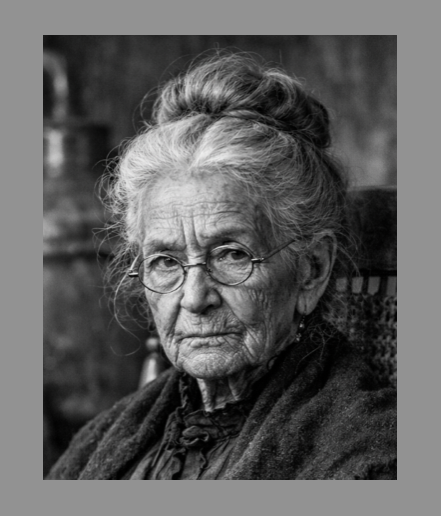
No known photos of Helen Cumming exist. Above is an AI-generated image of Helen in about 1867 when she was 90 years old. The image reflects facts known about her life.
Helen Cumming entered whisky history without ever needing a grand title; just a farmhouse, a small still, and the nerve to keep going when the law showed up at the door. She was born Helen Cruickshank on 15 April 1777, but her married name became synonymous with the place where her family worked the land and, season by season, built a reputation for spirit that would eventually become one of Speyside’s most important malts. Little is known about Helen’s early life, but on 13 December 1798, Helen married John Cumming, a “farmer/distiller” at Cardow. Their lives are most clearly traced through what legal history survives: leases, convictions, licenses, as well as the local stories that clung to their legend and are still being retold.
By 1811, Helen and John had taken a lease on Cardow Farm at Knockando, a remote, practical spot with easy access to water and peat, exactly what a farm family needed to make whisky. Those early Cardow years belonged to the grey zone that defined so much Highland life. Distilling on farms was common, and enforcement was uneven, but even so, the paper trail eventually caught up with the Cummings. In those days, excise officers were disliked and regularly thwarted at every possible turn, and Helen and her neighbors were no stranger to warning each other if one was sighted during the period when Cardow was operating illegally. Nevertheless, In 1816, John Cumming was convicted thrice for “malting and distilling privately.” The convictions were his on record, but when it came to dealing with visiting excise officers, Helen abruptly switched the scene from distilling whisky to domestic work with breathtaking speed: hiding equipment and replacing it with bread-making materials, dusting herself with flour, and greeting the officers as if they had arrived at the most ordinary moment in a working family’s kitchen. These details reveal what Helen’s role likely required in those days: not only helping make spirit, but managing risk, timing, and appearances; skills that were as important as any recipe. After all, Cardow sat in an area where illicit stills were common, and the excise men sometimes lodged locally while hunting them. When officers arrived at the Cummings’ farm, Helen fed them, yet while they ate, outside she slipped to raise a red flag as a warning signal to neighbors.
Then, suddenly, to the Cardow region’s great relief, the legal world shifted. The Excise Act of 1823 made licensed distilling more viable, and the Cumming distillery was among the early sites to move from the shadow economy into legitimate production. The distillery’s founding is commonly dated to 1824, when John and Helen obtained a license and began operating openly, still on a farm scale, but now inside the law. Cardow’s whisky also found paths into the wider trade through relationships with other Speyside figures; later accounts connect the Cummings’ early licensed era with advice and assistance from prominent neighbors, as the region’s whisky economy began knitting itself together. For Helen personally, what’s striking is how long her working life appears to have been. She outlived the illicit era, the hard early years of licensing, and then, her husband.
With John’s death in 1846, the farm and distilling work continued through Helen and their son Lewis Cumming. Lewis and his wife, Elizabeth, then become the next clear anchor point in the family’s story: he inherited operations, promoted Cardow’s character, and kept its small scale as a kind of selling point in an age when some distilleries were expanding.
Unfortunately, not long after his father’s passing, Lewis also died, then suddenly Elizabeth Cumming becomes the second half of Cardow’s founding legend. Helen was still alive then, an elderly matriarch beside a younger widow who now had to run a farm-distillery in a fast-professionalizing whisky world. Helen died two years after Lewis, in 1874, at roughly 97 years old, a lifespan that let her see Cardow’s transformation from whispered work to licensed production and growing reputation. At this point in the distillery’s history, Elizabeth is also credited with registering “Cardhu” as a trademark in the 1890s, a move that reads like instinctive modern brand protection.
Within Cardhu, Elizabeth’s era is often described in business terms—expansion, modernization, and eventually the famous sale that helped secure Cardhu’s role in the emerging blends market—but the relationship between the two women is the human hinge of the story. Helen represented survival: the lived intelligence of a farm household that could make spirit, sell it, and keep it safe in an era when legality was uncertain and enforcement could ruin a family. Elizabeth represented scale and strategy: taking what had been built and enlarging it to meet a new market reality. The shared thread is competence under pressure. Cardow/Cardhu did not become “the women’s distillery” because of a slogan. It earned that image because the crucial moments—evading the gaugers, then stepping into the licensed system, then keeping the business alive after two patriarchal deaths—were repeatedly navigated by wily, strong, resilient women both of whom happened to be in the same family line.
Sources:
Moray & Nairn Family History Society (PDF newsletter), Edition 5, November 2010, morayandnairnfhs.co.uk
Scotch Whisky Magazine, “Whisky heroes: The Cumming family, Cardhu”, Richard Woodard, 03 October 2019, scotchwhisky.com
FamilySearch, “Helen Cruickshank”, familysearch.org
FamilySearch, “John Cumming”, familysearch.org
Diageo Bar Academy, “Cardhu”, diageobaracademy.com
Contributed by Tracy McLemore, Fairview, Tennessee USA