J.H. Cutter

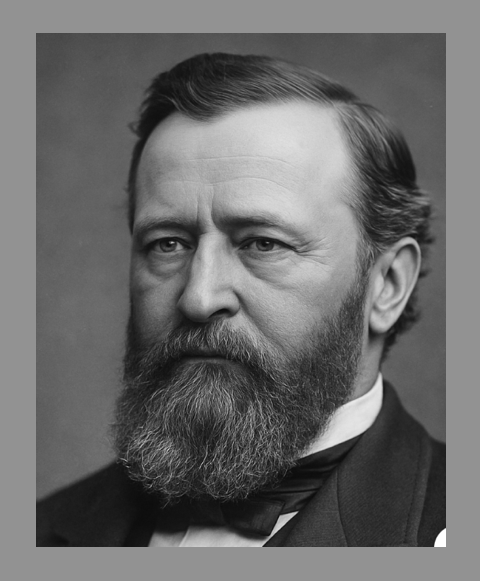
No known photographs of JH Cutter exist. The above is an AI-generated image based on known facts about Cutter’s life.
John Hastings Cutter spent only part of his life in the whiskey trade, but his name became one of the most famous bourbon labels in 19th-century America, and it still appears on bottles today. He was born in 1807 in the tiny farming community of Hollis, New Hampshire, the son of farmer Benoni Cutter and his wife, Phebe Tenney. When John was nine, his father died, leaving Phebe a widow with several children to raise. John had two older brothers, including RB Cutter and Ben B. Cutter, both of whom would go on to seek their fortunes further West.
By 1845, the Cutter family had established themselves in Louisville, Kentucky, a booming river city that was rapidly becoming a center of the bourbon trade. There, the brothers entered the liquor business, not as distillery owners but as “rectifiers”; that is, merchants who bought whiskey from Kentucky distillers and blended it to their own house formulas. Bottles from this period show that each brother eventually marketed whiskey under his own name, but it was JH’s bourbon that would achieve enduring fame.
The Cutters sourced whiskey from at least two important Kentucky plants. One was the Lawrenceburg distillery run by Mary Dowling, registered as RD #59 in the 8th District of Kentucky. Another was the distillery of W. B. Samuels at Samuels Depot in Nelson County, registered as RD #241 in the 5th District. From these sources, John H. Cutter blended and bottled whiskey that began to be recognized for consistent high quality, and sold it under his own name. In 1858, with his business already established, John H. Cutter merged his firm with that of Louisville wholesaler Charles P. Moorman. Moorman, a Kentuckian born in 1829, had started in the trade as a clerk, and by 1855, had opened his own wholesale liquor house. By 1857 he had bought out his original partner; the following year, he and Cutter joined forces. After the merger, Moorman and Milton J. Hardy, Cutter’s son-in-law, served as junior partners. Hardy was based in Boston, where he handled East Coast sales for the growing line of Cutter whiskies. During these years, bottles, signs, and advertisements began to promote “JH Cutter Old Bourbon” as a premium Kentucky whiskey.
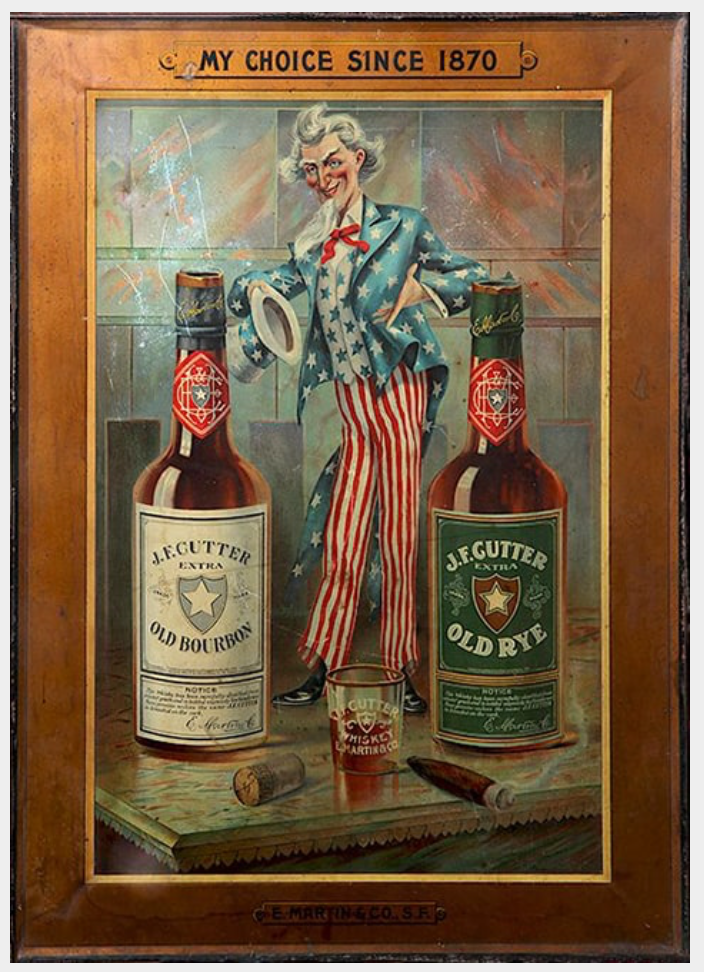
Framed Cutter print ad from about 1890
The Cutters sourced whiskey from at least two important Kentucky plants. One was the Lawrenceburg distillery run by Mary Dowling, registered as RD #59 in the 8th District of Kentucky. Another was the distillery of W. B. Samuels at Samuels Depot in Nelson County, registered as RD #241 in the 5th District. From these sources, John H. Cutter blended and bottled whiskey that began to be recognized for consistent high quality, and sold it under his own name. In 1858, with his business already established, John H. Cutter merged his firm with that of Louisville wholesaler Charles P. Moorman. Moorman, a Kentuckian born in 1829, had started in the trade as a clerk, and by 1855, had opened his own wholesale liquor house. By 1857 he had bought out his original partner; the following year, he and Cutter joined forces. After the merger, Moorman and Milton J. Hardy, Cutter’s son-in-law, served as junior partners. Hardy was based in Boston, where he handled East Coast sales for the growing line of Cutter whiskies. During these years, bottles, signs, and advertisements began to promote “JH Cutter Old Bourbon” as a premium Kentucky whiskey.
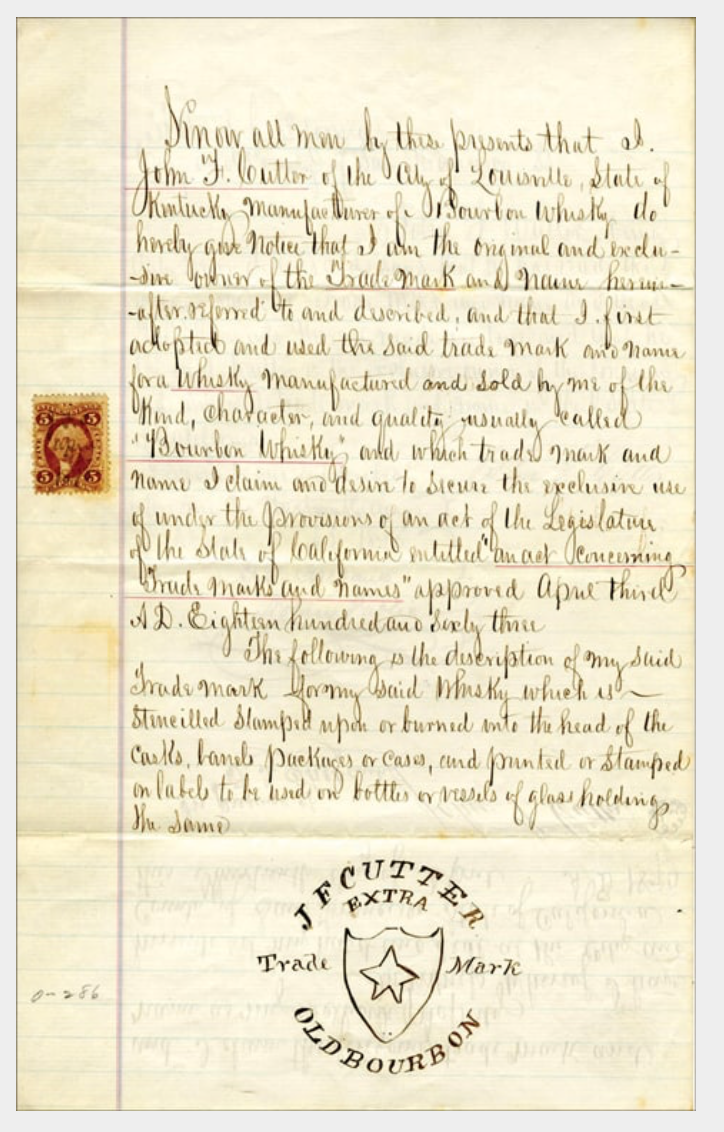
1863 Trademark application written
in Cutter’s own hand
The brand reached well beyond Louisville. On the West Coast, San Francisco liquor merchant Anson P. Hotaling became one of the main agents selling Cutter whiskey to miners and settlers during and after the Gold Rush. Embossed bottles and painted tin signs show the J H Cutter name paired with A P Hotaling & Co., linking Kentucky whiskey to the booming Pacific market. By now, though, even as his name was spreading across the country, John H. Cutter himself had begun to step back from day-to-day business. Having made his fortune in Louisville, he returned to his hometown of Hollis, New Hampshire. The 1860 federal census lists him there with his wife Susan, six children, three household servants, and five field hands. His occupation is recorded as “bourbon whiskey manufacturer,” but in practice he was living as a gentleman farmer while also serving as a member of the New Hampshire legislature.
Unfortunately, John H. Cutter’s life was not a long one. In 1860, the same year that census was taken, he died at the age of 53, with the cause reported as “disease of the liver.” He was buried in South Cemetery in Hollis, where a joint monument later marked the graves of both John H. and his son John F. Cutter.
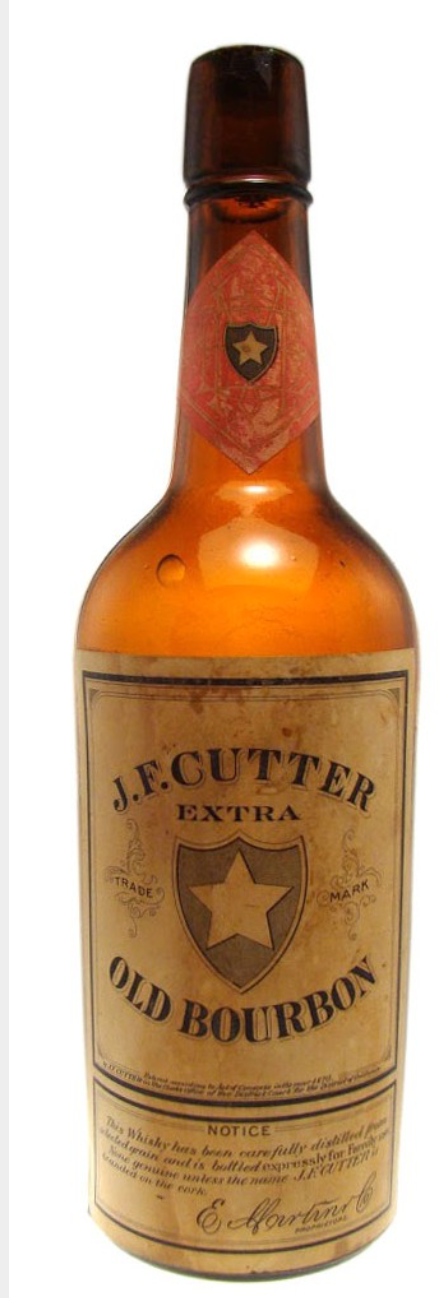
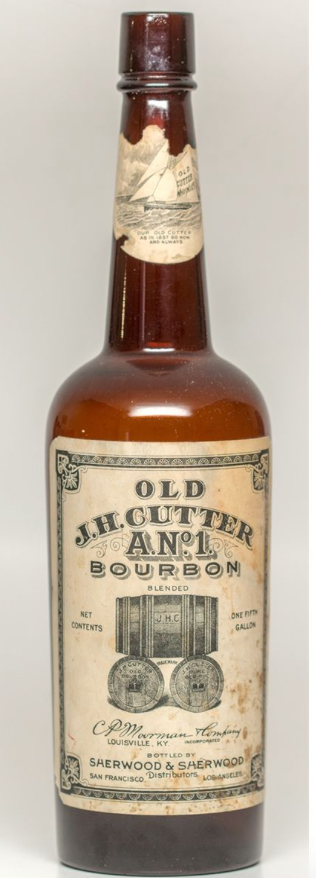
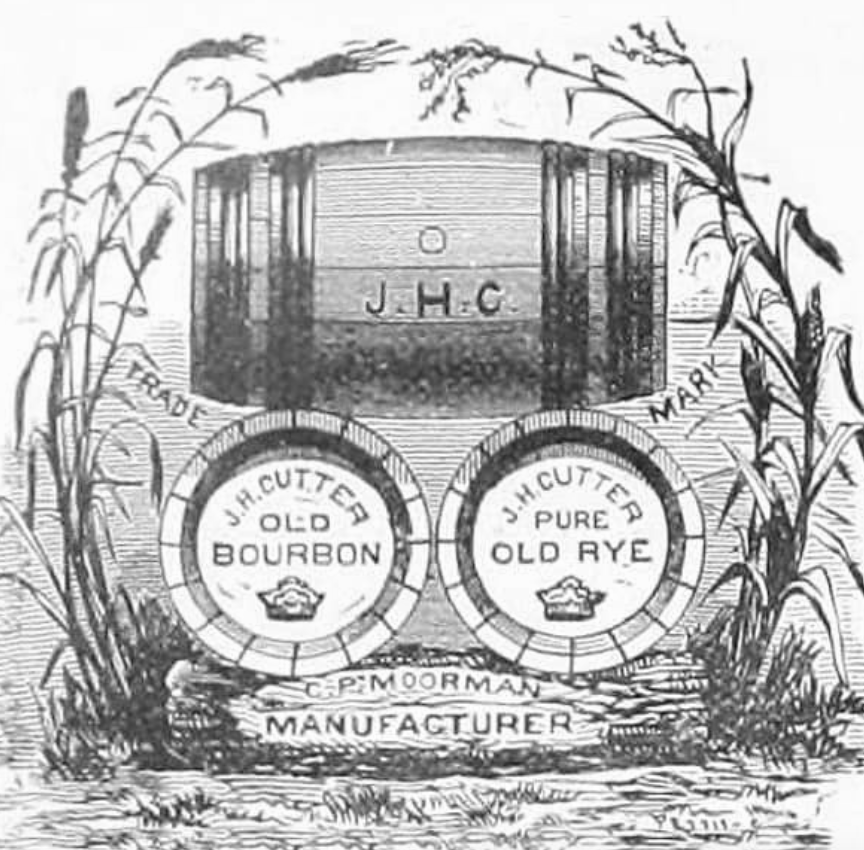
After JH’s death, control of the business shifted, with Charles P. Moorman acquiring a controlling interest in the JH Cutter name. Under Moorman’s direction, and with Hotaling as a powerful West Coast agent, the brand continued to grow. Over time, Moorman’s firm marketed multiple Cutter labels, including “JH Cutter A No. 1 Old Bourbon,” “JH Cutter Old Reserve,” “JH Cutter Pure Old Rye,” and other variations that kept the Cutter name in front of drinkers across the country. Meanwhile, the next generation of the family was also active in whiskey. John H’s third child launched his own brand under the name “JF Cutter,” leading to years of legal disputes and advertising battles over which whiskey could properly claim the Cutter heritage by name. Court records and contemporary newspaper ads show each side asserting the superiority of its own bottles, evidence of how valuable the Cutter name had become in the marketplace.
Regrettably, Prohibition eventually silenced all the Cutter brands, as it did so many others. For decades the name survived mainly on antique bottles, advertising trays, and glassware prized by collectors. Then, in the 21st century, JH Cutter returned to shelves in a new form. San Francisco-based Hotaling & Company, the modern successor to the old AP Hotaling liquor house, reintroduced JH Cutter Whisky as a heritage American blend inspired by the 19th-century original. Today’s JH Cutter is explicitly marketed as a “resurrected brand from the mid-1800s,” meant to honor both San Francisco’s Gold Rush–era whiskey culture and the blending tradition that made John H. Cutter’s bourbon famous.
From a New Hampshire farm boy to a name associated with premium whiskey on two coasts, John Hastings Cutter’s story today is written as much in glass and label art as it is in census records and old court files. Every modern bottle of J. H. Cutter Whisky pays quiet tribute to the 19th-century rectifier whose name it bears more than 160 years after his death.
Sources:
Federation of Historical Bottle Collectors Virtual Museum, entry “J. H. Cutter Old Bourbon,”, Stephen Hubbell collection, fohbcvirtualmuseum.org
Those Pre-Pro Whiskey Men,“C. P. Moorman and the Cutter Connection,”, Jack Sullivan, November 2, 2017, pre-prowhiskeymen.blogspot.com
The Whiskey Wash, “Review of JH Cutter Whiskey”, Carin Moonin, October 3, 2018
Some photos provided by the Virtual Museum of Historic Bottles and Glass:
fohbcvirtualmuseum.org/galleries/spirits/j-f-cutter-extra-old-bourbon/?utm_source=chatgpt.com
Contributed by Tracy McLemore, Fairview, Tennessee