
John Cor


The are no actual photographs of John Cor in existence. Above is an AI-generated image based on facts known about Friar John Cor’s life.
Friar John Cor steps into the historical record the way many late-medieval craftsmen do: briefly, officially, and with just enough detail to make later generations lean in closer. His birth date is not known, and the surviving sources do not preserve a childhood, a family tree, or the kind of personal milestones modern biographies rely on. What they do preserve is something rarer for whisky history: an administrative paper trail that pins a real name to the earliest widely cited written record of Scotch whisky production.
By the 1480s and 1490s, Scotland’s royal household was busy, mobile, and intensely practical. King James IV (who reigned 25 years from 1488-to-1513) moved between residences through out Scotland, pursued diplomacy, and then war in rapid succession, and cultivated a court that could be both devout and worldly. In that environment, churchmen often served in advisory roles that blurred the lines between religious life, learning, and royal administration. John Cor was one of those men that served in the King’s Court. In written logs, it described Friar Cor as associated with distilling “aqua vitae,” (Latin for “water of life,” the broad medieval term for distilled whisky).
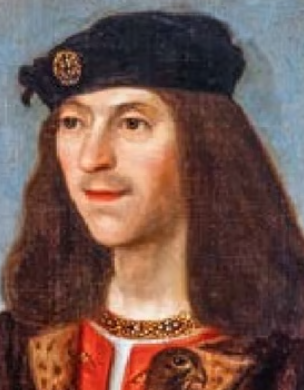
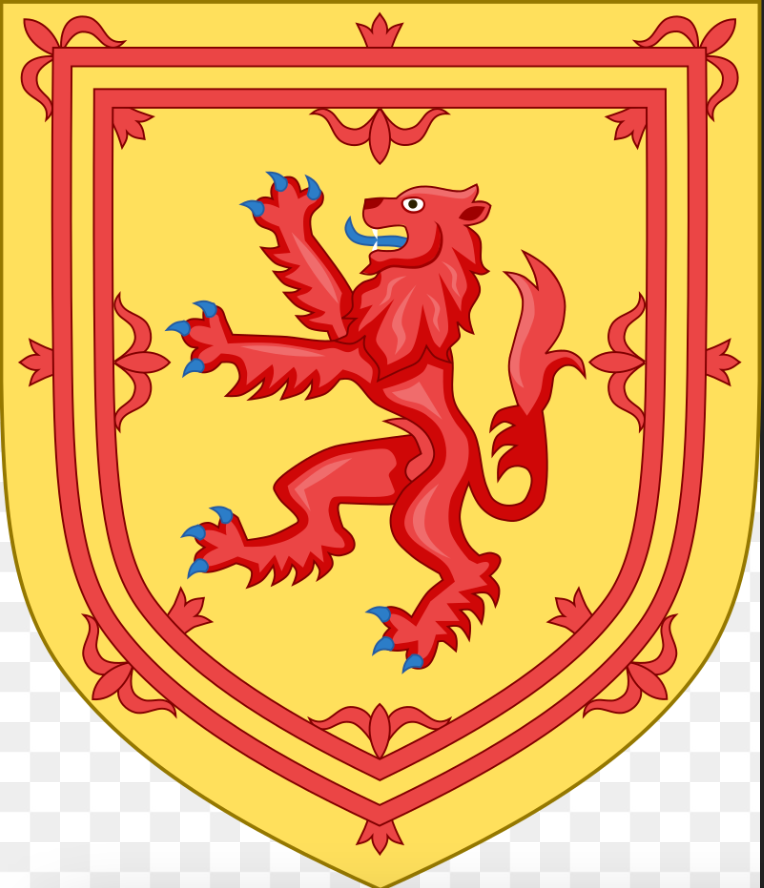
King James IV of Scotland and his coat-of-arms.
Friar John Cor was part of his royal court
Most modern whisky histories identify Jon Cor with Lindores Abbey in Fife, a place that has become closely tied to the story and is frequently described as a “spiritual home” of Scotch whisky. Other scholarship has argued different possibilities about his order affiliation and which friary he belonged to. The responsible historical portrait based strictly on what is commonly documented, however, in fact, strongly links him to Lindores Abbey. Also, as friars were bound to celibacy, it is unlikely that Jon Cor married or had children, thus no family lineage exists to counter the claim.
A glimpse of Cor’s presence near the crown comes from treasury traditions that place him in royal service at the beginning of James IV’s reign as King. Some historical entries mention gifts to “Friar Cor” at Christmas in 1488 and again other gifts in the mid-1490s, suggesting he was significant at court well before whisky history made him famous. These references place him in a world where clerics could be trusted to handle specialized tasks like preparing distilled whisky for medicine, ceremony, or the king’s own use.
The central event, the one that makes his name foundational to Scotch whisky lore, falls within the accounting year recorded in Scotland’s Exchequer Rolls. In an entry long celebrated by historians and the whisky industry alike, John Cor is connected to an order involving malt and “aqua vitae.” One commonly quoted English translation reads along the lines of: eight bolls of malt supplied to Friar John Cor “wherewith to make aqua vitae” for the king.
Reputable modern summaries place the earliest documented record in late 1494, while other references point to 1 June 1495 as the specific date attached to the entry in some scholarly discussion. Rather than contradicting the core fact, these differences usually reflect how the same accounting material is being cited, by regnal year (a regnal year is a year of the reign of a sovereign based on an Anniversary), by account year, or by a specific day associated with the record. The industry-facing takeaway remains steady: this is the earliest cited written record of distilling “aqua vitae” in Scotland tied to any named individual, and that person is indisputably Friar John Cor.
Second, the “order” referred to in the Exchequer meant grain—malted, valuable, measured, and tracked, while a “boll” was a substantial unit of dry measure used in Scotland at the time. Eight bolls represents a relatively large allocation of malted grain, the kind of quantity that implies the an existence of organized production on a regular basis rather than a casual, one-off experiment. That, too, is part of why the Friar John Cor entry matters: it is not merely an offhand mention of a drink. It reads like supply issued for the task of whisky production as a recognized, provisioned activity within the orbit of the crown’s finances.
Third, the entry tells us something important about Scotch whisky’s prehistory. The record is famous because it is early, not because it describes a first invention. By the time James IV’s government is allocating malt for aqua vitae, distillation knowledge already existed in Scotland for almost a century, likely transmitted through Europe over centuries and practiced in various contexts, including religious houses that cultivated medicinal preparation and record-keeping. The Cor reference is the earliest surviving “paper proof” that later generations can point to with confidence. It anchors the story of Scotch whisky not in legend but in administration: ink, accounts, and a named religious man tasked with turning grain into a drink fit for a king.
Modern whisky histories identify Friar John Cor with Lindores Abbey in Fife, a place that has become closely tied to the story and is frequently described as a “spiritual home” of Scotch Whisky. Other scholarship has argued different possibilities about his order affiliation and which friary he belonged to. The responsible historical portrait based strictly on what is commonly documented, however, in fact, strongly links him to Lindores Abbey. Also, as friars were bound to celibacy, it is unlikely that Jon Cor married or had children, thus no family lineage exists to counter the claim.
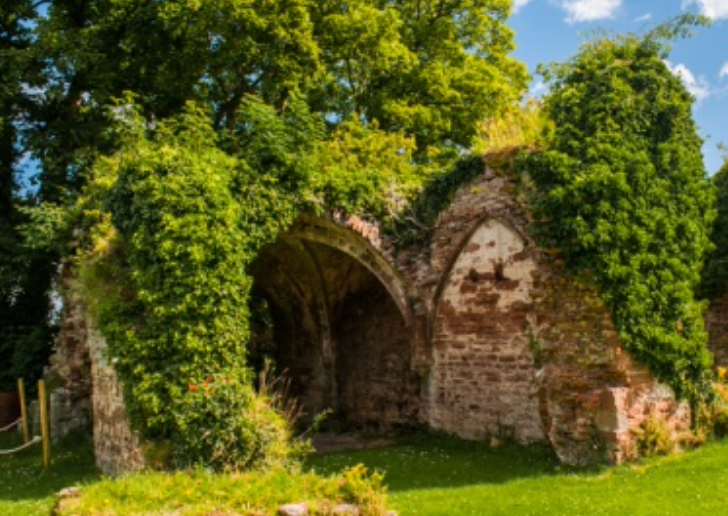
Modern-day ruins of Lindores Abbey
In the centuries after James IV, Scotch whisky would evolve far beyond anything the phrase “aqua vitae” could neatly contain: aging in oak, regional styles, the rise of commercial distilleries, and eventually the protected identity of Scotch as a global product. Yet the John Cor entry endures because it captures an origin point that is both humble and official. It is a reminder that Scotch whisky’s story is not a story of gorgeous glens and organized stillhouses; it is a story of ledgers, measured malt, and a religious man solely trusted to produce “water of life” for the court of a Renaissance king.
Sources:
Scotch Whisky Association, “Story of Scotch”, www.scotch-whisky.org.uk/discover-scotch/story-of-scotch/
National Trust for Scotland, “A guide to Scottish whisky”, www.nts.org.uk
archive.org, Exchequer Rolls of Scotland (Vol. 10; historical publication hosting)
Whisky Advocate, “Historic Lindores Abbey Distillery Reopens”, Gavin D. Smith, December 20, 2017
Lindores Abbey Distillery website, “Lindores Abbey Whisky 1494” / “Friar John Cor”, lindoresabbeydistillery.com
Contributed by Tracy McLemore, Fairview, Tennessee, USA