John Cote

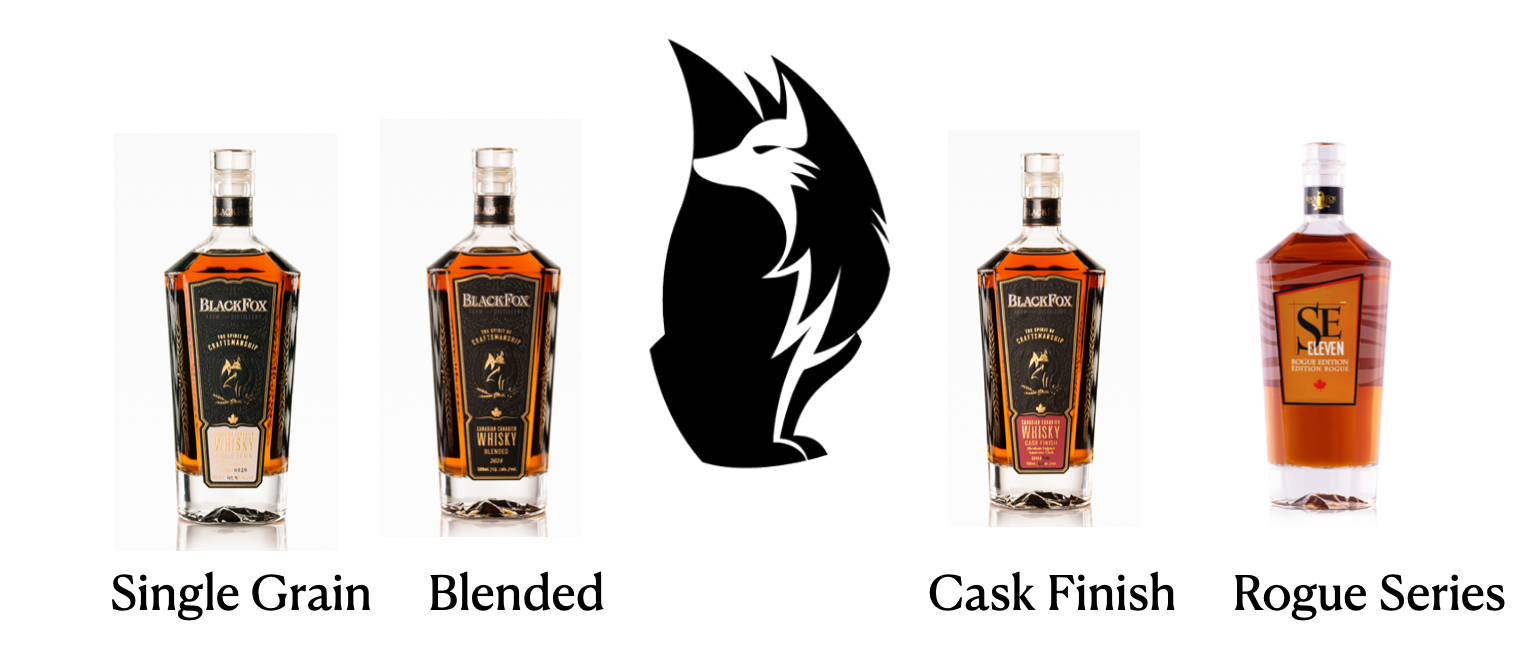
John Cote’s story is, in many ways, the story of modern Saskatchewan agriculture transformed into one of Canada’s most respected whisky enterprises. Long before he became known as a distiller, Cote was a farmer, soil scientist, agricultural leader, and international scholar whose career was rooted in the belief that great products begin with the land itself. That conviction ultimately led him and his wife, Barb Stefanyshyn, to create Black Fox Farm and Distillery near Saskatoon, where their commitment to terroir, sustainability, and farm-to-bottle production helped establish a new standard for Canadian craft whisky.
Cote was born in the mid-1960s and grew up in rural Saskatchewan. After completing his early education, Cote enrolled at the University of Saskatchewan’s College of Agriculture. There he studied soil science, earning a Bachelor of Science in Agriculture in 1986. Also during his university years he met another agriculture student, Barb Stefanyshyn, who was pursuing studies in animal science. Their shared interest in farming, rural life, and agricultural innovation would eventually develop into both a marriage and a business partnership that transformed Saskatchewan’s craft spirits industry.
Following university, Cote and Stefanyshyn built their lives around farming. The couple eventually operated a substantial grain farm near Leask, Saskatchewan. Farming at that scale required expertise not only in agronomy and crop production but also in business management, marketing, and long-term planning. The operation grew into a 5,000-acre enterprise, placing the couple among the province’s most successful agricultural entrepreneurs. During these years they also raised four children, balancing family life with the demands of modern prairie farming.
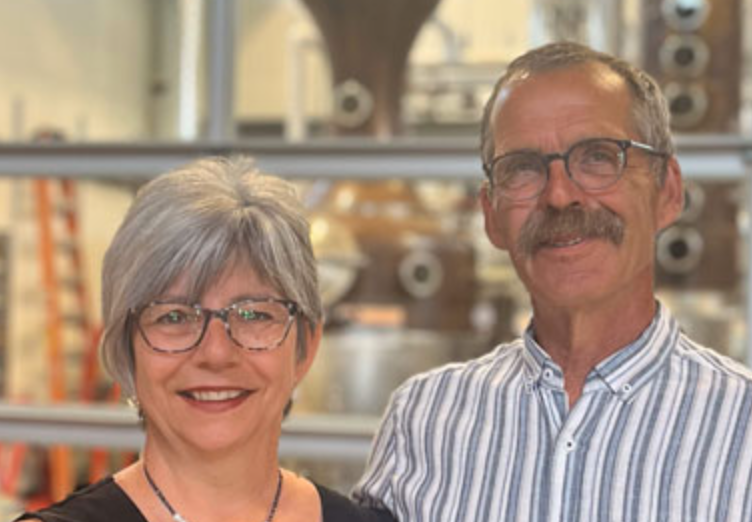
The couple’s commitment to agriculture extended well beyond their own farm. Both became deeply involved in agricultural leadership and education. They participated in the prestigious Nuffield Canada scholarship program, which allows agricultural leaders to study farming systems around the world. They also became alumni of the Canadian Agricultural Lifetime Leadership program and were recognized through Canada’s Outstanding Young Farmers program. Their studies and consulting work took them across five continents, exposing them to agricultural practices, food production systems, and rural enterprises around the globe. Those experiences broadened their perspective and reinforced their belief that agriculture could be connected more directly to consumers.
As their careers progressed, Cote and his wife became increasingly interested in the concept of terroir, the idea that soil, climate, geography, and local conditions contribute distinctive characteristics to agricultural products. While terroir is most often associated with wine, the couple believed that Saskatchewan grains possessed unique qualities that deserved recognition in distilled spirits as well. Rather than simply producing commodities for distant markets, they envisioned creating a product that would allow consumers to experience the character of Saskatchewan agriculture directly.
A major turning point came in 2010. After years of successful grain farming, the couple sold their farm near Leask and purchased eighty acres of river valley land southwest of Saskatoon. The move represented a significant change in direction. Instead of producing crops for others to process, they intended to control the entire chain from seed to finished product. Their goal was ambitious: to create a distillery that would grow, harvest, ferment, distill, mature, and market its own spirits.
The years that followed involved extensive planning, research, and construction. Drawing on decades of agricultural experience, Cote approached distilling with the mindset of a farmer rather than a traditional spirits producer. He focused on selecting grains suited to Saskatchewan conditions and on understanding how farming decisions affected flavor. This approach eventually became central to Black Fox’s identity. Rather than purchasing bulk grain from outside suppliers, the company would grow much of its own raw material and oversee every stage of production.
In August 2015, the first batch of clear spirit flowed from Black Fox Farm and Distillery. The distillery utilized a custom-built German Kothe hybrid copper pot still, combining traditional craftsmanship with modern technology. From the outset, Cote and Stefanyshyn positioned Black Fox as a “crop-to-connoisseur” operation. Every bottle was intended to reflect the agricultural origins of its ingredients and the distinctive environment of Saskatchewan.
Black Fox also quickly distinguished itself within the Canadian whisky industry. Most Canadian whisky producers historically relied heavily on corn and large-scale industrial production. Cote pursued a different path. He emphasized prairie-grown grains and small-batch methods. Black Fox became what is commonly known as a Type 1 distillery, meaning that production begins with raw agricultural ingredients rather than purchased neutral spirits or pre-distilled products. This commitment to authenticity allowed the company to showcase Saskatchewan agriculture in a way few distilleries had attempted. Another distinctive feature of Black Fox was its maturation program. Rather than aging whisky exclusively in climate-controlled warehouses, Cote embraced Saskatchewan’s dramatic seasonal temperature swings. Hot summers and frigid winters became active participants in the maturation process. The prairie climate, which many producers might view as a challenge, became an essential ingredient in the development of Black Fox whisky.
Over time, Black Fox earned increasing recognition in Canada and abroad. The distillery’s whiskies, gins, and specialty spirits received numerous awards, helping establish Saskatchewan as an emerging force in premium spirits production. By 2025, Black Fox achieved one of its greatest honors when it was named Worldwide Whisky Producer of the Year by the International Wine and Spirits Competition in London. For Cote, the award represented validation of a philosophy he had spent decades developing: that extraordinary spirits begin with extraordinary agriculture.
Throughout his career, John Cote has remained fundamentally a farmer. Distilling expanded his professional identity, but it did not replace the agricultural values that shaped his life. His work has consistently reflected a belief that the landscape of Saskatchewan deserve recognition, not merely as sources of raw materials but as contributors to the character of the final product. Through Black Fox Farm and Distillery, he helped demonstrate that Canadian whisky could express a sense of place every bit as distinctive as the world's great spirits. In doing so, he transformed a lifetime spent studying and working the land into a globally-respected distilling enterprise, one bottle at a time.
Sources:
University of Saskatchewan, “From Saskatchewan to the World,” 2 August 2024, agbio.usask.ca (Shannon Boklaschuk)
University of Saskatchewan, “‘The Benchmark of Excellence on the World Stage,’” 14 January 2026, greenandwhite.usask.ca (Shannon Boklaschuk)
Black Fox Farm & Distillery, “Our Story,” blackfoxfarmanddistillery.com
Summerton Whisky Club, “Black Fox Farm and Distillery,” summertonclub.com
AgWest Ltd., “Black Fox Farms and Distillery Brings Their Farm to Your Glass,” 14 June 2021, agwest.sk.ca
International Wine & Spirits Competition, “Black Fox Farm & Distillery Wins IWSC 2025 Worldwide Whisky Producer Trophy,” 12 November 2025, iwsc.net
Black Fox Farm & Distillery, “Live Whisky Conversation with John Cote,” youtube.com
Black Fox Farm & Distillery, “Whisky Conversation with John Cote,” youtube.com
LinkedIn, “Black Fox Farm and Distillery Company Profile,” linkedin.com
Tripadvisor, “Black Fox Farm and Distillery,” tripadvisor.com
Some photographs provided by the University of Saskatchewan
Contributed by Tracy McLemore, Fairview, Tennessee USA