
John Crabbie

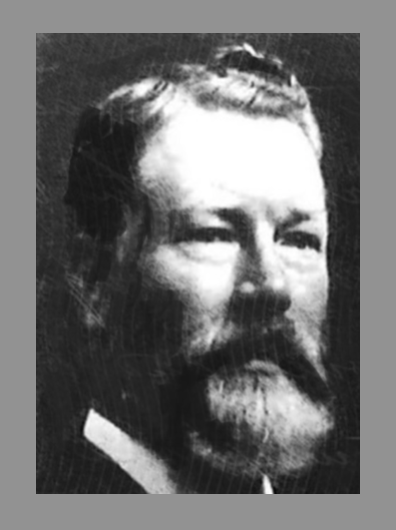
John Crabbie was born in Edinburgh on 2 December 1806, the third son of Millar Crabbie, an upholsterer and grocer, and his wife Johann. The Crabbie family lived in a region that was rapidly transforming during the early nineteenth century, and John Crabbie entered that world at precisely the right time to take advantage of the ensuing commerce. Edinburgh’s New Town was expanding, Leith was becoming one of the busiest ports in Britain, and the whisky trade there was evolving from a scattered rural business into a sophisticated industrial enterprise. His father’s grocery business sat in the Canongate district of Edinburgh, and the young Crabbie learned the fundamentals of merchandising there. But instead of carrying his father’s legacy as a grocer forward, John Crabbie established himself independently in the liquor trade, showing an ambition and foresight that distinguished him from many of his generation.
Around 1832, Crabbie founded his own business in Edinburgh dealing in wines and spirits. Four years later he entered into partnership with William Cree, and together the pair acquired the Leith firm of James Wyld & Co. The purchase proved decisive. James Wyld & Co. had operated since 1801 at Tolbooth Wynd in Leith, and after the acquisition, Crabbie used that founding date on company materials and labels.
The nearby Port of Leith also gave Crabbie an enormous advantage. During the nineteenth century the port served as one of Scotland’s principal commercial gateways. Ships arrived carrying wine, spices, citrus fruits, raisins, ginger, rum, and countless other imported goods from across the world. Whisky merchants in Leith were uniquely positioned to blend, store, bottle, and export Scotch on a massive scale, and Crabbie recognized this opportunity early.
By 1838, the company had moved fully into the former Wyld premises in Leith. The less-profitable grocery side of the business was gradually abandoned completely in favor of wines and spirits, particularly whisky. Surviving business ledgers from the late 1830s show Crabbie trading in malt whisky and grain spirit from various distilling sources around Scotland, including spirit associated with the Haig family at Cameronbridge. These records demonstrate that Crabbie was already operating within the expanding blending trade years before blended Scotch became globally dominant. Crabbie’s whisky business continued to grow rapidly during the middle decades of the nineteenth century, but rather than distilling under his own name, he sourced whisky from established distilleries and blended it in Leith. Company archives later revealed agreements allowing Crabbie to produce whisky through distilleries including Balmenach and Benrinnes. This hybrid merchant-and-blender model was common among successful Victorian whisky firms and allowed Crabbie to scale the business without relying solely on one production site. At the same time, the wily Crabbie diversified aggressively. He became widely known for producing ginger wine and ginger cordial, products that took advantage of Leith’s access to imported ginger from Asia and Africa. Crabbie’s Green Ginger Wine became one of the company’s signature products and eventually one of the most recognizable fortified wine brands in Britain. Records from 1839 already show strong sales of both whisky and ginger wine from his establishment.
Despite the later fame of the ginger products, whisky remained central to Crabbie’s identity and reputation. By the mid-nineteenth century, John Crabbie & Co. had become one of Edinburgh and Leith’s most respected whisky houses. The company exported its products widely across Europe, the Americas, Africa, and parts of Asia. Surviving records show shipments reaching destinations in Buenos Aires, New York, Constantinople, and St. Vincent. The growth mirrored the rise of the British Empire itself, and Crabbie became one of the merchants who helped transform Scotch whisky from a regional Scottish product into an international commercial commodity. About that time, Crabbie also became deeply involved in the industrial development of Scotch whisky production. During the 1880s many independent whisky merchants feared increasing dependence on the Distillers Company Limited, which controlled much of Scotland’s grain whisky production. To counter that influence, several major blenders and merchants collaborated to establish a new grain distillery in Edinburgh. In 1885, John Crabbie joined Andrew Usher, William Sanderson, and other prominent whisky figures in founding the North British Distillery Company.
The North British Distillery became one of the defining industrial whisky sites in Scotland. Crabbie served among its earliest directors, helping create a grain whisky source independent of DCL control. The decision proved historically significant. North British survived into the modern era and remains one of Scotland’s largest and most important grain distilleries.
In regard to his personal life, in about 1825, John married Margaret Crabbie, and together they had a large family of eight children. One of his sons, John Miller Crabbie, later assumed a leading role within the business after his father’s death. The Crabbie family remained heavily connected to Leith commerce for generations, and possessed extensive property holdings in Leith. It maintained substantial bonded warehouses connected to the whisky trade, which became increasingly important during the late nineteenth century as Scotch blending expanded dramatically. Leith’s bonded storage facilities allowed merchants like Crabbie to age, blend, and export whisky efficiently on an international scale.
John Crabbie died in 1891 at the age of 85, after helping shape the commercial identity of Scotch whisky during one of the industry’s most transformative periods. By the time of his death, his company had become a globally recognized name associated with both whisky and ginger wine. The business remained active long afterward, eventually passing through several ownership changes during the twentieth century. The whisky side of the Crabbie name gradually faded during the industry consolidations of the modern era, although the ginger products survived and remained commercially successful.
More than a century after John Crabbie’s death, his name returned directly to Scotch whisky production. Following the acquisition of the Crabbie brand by Halewood Artisanal Spirits in 2007, the company revived the whisky identity of the house and ultimately established the modern Bonnington Distillery in Leith, only a short distance from the historic Crabbie premises. The revival effectively brought the Crabbie name back to the same Edinburgh district where John Crabbie himself had built his nineteenth-century whisky empire.
Today, John Crabbie stands as one of the important merchant-blenders of Victorian Scotch whisky history: not a distiller in the narrow sense, but a businessman whose skill in sourcing, blending, exporting, warehousing, and industrial organization helped define the modern Scotch whisky trade. His career connected the old merchant culture of Leith with the industrialized whisky industry that emerged in the late nineteenth century, and his influence still survives in both the Crabbie name and the continuing operation of North British Distillery in Edinburgh.
Sources:
scotchwhisky.com, “John Crabbie”, Gavin D. Smith, 10 June 2019, scotchwhisky.com
Master of Malt Blog, “Crabbie’s on the Comeback: Restoring a Whisky Legacy”, Ian Buxton, 30 September 2021
Drink Warehouse UK Blog, “Crabbie’s: Since 1801”, 18 January 2023, blog.drinkwarehouseuk.co.uk
Bonnington Distillery official website, “John Crabbie Story …”, crabbiewhisky.com
Contributed by Tracy McLemore, Fairview, Tennessee USA