Luca Čutura


Luka Čutura’s whiskey story starts in the cordgrass-and-mud working world that most visitors never see when they think of Louisiana. Before he was running a still, he was running marsh boats, first with his family’s oyster work, then as a commercial captain guiding visitors through the swamp. That background explains the way Luka approaches bourbon: not as lifestyle branding, but as a job built on local raw materials, seasonal rhythms, and a clear-eyed respect for what the Gulf Coast climate can do to a spirit soaking in wood.
Čutura’s family roots reach across the Atlantic. His family hails from northern Croatia and Bosnia, where corn and wheat cultivation, vineyards, winemaking, and home distilling were part of the routine culture. His father emigrated to the United States in 1973 and settled near New Orleans, building a life as an oysterman. So Luka grew up on that city's North shore, in a household where the salty water and hard work were a way of life. He followed his father into the seafood trade, getting a commercial captain’s boat license at 18, and putting him in position at that age to carry passengers and make a living on the water. Those summers also ran in two directions: Louisiana for work and Croatia for family. His childhood summers in Croatia were tied directly to learning traditional family fermentation involving wine, as well as a Balkans-style fruit brandy. Those skills later translated into professional curiosity and also exposed a natural talent. But as an adult, Luka first worked with his father in the oyster business and then built a second identity as a tour captain with ‘Cajun Encounters Swamp Tours,’ a company that would become his own bridge into distilling.
That pivot took shape in 2016, when Cajun Encounters owner Jeff Rogers and his wife Mary Anna decided to launch a distillery in New Orleans. To be named “Seven Three Distilling” after the city’s 73 neighborhoods, Rogers wanted a distillery where the spirits themselves would also carry neighborhood names. Čutura was already inside that ecosystem as one of Rogers’ trusted captains, so the shift from boats to bourbon did not happen as a complete surprise, nor overnight. But he began coursework through the American Distilling Institute to sharpen his technical foundation, then stepped into the role that would define the next phase of his life: Head Distiller and General Manager of Rogers’ new venture.
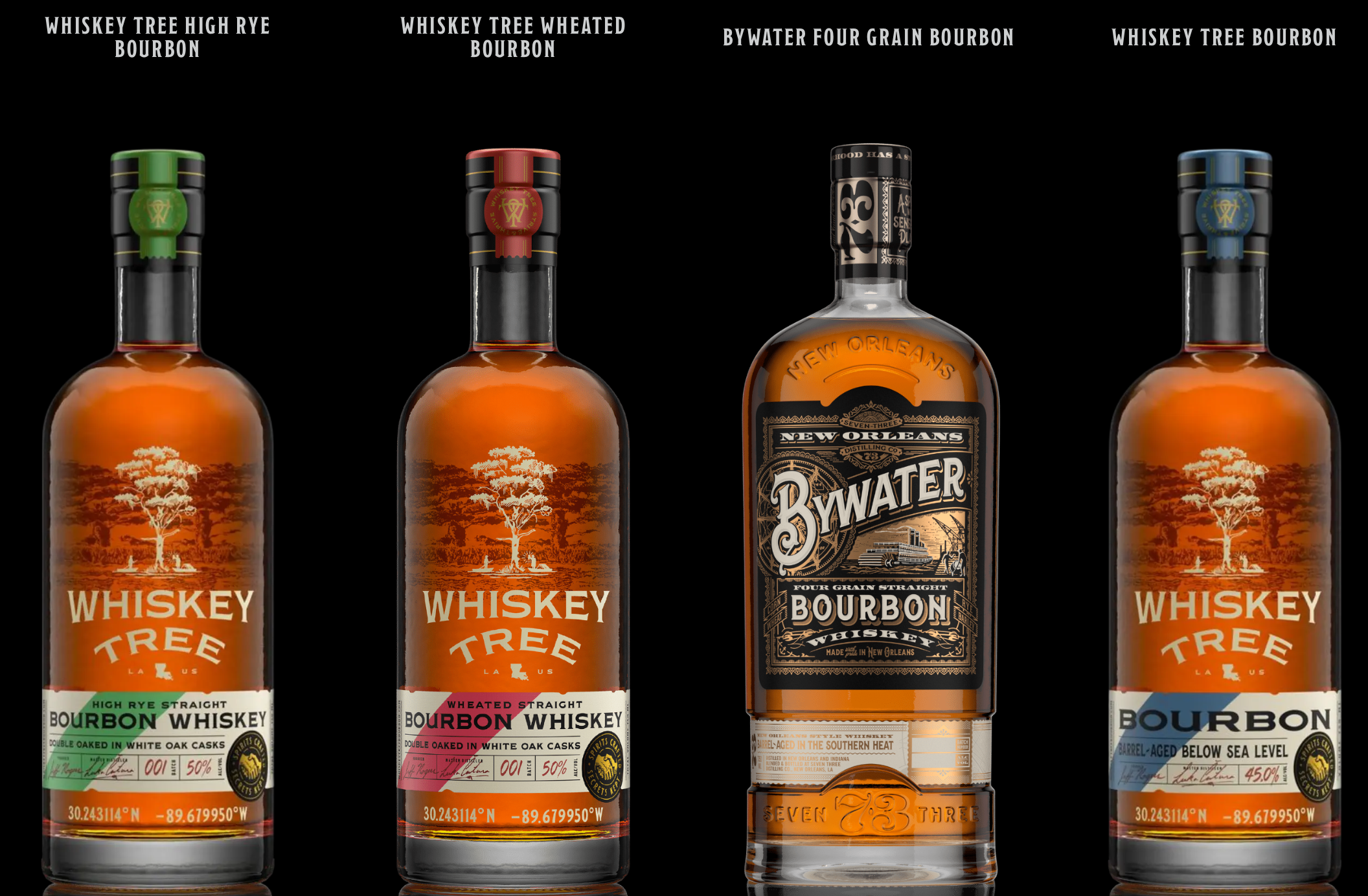
Seven Three’s whiskey identity centers on bourbons that are designed to make sense in Louisiana. Heat and humidity are, therefore, not treated as obstacles but are treated as part of the maturation argument. The distillery’s flagship neighborhood bourbon line, Bywater, is positioned as a smooth, approachable New Orleans bourbon profile, with tasting notes that lean into fruit, vanilla sweetness, and softer herbal edges. However, the most clearly documented whiskey specs in the public record sit with Bywater Four Grain Bourbon, a small-batch bourbon presented as coming from Kentucky & New Orleans and bottled at 93 proof. The distillery describes it as built on Louisiana corn and wheat for sweetness, with rye and barley adding structure, and Southern heat shaping an oak-and-cherry finish. A retail listing that includes technical details gives a mash bill of 72% corn, 16% rye, 6% wheat, 3% malted wheat, and 3% malted barley, and describes it as a blend of sourced whiskey and the distillery’s own distillate. Čutura’s most headline-grabbing whiskey work, though, sits under the Whiskey Tree label. That is bourbon which is tied to a local legend and built to compete on a national judging table. Seven Three’s own award announcement explains the concept: the Whiskey Tree line is inspired by a bald cypress hidden in the Pearl River swamp, associated in local lore with bootleggers meeting to exchange goods. The distillery turned that story into a modern bourbon series, and in doing so created a brand vehicle that could carry both place and performance. One of the Whiskey Tree releases that Seven Three heavily emphasizes is Whiskey Tree Wheated Bourbon. It is described as a New Orleans-crafted expression with a soft, rounded profile influenced by the local climate. A retailer listing supplies the hard specs that help pin it down as a whiskey object, not just a tasting narrative: 100 proof, 5 years old, with a mash bill listed as 51% corn, 45% wheat, and 4% malted barley, and distilled by MGP. Then there is Whiskey Tree High Rye Bourbon, the bottle that vaulted Seven Three into “pay attention” territory outside Louisiana. Seven Three’s announcement states that the whiskey earned Double Gold, a 99-point score, and a Best-of-Class finalist placement at the 2025 San Francisco World Spirits Competition. The distillery’s own Whiskey Tree High Rye page attributes the tasting note set to Nancy Fraley, the master blender associated with multiple Seven Three whiskeys. In other words, Čutura’s whiskey work is not presented as a lone-wolf act; it is framed as a production-and-blending collaboration guided by one of the most recognizable palates in the American craft space.
On the personal side, Luka Čutura was born in October of 1977. He is married to Regina Lynn Čutura, and they have three children: Brooke plays soccer for LSU, while the oldest, Luka, 24, lives out of state. Nikola is in high school and plays soccer well like his older sister. The family still considers their home to be a suburb on the North shore of Lake Pontchartrain. As for their father, other than his kids, Čutura’s biggest achievement is making his New Orleans bourbon feel like a repeatable discipline of grain, fermentation, distillation, blending, and wood, all done up in a place that refuses to behave exactly like bourbon country, but done anyway, and done well.
Sources:
Bourbon and Cake (podcast), Peter Ricchiuti, October 11, 2023, itsneworleans.com
Seelbach’s, “Seven Three Distilling Whiskey Tree Wheated Bourbon” / “Seven Three Four Grain Bourbon”, seelbachs.com
Seven Three Distilling Company official website, seventhreedistilling.com
LSU Athletics, “Brooke Čutura”, LSU Sports, lsusports.net
Contributed by Tracy McLemore, Fairview, Tennessee