
Charles Chree Doig

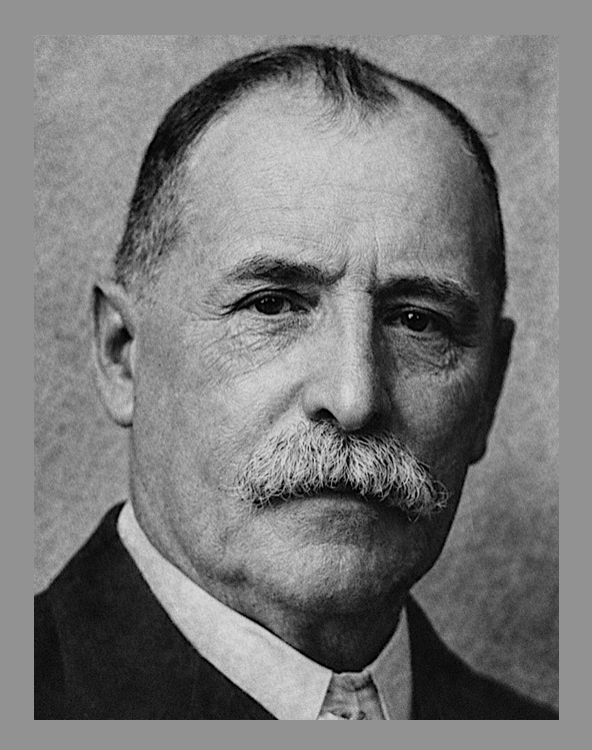
Charles Chree “C.C.” Doig was born 24 August 1855 at Pitewan Farm near Lintrathen in Angus. As an adult, the renowned architect was unquestionably the most influential distillery designer of the late Victorian whisky boom, and he ended up literally reshaping the skyline of Scotland.
As the son of agricultural laborer James Doig, education mattered to “C.C.” early. He won prizes for arithmetic and ‘General Scholarship,’ staying in school until about age 15, which was long enough, in that time and place, to stand out. When he left, he stepped into work that blended drawing, measurement, and practical building knowledge. He was immediately taken on by John Carver, a local architect who practiced in the town of Meigle. It was a classic apprenticeship-style beginning of learning by doing, and learning with a pencil in hand.
On 02 January 1881, young Doig married Margaret “Isabella” Dick. Their family life ran alongside his rising professional life, and Charles and Isabella quickly had three sons, yet Doig’s work soon pulled the family north. In 1882, the Doigs settled in Elgin, the Speyside market town that sat close to a swelling concentration of distilleries and to the wealthy merchants financing them. There, Doig joined the practice of Harbourne-Marius-Strachan-Mackay, a land surveyor. Surveying was not a side skill for a distillery designer; it was the foundation. A distillery was an industrial machine made of stone, iron, timber, and pipes, built on sloping ground, threaded with drains, fed by water, and increasingly served by rail. Doig’s employer quickly recognized his ability to tie all of those elements together successfully in a reasonably attractive package, and before long Doig became a partner.
By 1890, Doig was running his own practice, specializing in distilleries at exactly the right historical moment. Scotland, and specifically Speyside, was in a period of great expansion; new distilleries planned from scratch, older sites rebuilt, capacities pushed upward. Doig’s value was that he did not limit himself to façades and floor plans. He drew up buildings, but he also designed the stills and production equipment to fit those buildings, and he stayed involved when distilleries needed engineering solutions to operate well. That “architect plus process-thinker” identity is why he is, even today, is often described not only as an architect, but as a distillery engineer in practice.
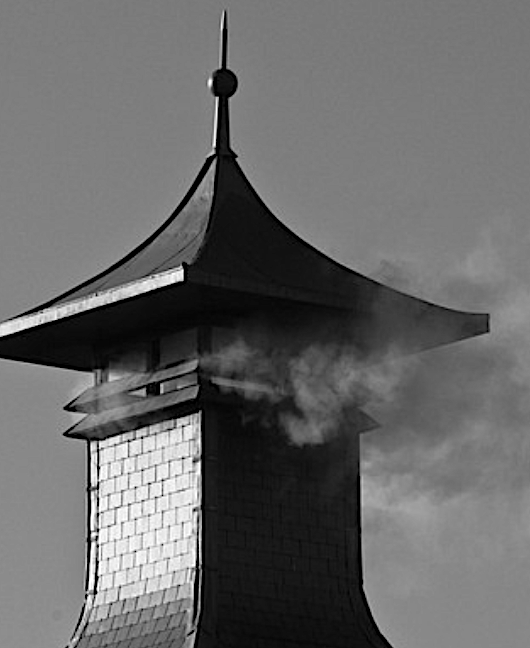
But the moment that made his name came on 3 May 1889, during a site meeting at Dailuaine Distillery. Malt kilns needed effective ventilation to draw smoke up and away. Doig devised a new ventilator, an elegant, pagoda-like form that created a stronger draw and vented smoke much more efficiently. The functional point was airflow; the accidental consequence was iconography. The “pagoda roof” became so visually distinctive that it turned into shorthand for Scotch whisky itself, even long after many distilleries stopped malting on site. Before Doig’s breakthrough, many kilns had used rotating cowls or ineffectual chimney forms for ventilation.
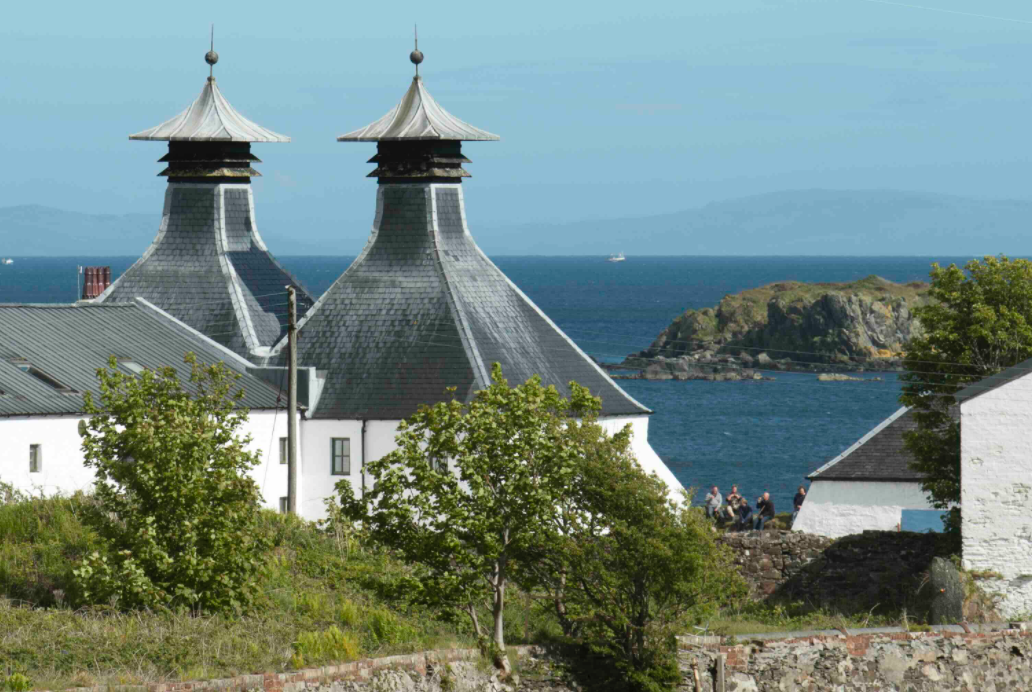
Ardberg Distillery still sports Doig’s pagoda-style roof today
Doig’s practice spread well beyond one clever roofline. He was professionally involved with no fewer than 56 distilleries, with work ranging from Speyside to the islands, and even to Ireland. His portfolio included famous names such as Ardbeg, Caol Ila, and Laphroaig and extended to distilleries across regions where terrain and weather demanded many different kinds of practical choices. Government heritage documentation still ties his reputation to efficiency and attractive industrial design, pointing to his role at places such as Dallas Dhu Distillery, where a Doig-style pagoda ventilator remains part of the site’s defining architecture today.
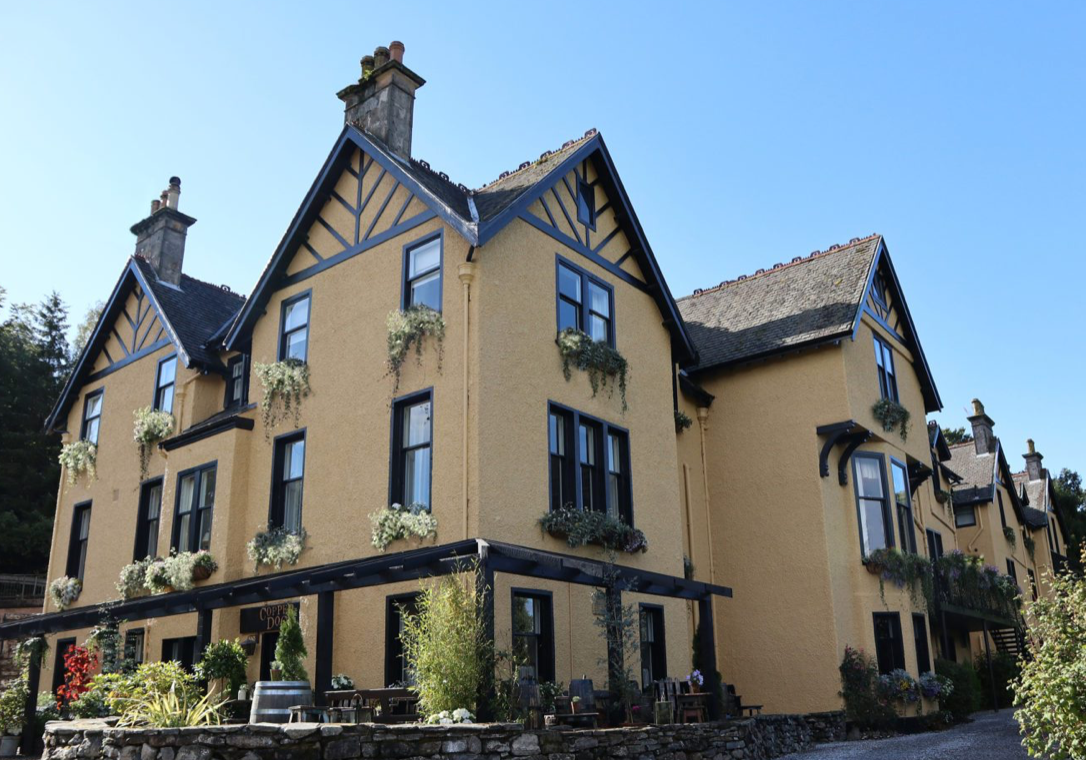
Craighellachie hotel, Speyside
Doig was also one of the first designers to consider risk. Distilleries, full of heat sources, flammable vapors, and timber, had always been vulnerable to catastrophic fires. Doig developed a fire-extinguishing system designed to be fitted through distillery buildings, reflecting the way he approached distilleries as integrated systems rather than decorative commissions. Even when he was designing for beauty, his purpose was production: getting barley, water, heat, and time to behave predictably and efficiently. Further, Doig was also architect for the Craigellachie Hotel and a number of other grand houses in the area, including Rothes Glen, located between Rothes and Elgin, and built by Rosyth of Elgin in 1893
The end of Charles Chree Doig’s fascinating life was, ironically, tied to the outdoors he loved. He became violently ill while hunting on moorland near Forres and died abruptly on 28 September 1918, at the age of 63. His death did not end the Doig name in architecture, however. Two of his sons, Charles (Junior) and Willie, became architects as well, and the family practice continued before being absorbed into another firm years later. Thousands of the Doigs’ plans have remained preserved in Elgin, leaving an enduring paper trail as substantial as the skyline legacy that still dots the Speyside landscape.
In the end, Doig stood at the intersection where professionalism and intelligence crossed with rapid industrialization in exactly the right time and place. He arrived from a farm in Angus with work ethic, learned the craft through an experienced mentor in Meigle, sharpened his surveying and engineering instincts in Elgin, and then helped standardize what a modern Scottish distillery looked like. In the process, he gave Scotch whisky one of its most recognizable silhouettes: the pagoda-capped ventilator that still “reads” as whisky, even when it has now become, at many distilleries, more symbol than actual necessity.
Sources:
Moray Council Local Heritage Service, “People Index Entry for Charles Chree Doig”, libindx.moray.gov.uk
Scotch Whisky, “Whisky heroes: Charles Doig”, Gavin D. Smith, 10 September 2015, scotchwhisky.com
Whisky Magazine, Issue 13, “A pioneer of the Spirit”, Stewart McBain, 16 December 2000, whiskymag.com
Historic Environment Scotland, “Listed Building Record for Dallas Dhu Distillery”, historicenvironment.scot / portal.historicenvironment.scot
Dictionary of Irish Architects/entry for Charles Chree Doig, dia.ie
Master of Malt (blog), “Whisky Heroes: The Architects Who Made the Mould”, masterofmalt.com
Edinburgh Whiskey Academy, “ Charles Doig…”, 21 May 2025, edinburghwhiskeyacademy.com
Contributed by Tracy McLemore, Fairview, Tennessee USA