John Dewar, Jr.
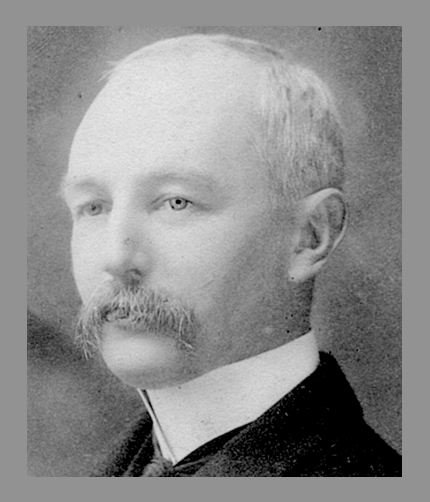

John Alexander Dewar, the John Dewar, Jr., who became 1st Baron Forteviot, was born into a Perth family that was already turning whisky from a local trade into a branded business. He was born 6 June 1856, in Perth, Scotland, one of the seven ambitious boys born to John Dewar, Sr., and Jane Gow Dewar. By the time John, Jr., was old enough to understand work, his father had opened a wine and spirits shop, and the family’s early reputation for blended whisky had begun to form. The shop did not function only as a storefront, it became a place where multiple Dewar children learned the rhythms of the trade.
From an early age, John Alexander had an aptitude for business. He carried himself with the quiet seriousness of someone who had grown accustomed to responsibility earlier than most young men of his era. He could scan a warehouse ledger and detect a discrepancy in grain purchases or cask counts almost instinctively, and he treated the distillery’s books with a kind of guarded reverence, as if the family’s reputation were written in every column of figures. While older merchants occasionally mistook his reserve for aloofness, it was more accurately the habit of a young man who preferred to listen, calculate, and verify before speaking. He possessed a careful, orderly mind well suited to the legal documents, excise records, and account books that governed a nineteenth-century distillery, and he took a quiet pride in keeping them precise. Yet that same discipline sometimes tipped into stubbornness. He distrusted risky ideas, even promising ones, and he could grow impatient with workers who treated details casually. Still, beneath that caution sat a steady ambition. He understood that the distillery would one day rest on his judgment, and he intended to prove himself worthy of the name already painted above its doors. Naturally, then, in 1876, at age 20, John Alexander was made a partner in the family firm, and when John Dewar, Sr., died in 1880, the business did not pass to distant managers, it passed to two of his sons, John Alexander and Tommy. At their father’s death, John Alexander was24, and Tommy was 16.
That moment was the start of a two-man division of labor that would define Dewar’s for decades. John Alexander became the steady internal force: the chairman-and-operations mind. Tommy became the outward-facing force: sales, travel, and relentless market-making. The brand’s later global fame often credits Tommy’s flair, but the company’s institutional shape, its capital structure, its production strategy, and its political stature in Perth bears John Alexander’s fingerprints. In 1886, the firm was renamed John Dewar & Sons, and the two very close, yet very dissimilar brothers continued building their modern whisky dynasty.
In 1884, John Alexander married Elsie Johann (Joan) Tod, and their marriage produced a large family, including John Dewar III (later 2nd Baron Forteviot), and five daughters. Tragically, Elsie Tod Dewar died in 1899. Six years later, John Alexander remarried to Margaret Elizabeth Holland and that second marriage added two more children, Henry Dewar and Irene Dewar.
The Dewars built their reputation first as blenders, but the late 1890s forced a strategic decision. Malt reserves were low and, therefore suppliers could charge at will for their product. By that time, Dewar’s was booming, so, in 1898, John Alexander commissioned the Aberfeldy distillery, only a few miles from the area tied to the family’s earlier roots. This was the blunt industrial logic of a brand trying to meet demand without losing its signature profile. The following year, Dewar’s White Label, the expression that would become the flagship, was launched. Around that time, John also professionalized the company’s structure, and in 1897, the business was reconstructed as a public company, issuing substantial stock shares; by that point it maintained offices across all major UK and a few international cities.
But Dewar’s global rise did not pull John Alexander away from politics, it equipped him for it. He entered Parliament as Member of Parliament for Inverness-shire, serving from 1 October 1900 until his elevation to the Lords during the First World War.
His political and civic identity was also strongly tied to Perth. He was made Lord Provostof Perth (more than once), and was by then a locally-famous business magnate whose success and philanthropy became part of Perth’s civic fabric. In 1907, he was created a baronet; in January 1917, he entered the peerage as Baron Forteviot, of Dupplin in the County of Perth. From that point, he was no longer merely a whisky businessman who sat in the Commons. He became a titled figure whose name linked whisky, civic authority, and national politics. One of the most durable public-policy episodes associated with him is the Dewar Commission. In 1912, he chaired a major inquiry into healthcare provision in the Highlands and Islands, work that fed into the creation of the Highlands and Islands Medical Service.
The final chapter of John Alexander’s working life unfolded under the shadow of world events that threatened the entire Scotch trade. Following the Great War, market disruption and then the tightening effects of global regulation necessitated John Dewar & Sons’ merging into Distillers Company Ltd (DCL), a consolidation meant to protect the industry and the business in a volatile era. But even then, John Alexander remained closely identified with the larger firm’s leadership as chairman.
John Alexander Dewar died on 23 November 1929, at the age of 73. He was buried with his family at Aberdalgie, near Perth, close to the land and the civic world that had framed his entire public life. By the time of his death, Dewar’s was no longer a Perth shop or even merely a successful blender. It was a global Scotch force anchored by controlled production at Aberfeldy and sustained by a corporate structure robust enough to survive the chaotic century that followed. If John Dewar, Sr., had provided the steady founding base and Tommy Dewar supplied the brand’s swagger, John Alexander Dewar supplied its architecture: the disciplined expansion, the supply control, the civic legitimacy, and the long chairmanship that carried Dewar’s from family enterprise into enduring institution.
Sources:
Whiskypedia, “Dewar’s”, scotchwhisky.com
UK Parliament, “Mr John Dewar (1856–1929)”, api.parliament.uk
Made in Perth, “John Alexander Dewar ~ Distiller”, staff, July 11, 2014, Made in Perth.
University of Strathclyde repository | Strathprints (PDF), “Dewar’s Scotch Whisky, Prosociality, Politics, and Place—1846–1930”, Neil G. MacKenzie et al., 2025
Difford’s Guide, “History—John Dewar and Sons”, diffordsguide.com
Contributed by Tracy McLemore, Fairview, Tennessee USA