
John Drummond

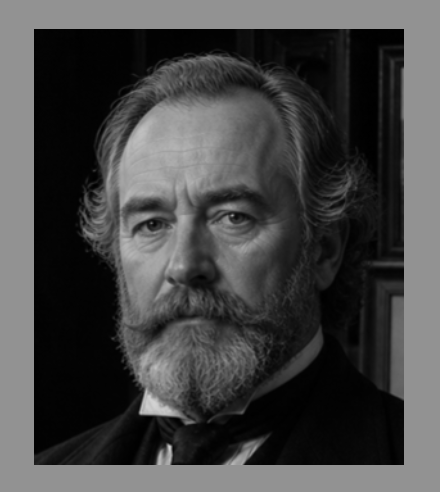
There are no actual photographs of John Drummond. Above
is an AI-generated image of him based on facts known about his life.
John Drummond became a defining figure in the history of what became Glenturret Distillery during the nineteenth century. His career linked the old Highland whisky trade to the increasingly industrialized Scotch whiskyindustry that developed during the Victorian era. Although Glenturret itself traces its roots to earlier illicit distilling operations in Perthshire, Drummond helped shape the distillery into a stable commercialenterprise during a period when legal whisky production was expandingrapidly across Scotland.
When Drummond was born in 1810, his family already had longstanding ties to the whisky economy around Crieff, a town that occupied a strategicposition at the edge of the Highlands. For generations, Crieff had functioned as a commercial gateway where cattle drovers, merchants, and illicit whisky traders converged. By 1825, legal distilling was beginning to replace the older smuggling economy, and families with agricultural or trading experience were uniquely positioned to profit from the transition. John Drummond entered the industry during precisely this moment. Yet before becoming associated specifically with distilling, Drummond worked in agricultural commerce and whisky trading in Perthshire, where he dealt in grain and spiritdistribution, both natural extensions of the region’s farming economy. These early experiences were essentialpreparation for operating a Highland distillery during a period of growing competition and increasing government oversight.
On December 4, 1836, John Drummond married Christian Cameron in Monzie, Perth & Kinross. Within five years, 3 children had been born to the union: Mary Drummond (born in 1837); John Drummond, Jr., (born in 1839); and Janet Drummond (born in 1841). In about 1845, with a wife and three children, Drummond decided to try his hand at distillery operations, and the nearby “The Hosh” distillery provoked his interest. Unfortunately, The Hosh possessed a complicated history dating back to 1717. The site near Crieff had long been associated with rough, illicit whisky production, and had sported multiple names through the years and persevered through various ownership structures. Only over time had it finally evolved into a respectable distillery. Meanwhile, legal distilling operations had only recently emerged there very cautiously. But the distillery provided an experienced, if apprehensive, labor pool, its location beside Loch Turret provided an abundant water source, and nearby barley fields supported sufficient whisky production, giving Drummond all the basic resources he needed for quality, legal whisky. His management coincided with the new ownership of John McCallum.
So John Drummond became the central management figure connected to the Hoth distillery operation during its critical nineteenth-century development. Under his involvement, Hoth navigated the volatile whisky market of Victorian Scotland. This was not an easy period for distillers. Economic downturns, changing taxation systems, fluctuations in grain prices, and transportation challenges all threatened smaller Highland operations. Distillers who survived required discipline and commercial adaptability as much as technical distilling skill. Drummond helped position Hosh as a reliable producer of Highland malt whisky at a time when blending houses increasingly demanded consistent spirit supplies. During that time, blended Scotch whisky rose dramatically in popularity, especially after improvements in blending techniques and the expansion of rail transport. Distilleries capable of producing dependable malt whisky became increasingly valuable suppliers to merchants and blenders centered in Glasgow, Edinburgh, and beyond.
To make matters even more difficult, nineteenth-century whisky production also demanded careful navigation of new government regulations. Following the Excise Act reforms of the 1820s, legal distillers operated under ever-increasing scrutiny. Accurate accounting, bonded warehousing, and tax compliance became essential. Distilleries that failed to maintain financial discipline frequently collapsed or were shut down. Further, operations of the time were heavily labor-intensive, requiring coordination between maltmen, mashmen, coopers, excisemen, and farm workers. Distillery managers in this period often handled every aspect of the business personally, from grain purchasing and payroll to negotiations with spirit merchants. Drummond’s long association with the distillery suggests he possessed both technical understanding and commercial resilience.
Drummond also surely operated under enormous social pressure. Within the regional whisky community, distillery owners and managers in Perthshire occupied important positions in local society; they employed substantial numbers of workers, purchased grain from surrounding farms, and contributed to regional commerce. Successful distillers often became respected commercial figures whose fortunes were closely tied to the prosperity of their towns. Fortunately, Hosh survived repeated industry downturns during the century, further indication of comparatively stable management during Drummond’s involvement. Unfortunately, other than some routine business documentation, after the mid-1850s,little else is told of John Drummond or his family in reference to the Hosh distillery. Its official moniker was changed in 1873, when it was called Glenturret for the first time, named for the burn by which it sat.
John Drummond is thought to have died about 1874, and ownership of Glenturret was taken over by Thomas Stewart the following year.
The latter half of the nineteenth century brought major transformation to Scotch whisky. The phylloxera crisis in France devastated cognac production, pushing many drinkers toward Scotch whisky. Demand surged. Rail networks expanded distribution. Blended whisky firms grew into powerful international businesses. Distilleries capable of maintaining production through these changes became increasingly valuable assets. Glenturret endured through this transition, with none other than John Drummond having played an important role in sustaining the operation during these formative decades. And although Glenturret later passed through multiple ownership changes and periodic closures, its nineteenth-century survival owed much to John Drummond who, with little distillery experience, stepped into an important job at a vital time and stabilized Highland distilling after the chaotic smuggling era and before the consolidation era of the modern Scotch whisky industry. He belonged to the generation that transformed whisky from a largely regional agricultural product into a globally traded spirit.
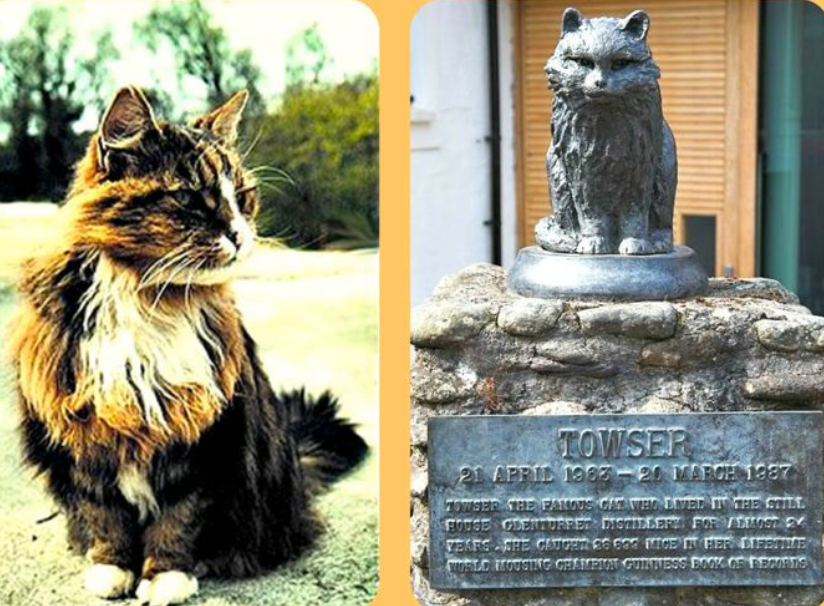
Today, Glenturret is recognized as Scotland’s oldest working distillery, and one of the most important parts of Perthshire’s whisky heritage. It is also a major tourist draw, partly due to the story of the still-beloved “Towser,” born in 1963, who served as Glenturret's distillery cat for a full 24 years until her passing in 1987. Towser caught an actual Guinness World Record 28,899 mice during her tenure, laying the carcasses out dutifully on the stillhouse floor each morning to be inspected by the stillman.
The picturesque site beside the Turret Burn still attracts visitors from around the world, yet beneath the modern visitor experience lies the legacy of nineteenth-century operators who preserved whisky through difficult decades. John Drummond stands among those foundational figures whose steady management helped secure Glenturret’s place in Scotch whisky history.
Sources:
The Whisky Distilleries of the United Kingdom, Alfred Barnard, 1887, archive.org
Malt Whisky Companion, Michael Jackson, 1989
Glenturret Distillery official website, “History”, theglenturret.com
Historic Environment Scotland, “Archives and Research: Glenturret Distillery”, historicenvironment.scot
Undiscovered Scotland, “Glenturret Distillery,” undiscoveredscotland.co.uk
Wikitree (ancestry), “John Drummond, b. 1810”, wikitree.com
Contributed by Tracy McLemore, Fairview, Tennessee USA