
John Duff

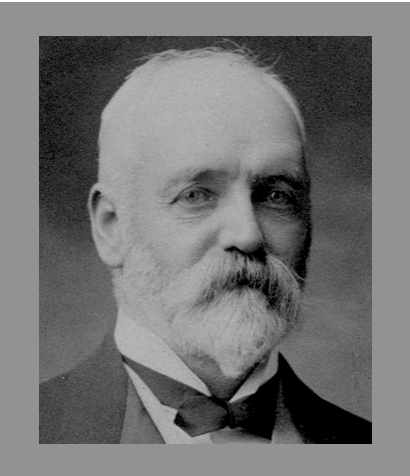
John Duff was one of the great entrepreneurial figures of the late nineteenth-century Scotch whisky industry, a builder of distilleries whose ambition stretched far beyond Speyside. He is best remembered today as the founder of the Benriach Distillery, established in 1898 near Elgin in northern Speyside. Yet Benriach was only one chapter in a career that carried Duff from Scotland to South Africa and then America before financial disaster overtook his whisky empire at the turn of the twentieth century.
Duff was born in Aberchirder, Aberdeenshire, on 2 September, 1842, to his father James Duff, a shoemaker, and his mother, Eliza Brebner Duff. John had several siblings, including an older brother, William Duff, who served gallantly in the 78th Highlanders in India before being swept overboard and lost at sea.
On 27 September 1867, John Duff married Christina Campbell. The couple lived in Elgin, Moray. Three daughters were soon born to the union: Elizabeth (born 1868), Louise (born 1870), and Janet (born 1872). During his early adulthood, Duff worked as an innkeeper, operating the ‘Fife Arms’ in Lhanbryde. He transitioned into the distilling industry by leveraging this experience to secure a management position at Glendronach Distillery, simultaneously building the network needed to establish his own company, John Duff & Co., in 1876. Later, in 1876, Duff left Glendronach to help launch the Glenlossie distillery.
Glenlossie Distillery had long been a dream of Duff. Having gained considerable experience managing Glendronach, Duff enlisted leading architect Alexander Marshall MacKenzie to draw up plans for his distillery. Glenlossie would be a modern distillery, independent of the troublesome and complicated steam power that was common in those days. Therefore, MacKenzie incorporated the natural slope of the land to build a waterwheel to run all the distillery’s machinery. Before long, construction costs began to balloon, so Duff ended up enlisting three friends as partners in the enterprise: public prosecutor Alexander Allen, land surveyor H.M.S. Mackay, and John Hopkins, a well-known blender.
With Duff running the company, Scotch consumption skyrocketing, and Glenlossie booming, the distillery was enormously profitable during its first years. Nevertheless, in 1888, after almost ten years of successfully operating the Glenlossie distillery, the ever-entrepreneurial Duff, seeking greater independence from the financial constraints of his partners, sold his share in Glenlossie. Duff decided to pack up and move with his family to South Africa. There, he planned to build the country’s first whisky distillery in the Transvaal. Unfortunately, after sinking huge amounts of money into the project, Duff had badly underestimated the political tensions that were bubbling away in that nation caused by resentment of British colonization. Within two years, the entire venture collapsed when South African president Paul Kruger, a man with a mission against anything British, put a stop to it once and for all.
Undaunted, Duff again packed up his family and moved from South Africa to Kentucky in the United States, determined to make American whiskey, this time in a well-established region. Those plans also failed to materialize, and in 1892, the Duff family returned to Scotland.
Fortunately, his experience allowed him to quickly find employment, and soon Duff was working as distillery manager at Aberdeen’s Bon Accord distillery. John, though, was a man who was never to be content with working for others, and he yearned to have another go at building his own distillery. So in 1894, Duff teamed up with Charles Shirres and George Thomson to build Longmorn Distillery. The malt they created there was a big hit with blenders, so Duff bought Thomson and Shirres out of their shares, expecting to reap all the profit for himself. Again successful at first, in 1898, Duff decided to double down and invest another £16,000 to build BenRiach Distillery.
The timing proved disastrous. Shortly after Benriach opened, the entire Scotch whisky industry was utterly rocked by the collapse of Pattison’s Ltd., one of the major whisky brokers and blending firms of the era. The so-called “Pattison Crash” of 1898–1899 triggered financial panic throughout the whisky trade and destroyed many newly established distilleries. Both Longmorn and Benriach were badly affected. Duff was financially ruined by the collapse of his distilleries.
As a result of the disaster, Benriach itself survived only briefly as an operating distillery in its original form. Production ceased around 1900. The buildings remained intact, which later allowed the distillery to reopen in 1965 under new ownership. Today, Benriach is regarded as one of Speyside’s most distinctive single malt distilleries, known for producing peated, unpeated, and triple-distilled whiskies.
Duff died on May 1, 1919, in Elgin, and is buried there, where he had lived most of his life, discounting his travels to South Africa and America. He had spent the remaining two decades of his life broke and living in relative obscurity. He was surely mournful that he lived to see Benriach abandoned, falling into a "silent" period starting in 1900. It would not produce spirit again for 65 years.
Although Duff’s business collapse overshadowed the end of his career, he should be portrayed sympathetically. While his finances failed, the distilleries he created endured and ultimately prospered. Longmorn became one of the great blending malts of Scotland, and Benriach eventually emerged as a respected single malt in its own right. Duff’s work also indirectly influenced the global whisky industry in unexpected ways. In the 1930s, Longmorn hosted Masataka Taketsuru, the future founder of Nikka and one of the architects of Japanese whisky, whose experiences there later shaped the entire Japanese distilling tradition.
So John Duff’s influence on Scotch whisky is undeniable. In an age of aggressive industrial expansion, he helped shape the physical and commercial landscape of Speyside whisky production. More than a century after his death, the distilleries he founded continue to produce whisky enjoyed around the world. That enduring success stands as the clearest testament to John Duff’s entrepreneurial vision.
Sources:
Benriach Distillery official website, “Our Heritage” | “About Us”, benrachdistillery.com
Longmorn Distillery official website, “The Longmorn Story”, longmorndistillery.com
ScotchWhisky.com, “Benriach”, scotchwhisky.com
WhiskyCiti, “Longmorn”, whiskyciti.com
Contributed by Tracy McLemore, Fairview, Tennessee USA