Peter Dawson

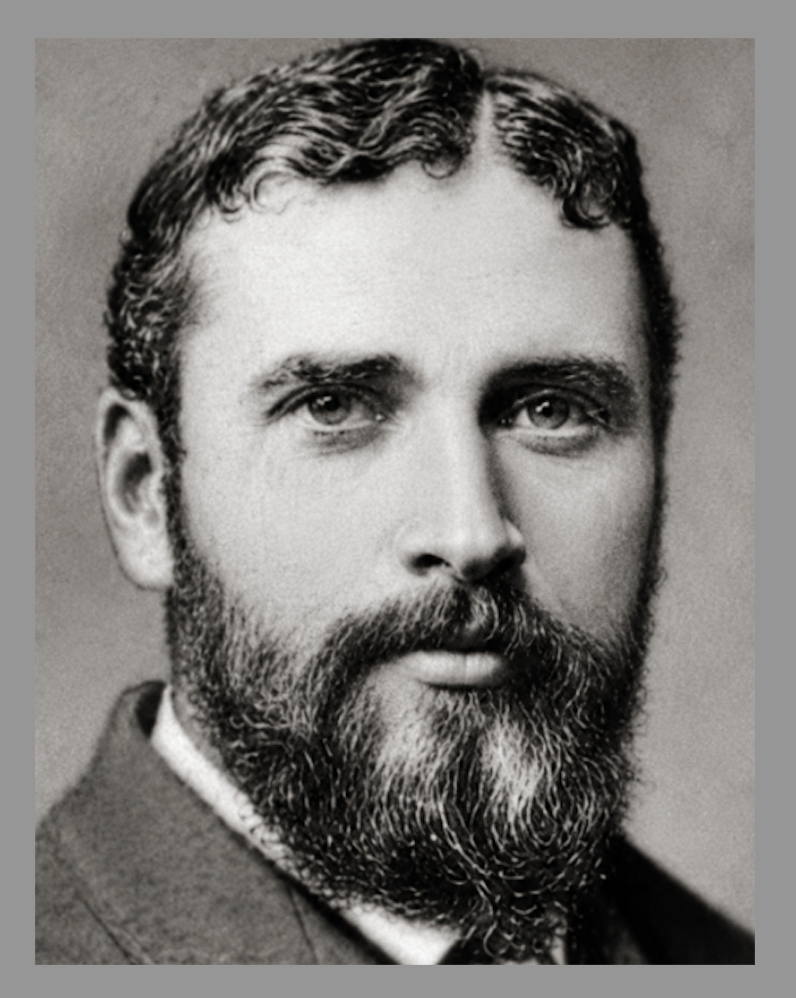
Peter Dawson was descended from a long line of distillers near the hamlet of Glenlivet beginning with his grandfather in 1802. Half a century later, he was born there himself in one of the great distilling districts in Scotland. In those days, Glenlivet was a wild, upland village, hemmed in, not by the constriction of the city, but by heather-clad valleys and steep ridges.
Not much is known about Dawson’s very early life, but as an adult, he was one of the great entrepreneurial figures of the late Victorian Scotch whisky trade. He was a man whose ambition and flair for publicity helped shape the modern whisky industry during one of its most volatile eras. Dawson built distilleries, developed internationally recognized blends, cultivated royal endorsements, and aggressively marketed Scotch whisky abroad at a time when the industry was transforming from a regional trade into a global business.
Dawson entered business life at a relatively young age. He initially worked as a grain and seed merchant. By 1882 he had established Peter Dawson Ltd. in Glasgow, operating first as a grain merchant before recognizing the far greater profits available in whisky maturation, blending, and export. Scotland’s whisky trade was then entering an extraordinary period of expansion. Blended Scotch whisky was becoming fashionable throughout Britain and abroad, aided by the phylloxera crisis that devastated French vineyards and disrupted the cognac industry.
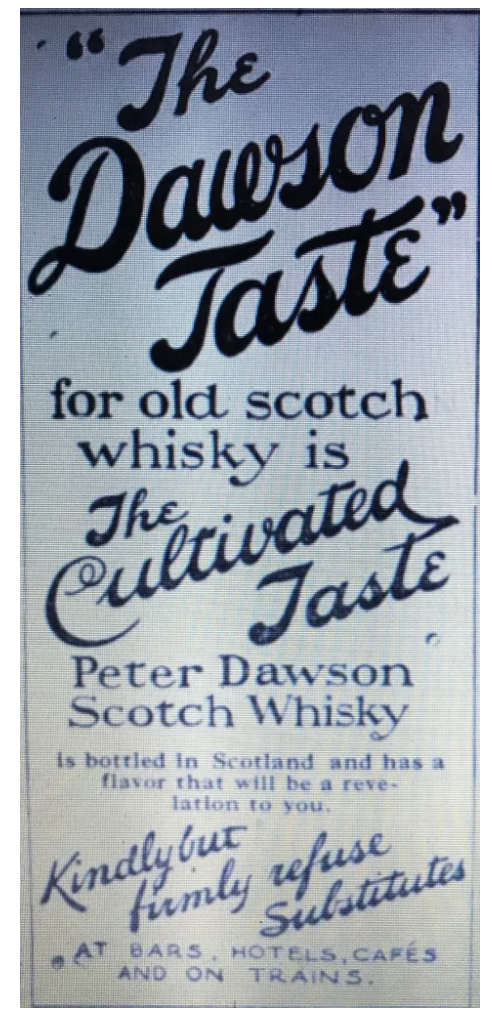
Dawson possessed both commercial instincts and a showman’s personality. He was described as unusually gifted at publicity. Dawson understood early on that whisky could be marketed not simply as a drink, but as a branded luxury product tied to heritage, purity, and prestige. During the 1890s he became known for spectacular promotional claims and carefully cultivated endorsements. One of Dawson’s earliest direct ventures into distilling came in 1887, when he briefly acquired Auchnagie Distillery in Perthshire. The distillery was small and remote, and Alfred Barnard, the great Victorian chronicler of Britain’s distilleries, visited during Dawson’s ownership. Barnard recorded that at the time production had temporarily ceased because ‘the weather was too warm for malting.’ Dawson later sold Auchnagie to John Dewar & Sons. Although his ownership was brief, the experience taught him valuable lessons about weather, water supply, transportation, production scale, and the realities of operating a rural Highland distillery.
But by 1891, Dawson had become deeply involved in the rapidly expanding Speyside whisky industry. In 1893, he joined a consortium that built Convalmore Distillery in Dufftown. Convalmore reflected the industrial optimism of the era, when investors believed worldwide demand for Scotch whisky would continue growing indefinitely. Ever the showman, Dawson made headlines for creating a single vatting of 20,370 gallons, a record for the time, which was later bottled as Peter Dawson’s Blended Scotch. The mammoth proportions consisted of component parts which represented the matured products of twenty-five stills, and the total weight of which was more than sixty tons. The diameter of the vat used for the undertaking was eighteen and a half feet, and it had a depth of eight feet. It was surrounded with eight iron hoops, each weighing 50 kg, all unheard-of proportions for the time.
Besides being a distiller and blender, Dawson was the co-inventor of what was known as the “Dawson-Dowell Patent Lorry Drag.” The 1891 design was an early wagon and lorry braking system. To slow heavy horse-drawn or early motorized vehicles on steep descents, drivers would lock the rear wheels using a heavy chain and let the vehicle slide on a metal "shoe" or "skid" to increase friction and protect the wheels or tires. The Dawson-Dowell drag allowed the driver to operate and release the drag without having to leave the front of the vehicle, maintaining better control, improving controllability, safety, and cost effectiveness of the braking components
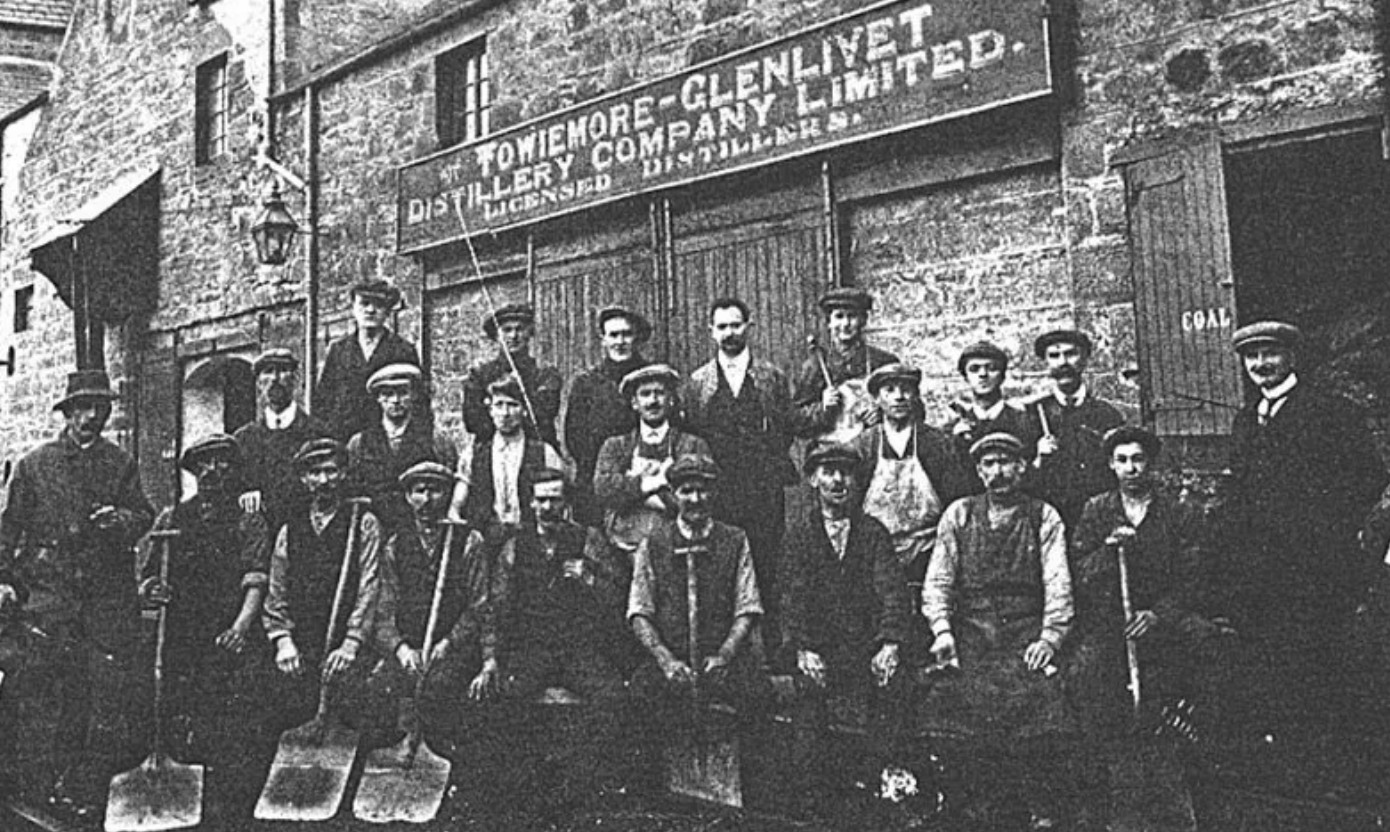
Yet Peter Dawson was perhaps known best for his founding and operation of Towiemore Distillery in the parish of Botriphnie, near Dufftown. Early construction of Towiemore started in 1896, followed by the commencement of distilling in 1898. Dawson insisted that he employed only “respected workers and managers.” The distillery became associated with technical modernization and careful spirit production. Dawson emphasized purity and maturity in whisky production. In one widely quoted statement, Dawson argued that poorly made and immature whiskies caused social harm, while properly matured whisky represented a more civilized product. He even claimed that producing pure whisky contributed indirectly to temperance by discouraging consumption of inferior spirits. Such remarks reflected the period’s growing debate over alcohol quality, public health, and industrial regulation. His commercial reach expanded internationally. His whiskies were exported widely, and some bottles carried the seal of King Alfonso XIII of Spain after Dawson became an official supplier to the Spanish Royal Household. The best-known brands that arose from Towiemore during that time included Peter Dawson’s Special, Dawson’s Extra Special, and Old Curio. True to their founder’s form, the whiskies achieved significant commercial visibility. Soon after its opening, however, Towiemore ultimately fell victim to a series of misfortunes, including a devastating fire in 1904. Also, Towiemore drew its water from the Towie Burn, a source promoted as exclusive to the distillery. Yet for a brief time Towiemore experienced serious water supply/clouding problems from an unknown source that prompted blenders to temporarily stop purchasing Towiemore liquid
By 1910, however, good fortune again saved the brand when headlines read that Capt. Robert Falcon Scott chose Towiemore malt whisky as his ‘whisky of choice’ on his attempt for the Terra Nova Antarctic expedition, forever linking Dawson’s distillery with one of the heroic age’s most famous explorations to attempt reach the South Pole.
Unfortunately, much like Scott’s ill-fated voyage, the boom period for Peter Dawson and Scotch whisky did not continue. Dawson was hindered by the fallout from the Pattison crash of 1898, which ultimately closed Convalmore distillery, eventually rendering it bankrupt in 1905. By the time Dawson had begun to recover from that loss, World War I was upon Britain, and nearly all Scotch distilleries were closed by government order due to wartime restrictions.
After the war, Towiemore continued to limp along, but by 1924, a period of major consolidation of the Scotch whisky industry was underway. In the interim, Dawson’s company did pick up Balmenach distillery in nearby Cromdale in 1922. Dawson reportedly had big ambitions for the brand, and a preemptive trademark was lodged in the US in 1923 in anticipation of Prohibition being lifted. However, that was not to occur for yet another decade. Soon, other financial difficulties affecting the company lead to Peter Dawson Ltd., along with 2.9 million gallons of maturing stock, as well as Balmenach, being acquired by Buchanan-Dewar, John Walker, and DCL in 1924. At that point, Peter Dawson joined the board of the new company, and he remained an important industry figure for the rest of his life. The larger company eventually became a subsidiary of DCL, which ultimately became the forerunner to Diageo. The acquisition reflected the broader consolidation of the Scotch whisky trade during the interwar period. Independent entrepreneurs like Dawson increasingly disappeared as large corporate groups absorbed brands, warehouses, and distilleries into integrated whisky empires
Peter Dawson died in March of 1937 at the age of 85, and was buried at St. Ninian’s Churchyard in Enzie. By then, Towiemore had operated for approximately 30 years before ts distillery equipment were removed for use elsewhere, while the site itself gradually disappeared. Yet the distillery’s reputation survived among whisky historians and collectors. In the twenty-first century, modern whisky companies devoted to recreating “lost distilleries” revived the Towiemore name, introducing new generations of enthusiasts to Dawson’s Speyside venture.
Although important details of Peter Dawson’s private life remain elusive, his professional career is remarkably well-documented. He represented a particular type of Victorian whisky entrepreneur: ambitious, theatrical, internationally-minded, and deeply committed to branding long before modern advertising agencies transformed the spirits business. He moved fluidly between grain trading, distilling, blending, warehousing, and international export. He embraced publicity, royal endorsements, and technical modernization while navigating market crashes, industrial consolidation, and World War.
Today, Towiemore survives only in fragments of masonry, archival records, and recreated bottlings. Yet Peter Dawson’s influence remains woven into the history of Scotch whisky’s transformation from a regional product into a globally marketed spirit.
Sources:
ScotchWhisky.com, “Peter Dawson”, scotchwhisky.com
The Lost Distillery Company, “Towiemore Distillery”, 2020, lost-distillery.com
Old Glasgow Pubs, John Gorevan, 2002, www.oldglasgowpubs.uk/peterdawson
University of Strathclyde archives, “An Economic History of the Distilling Industry”, stax.strath.ac.uk
Contributed by Tracy McLemore, Fairview, Tennessee USA