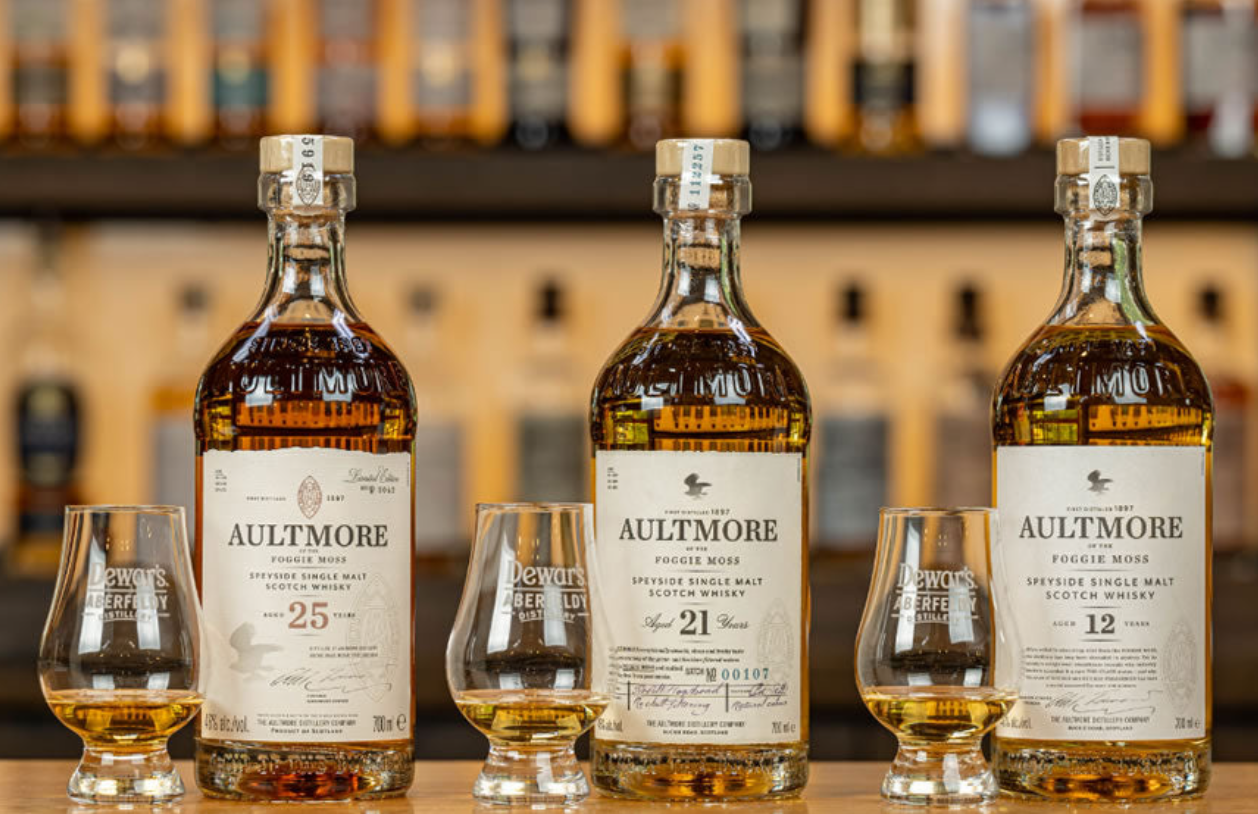
Alexander Edward

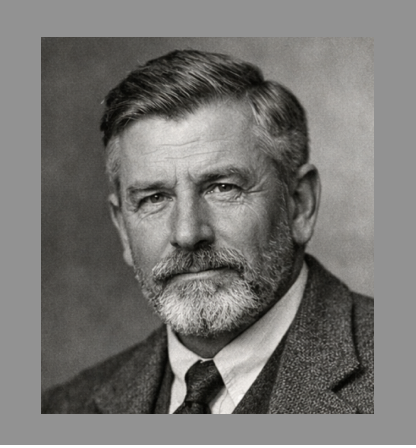
There are no known photographs of Alexander Edward in existence.
Above is an AI-generated image of him based on facts known about his life.
Alexander Edward’s life has one of those beginnings that later seems almost like foreshadowing. He was born on 5 December 1865 at Wester Gauldwell, Boharm, in Moray, into a whisky family already positioned at the point where Speyside’s rural economy was turning into an export industry. His father, David Edward, was an experienced distiller who would acquire the license for Benrinnes and also held land on the edge of Craigellachie, a small but strategically important settlement sitting on a railway junction that could draw visitors inward and whisky outward at the same moment.
Edward entered whisky life early and visibly. By 1890, at just twenty-five, he joined a consortium with Peter Mackie to purchase his father’s Craigellachie land and build what became Craigellachie Distillery. Constructed in 1891 by a company of blenders and merchants led by Edward, the distillery reflected a changing industry: whisky was no longer only about who could make spirit, but about who could control capital, transport, and markets.
His rise accelerated after his father’s death in 1893. Edward inherited Benrinnes, then formed a new consortium and sold the distillery for £32,000, while retaining stock but remaining involved in management at both Benrinnes and Craigellachie. He had learned quickly how to build, sell, and remain embedded.
Edward’s interests extended beyond Speyside. In 1894 newspapers tracked him traveling through the Mediterranean and Morocco, last heard from at Gibraltar before returning home. He moved in circles where his movements were considered newsworthy. Back in Craigellachie, he invested heavily in infrastructure, expanding a brick-and-tile works and introducing new machinery. He also pursued a larger idea that set him apart: he saw the River Spey not only as a whisky artery, but as a tourism corridor. With rail access bringing visitors as easily as casks, he built summer villas constructed from his own bricks, and began shaping Craigellachie as both industrial village and resort. That vision culminated in the Craigellachie Hotel. In 1896, he committed to a “first-class hotel” aimed at sportsmen and affluent travellers, complete with access to a Spey fishing boat. Newspapers soon described him as “probably the most expert financier in the North of Scotland,” not simply praise, but evidence that Edward had become a recognized regional figure while still in his early thirties.
While the hotel was rising, Edward laid the foundations for Aultmore Distillery. Building began in 1896, making Aultmore the first distillery he created entirely from scratch. He commissioned Charles Doig as architect and positioned Aultmore as another pillar in a growing network. At the same time he invested in Benromach in 1898 and Dallas Dhu the following year. Distilleries, hotel, brickworks, and village development formed a single strategy: whisky production reinforced tourism, tourism reinforced whisky, and both were supported by transport and materials under his control.
Alliances shifted as his empire expanded. After founding Craigellachie with Peter Mackie, Edward stepped back from operations and aligned more closely with Tommy Dewar, a close friend with whom he shared a passion for motoring. Friendship and business clearly travelled together in Edward’s world.
In 1898 he was appointed a Justice of the Peace. The following year he married Cicely Mary Godman, though contemporary reports suggest the marriage was unhappy and produced no children. By about 1905 he had moved toward whisky broking in Edinburgh, fitting for a man who understood whisky as stock, and relationships as much as spirit. Even then he remained a public figure: in 1903 his continued love for cars and driving resulted in a large fine for speeding, a rare and gossip-worthy “black mark” on a respected local dignitary.
Later life revealed a sustained pattern of Edward’s civic giving. In 1926 he opened a fund for farmers concerned about cheap, imported grain; in 1928 he gifted the Kintail sporting estate to the Inverness Northern Infirmary; during the Second World War he allowed Sanquhar to be used as an auxiliary hospital. These were substantial acts that reflected how he saw his role; as landowner, organizer, and regional patron.
Edward died on 3 March 1946, aged eighty. His obituary called him “one of the oldest and best-known distillers in Scotland,” and also remembered him as a skilled sportsman who loved automobiles, rod, and gun. His legacy lay not only in stillhouses and ledgers, but in a particular model of Scottish success: industry tied to land, tourism tied to transport, whisky tied to both.
Aultmore, in that light, was never an isolated venture. It was conceived alongside a hotel designed by a specialist architect, and placed within a web of distilleries and investments. Alexander Edward did not merely build distilleries—he built Speyside as both an industry and a destination, selling first the whisky, and then the journey by which it was made.
Sources:
ScotchWhisky.com, “Whisky Heroes: Alexander Edward, Craigellachie”, 20 April 2017, Dave Broom
Difford’s Guide, “Aultmore Distillery”, diffordsguide.com
Whiskypedia, “Aultmore”, scotchwhisky.com
Spirit of Speyside Whisky Festival, “Alexander Edward Comes to Life…”, 06 April 2017
The Press and Journal/Aberdeen, UK,“Alexander Edward/Craigellachie”, www.pressandjournal.co.uk/fp/lifestyle/food-and-drink/whisky
Find a Grave/ancestry, “Alexander Edward, Craigellachie”, findagrave.com
WhiskybarPlaza, “Alexander Edward”, www.whiskybarplaza.com/alexander-edward
Contributed by Tracy McLemore, Fairview, Tennessee USA