

Craig Engelhorn

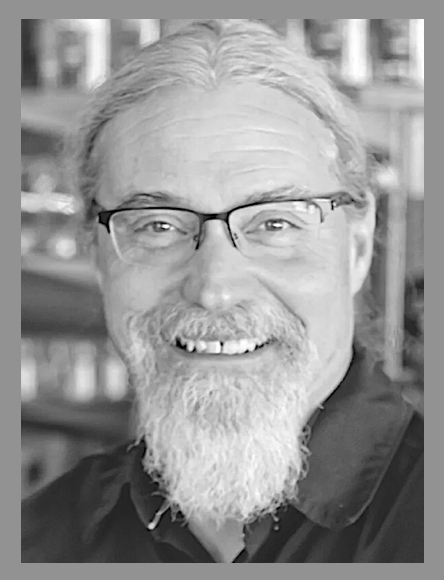
Craig Engelhorn was born on December 5, 1961, and grew up within the kind of Nebraska childhood that could be described as small-town and hands-on. That is, one where curiosity about how things worked showed up early, and where science and engineering felt less like abstractions than tools for solving everyday problems. Engelhorn’s early bent toward building and fixing what was broken eventually became formal training. He earned an electrical engineering degree and entered the world of high-end, invention-heavy industry at AT&T Bell Laboratories. He later described that period as a “dream job,” and it established a pattern that would reappear throughout his life: he gravitated toward complicated systems, learned them thoroughly, and then used that knowledge to build things that did not yet exist.
By his mid-30s, that first career reached a turning point. Engelhorn took a buyout, moved west from Illinois to Colorado, and redirected the same engineering mindset into a world that, on the surface, looked entirely different: beer. In Lyons, he connected with the restaurant Oskar Blues Grill & Brew and its owner, Dale Katechis, at exactly the moment when craft brewing was becoming both a cultural force and a technical playground. Engelhorn was already a committed homebrewer, and he pushed, half teasing and half evangelizing, for the restaurant to install brewing equipment. When it happened, Craig became the person who made it run.
From 1998 to 2002, Engelhorn brewed at Oskar Blues in Lyons. Those years were important for more than the beer itself, because brewing taught him how to scale a recipe without losing its character. It showed him how to manage fermentation as a repeatable process and how to live inside the practical constraints of production. In doing so, he also learned the unglamorous side of beverage making: cleaning, maintenance, supply chains, and the constant pressure of consistency. This was also the period when he met Wayne Anderson, another future co-founder, and the long conversation that eventually became Spirit Hound began to take shape.
In those days, Engelhorn’s interest was not limited to what could be purchased off the shelf, even though the idea of distilling took longer to crystallize. That delay was partly because government regulation has a way of draining the joy out of any new obsession. Engelhorn later recalled that early conversations about state and federal rules “sucked all the fun out” of the notion of starting a DSP in Colorado. But the idea kept simmering. By 2011, his creative attention had shifted decisively toward spirits. Spirit Hound’s own origin story frames that pivot through a recognizable inflection point: after having “struck gold” with a homebrewed beer recipe that became associated with Dale’s Pale Ale, he started dreaming up higher-proof creations.
In 2012, Engelhorn co-partnered to open Spirit Hound Distillers in Lyons, Colorado. The choice of location in a small town in the foothills was not accidental. Lyons is the kind of place where community is not an abstract brand value, and that sense of community can be the difference between surviving and folding when something goes wrong.
Before long, something did go wrong. In September 2013, catastrophic flooding hit Colorado, and Lyons was among the hardest-hit towns. Engelhorn happened to be the partner on site when the distillery flooded. A disabled truck kept him from driving home; he called his wife and told her he would be sleeping at the distillery, expecting nothing worse than an inconvenient night. Instead, he woke early to the sound of water and saw chairs floating in the tasting room. For days, he was the only partner witnessing the damage firsthand, and he began the slow work of assessing what could be saved and what would need to be rebuilt. The “flood” story reveals Engelhorn’s temperament. In the midst of catastrophe, he still spoke like a builder—equipment could be cleaned, losses could be calculated, and the operation would rise again. That calm, do-it-yourself engineering demeanor became one of Spirit Hound’s signature details. The distillery’s all-copper pot still was built by Engelhorn and took more than 500 hours to complete. It is the kind of fact that sounds like marketing until you consider what it implies. He was not merely buying a distillery-in-a-box; he was shaping the tool that would shape the spirit. Over time, that hands-on approach extended beyond the still to a broader insistence on process control and ingredient choices.
Engelhorn’s production philosophy leaned deliberately toward a single-malt and “whisky” sensibility utilizing careful maturation, respect for established best practices, and a preference for rigor over shortcuts. Craig describes himself as a traditionalist who values proven methods and clear definitions such as bottled-in-bond. The same mindset appears in the way he talked about sourcing. Spirit Hound wanted a 100 percent Colorado product, down to malted barley sourced within the state, and he carefully cultivated a long-running supplier relationship to make that possible.
On the personal side, Engelhorn is married to Amanda Engelhorn, who serves as tasting room manager at Spirit Hound. He also has three adult children and several grandchildren.
In many ways, Engelhorn’s career forms a straight line rather than a series of pivots. From Bell Labs to brewing to distilling, the constant has been a fascination with how systems work and a belief that the best way to understand them is to build them yourself. Spirit Hound stands as a physical expression of that belief: a distillery shaped not by trend or spectacle, but by an engineer’s patience, a brewer’s discipline, and a builder’s quiet confidence in doing things the hard way and doing them well.
Sources:
Distiller Magazine, “Interview: Spirit Hound Distillers, Craig Engelhorn & Wayne Anderson”, Virginia Miller, December 1, 2018
Spirit Hound Distillers official website, “About Us / The Spirit Hound Origin Story”, spirithounds.com
Westword, “Craig Engelhorn on weathering…”, Samantha Alviani, September 23, 2013
Thirst Colorado, “Whisky is Serious Business…”, Kyle Kirves, November 24, 2019
Yellow Scene Magazine, “Small Distillery, Big Flavors…”, Chris Curtis, June 28, 2024
Boulder Weekly, “Whiskey Wenches Spirits Society”, Matt Maenpaa, June 30, 2022
Obituary for Jeanette Engelhorn, January 2019, legacy.com
Cowboys & Indians, “From Crop Field to Whiskey Bottle”, Jennifer Nalewicki, January 12, 2015
Contributed by Tracy McLemore, Fairview, Tennessee