Magnus Eunson

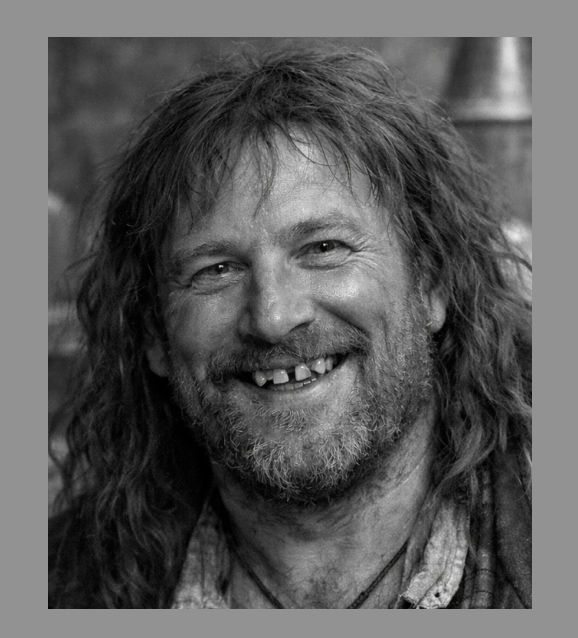
There are no known photographs of Magnus Eunson in existence. Above is an AI-generated image of him based on facts known about his life.
Magnus “Mansie” Eunson sits in Highland Park distillery’s story the way Orkney sits on the map: slightly askew and hard-edged. Eunson was a man who became closely linked to the illicit whisky-making that pre-dated the distillery’s legal life. He was a born character, brimful of pawky humor, resource, and resistance, traits which extricated him from many a scrape. Stories of illicit distillers (“smugglers”) are often imbued with poetic license and passion. Tales of the canny, happy-go-lucky Orkney local outwitting the cowardly, corrupt and doltish representatives of the establishment made Eunson nothing less than a hero in his own time.
On one occasion, Eunson was tipped off about an impending raid on his illegal whiskey-house. When the Excise agents burst in, a solemn “funeral service” was under way, with the coffin resting on supports covered with a white cloth. Just before the covering was raised to reveal the casks on which the coffin lay, the word ‘smallpox,’ was whispered in hushed tones, and the horrified taxmen scurried off with haste.
Eunson was, for a while, a minor church officer in Kirkwall, often described as a beadle or verger. A church beadle was expected to be respectable, seen in public, and trusted with solemn routine. In an island community where illicit distilling and smuggling were widespread, this role made a man both visible and well-positioned. Though clearly a religious man, Eunson carried himself with stubborn pride and was said to have frequently sparred with clerical authority. In 1798, Eunson was brought before the local judge for smuggling, and afterward, lost his position as beadle.
As with all folk heroes, there are several accounts of Eunson’s charm; he employed his quick wit to engage a party of taxmen in banter and humor after they clearly caught him with kegs of smuggled spirit in a cart and insisted he accompany them to Kirkwall to deal with the matter. So entertaining was Mansie that the agents failed to notice a number of his accomplices creep behind the cart and remove the kegs one by one as the rickety wagon made its way towards town. By the time they reached Kirkwall there was no evidence left, so no charges could be brought against the smuggler.
In 1813 Eunson was again arrested for transporting illegal substances. Smuggling on Orkney had by now become so prevalent that on several Sundays, Mansie’s minister denounced the activity as being insidious and un-Christian. Finally, Eunson took this so much to heart that he gave up attending church. When he was later asked about his absence, he insisted that he did still attend church. Said Mansie, “My wife is there every Sunday. The other minister who conducted the service said me and me wife were now one. Either you or he has tellt us a lie.”
Curiously, very few of Mansie’s cases ever went to trial so he was never sentenced for smuggling. This has led to implications that he was merely the front man of a larger, better-organized operation. Ironically, a transfer of deed occurred at Highland Park in 1818, when businessman and farmer Robert Borwick together with his son-in-law, John Robertson became owners of Highland Park Distillery. Robertson was a former Excise man whose duty it was to find and prosecuting smugglers. This was around the time that Scotch whisky was gaining a higher profile; King George IV paid his famous visit to Edinburgh in 1823, in effect granting Scotch whisky royal approval, and the following year the Excise Act halved taxes on spirits. In this short space of time, whisky distilleries were taking out licenses, the King developed a fondness for whisky and tax cuts made Scotch whisky a much more attractive commercial proposition.
By this time, High Park was now officially called Highland Park and in 1826 John Robertson moved south, with Robert Borwick buying out his share in Highland Park. Borwick died in 1840 and the distillery was taken over by his son, George. Thus it went for the small but resilient Orkney distillery; whisky busts and booms, transferences every 15 or 20 years. Few successful distilleries have seen the change of hands so many times and yet maintained relevance. Finally, in 1979, The Edrington Group Ltd., a Glasgow-based privately owned international spirits company purchased Highland Park, which it retains to this day. The group also owns two other renowned single-malt distilleries, The Macallan and The Glenrothes.
Little was ever heard again of Magnus “Mansie” Eunson after the 1818 transfer of High Park to Borwick and Robertson. But his significance to the larger history of Scotch whisky is not small. Highland Park’s modern identity leans into Orkney’s separateness, its heathered peat, its weather, its stubborn self-reliance. The distillery’s own identity places Eunson at the beginning as the “original rebel,” the man whose methods and attitude helped define a place that would later become one of Scotch whisky’s most famous northern outposts. Mansie survives because his church role, the smuggling reputation, the 1798 and the 1813 brush with enforcement were all pivot points in distilling tradition. They all both fit together into a credible portrait to tell the story of how distillers survived and how whisky was really made and moved in Mansie’s day.
Sources:
Highland Park Whisky official website, “Our Story”, highlandparkwhisky.com
Scotch Whisky, “The Tenacity of Orkney’s Early Whisky Makers”, Gavin D. Smith, 08 August 2019, scotchwhisky.com,
WhiskyCorner, “Highland Park Distillery Information”, whiskycorner.co.uk
Whisky and More (blog), “Highland Park”, February 09, 2015, whiskyandmore.co.nz
Difford’s Guide, “Highland Park Distillery”, diffordsguide.com
Old Scottish, “Orkney/Kirkwall Record Guides”, oldscottish.com
Contributed by Tracy McLemore, Fairview, Tennessee USA