James Fleming

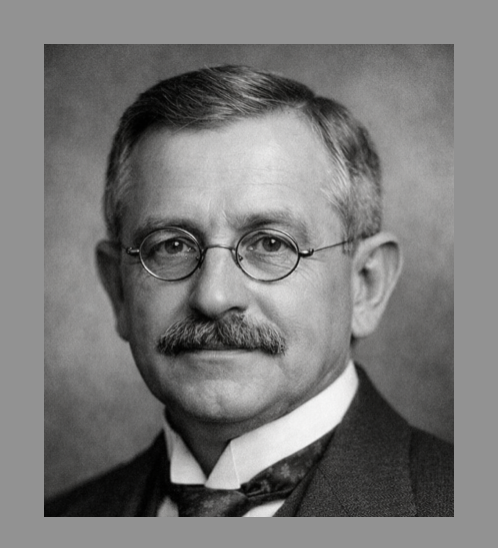
James Fleming’s life belongs to the kind of Highland-and-Speyside story where a man’s public record is made not by loud self-promotion, but by the steady accumulation of roles: farmer’s son, grain man, bank agent, distiller, civic leader, and, by the time he died, a benefactor whose money was still shaping Aberlour years afterward. His own family motto—preserved in the distillery’s modern retelling—was blunt and practical: “Let the deed show.”
Fleming was born and baptized on 1 June 1830 at Inveravon, described in local heritage material as the only son of a tenant farmer at Tomfarclas on the Ballindalloch estate. In the early part of his working life, the traceable facts are more occupational than personal. The same heritage account places him first where many rural boys began: helping on his father’s farm “until manhood,” then leaving agricultural work in search of better-paid employment.
The move he made—out of the field and into commerce—matters to the later whisky story, because it put him into the grain economy that fed Scotland’s distilleries. Fleming next worked as working as a commissioning agent and dealer in the grain trade, an occupation that would have required practical numeracy, relationships with farmers, and the ability to judge markets. That line of work also positioned him close to the distilling world long before he owned a still, because distilleries were among the customers who bought grain in bulk.
By the mid-1860s, Fleming had moved from supplying distilleries to being directly involved with one. He acquired a lease of the Dailuaine Distillery at Carron and held it for ten years, a significant span that likely brought him into the daily realities of production, excise compliance, and whisky trading networks. The same record makes the implication explicit: the lease helped him build connections “in the spirit trade.”
The next fixed point is documentary and municipal rather than romantic or domestic. By the 1871 census, Fleming had moved to Aberlour, the Speyside village at the meeting of the River Spey and the Lour Burn. In 1874, he established a new branch agency for the North of Scotland Bank in the village—an appointment that put him at the center of local business life and made him a natural point of contact for farmers, merchants, and any enterprise that needed credit and reliable accounts.
It is around this period that the clearest public picture of Fleming forms: not just a businessman, but a community figure. He served as an elder of the parish church, chairman of the school board, a county councillor, and town provost. Those are offices that came with responsibility for schooling, local governance, and public order—work that would have required a reputation for sobriety and competence, even in a whisky district.
Fleming’s step into lasting whisky history came in 1879. That year he secured a lease from the Earl of Fife for land on which he would build a new distillery at Aberlour. The distillery was be his own creation rather than a takeover. Fleming built it, and production of his own whisky began there in December 1880. In other words, he arrived in Aberlour as a bank agent and public man, and only afterward anchored his name to the village through a distillery that would eventually become one of Speyside’s best-known single malts.
The surviving public record is far more generous about Fleming’s civic works than about his private household. One important personal detail, however, is preserved in the same local heritage narrative that records his bequests: Fleming left a widow named Margaret, who appears later as an active advocate for a public safety project in the village. Beyond that, readily accessible public summaries emphasize his roles and legacy rather than offering extended coverage of family life, schooling, or siblings; even so, the description of him as his parents’ “only son” strongly suggests a small immediate family.
Fleming’s philanthropy, unlike his domestic life, is unusually concrete. In 1889, Aberlour gained its first public meeting place in the form of the Fleming Hall, which was opened in 1889 and later bequeathed to the town on Fleming’s death. It is the sort of gift that says something about the giver: a town hall is not merely charitable, but civic-minded—an investment in community life and public gathering.
In business, Fleming did not hold the distillery forever. In 1892, he sold the Aberlour distillery to Robert Thorne & Sons. The sale shows that his identity in Aberlour was already larger than ownership of a single enterprise; he remained “Mr. Fleming” of the village in civic and philanthropic terms even after the distillery passed into other hands.
In his final year, Fleming’s concern for Aberlour’s practical welfare becomes especially visible in the language of his bequests. On 11 June 1895, he made a specific provision of £500 for the construction of a steel wire footbridge over the River Spey near the mouth of the burn (the Lour), intended to connect Charlestown with Knockando parish. The timing is striking: it was made two weeks before his death, turning a public hazard into a planned civic improvement with money already assigned to it.
Fleming died in June 1895, aged 65. He was buried in Aberlour, and his grave is in the town cemetery opposite the distillery site. But his death did not end the story of his gifts—because a bequest is, by design, a kind of delayed action. The bridge is a good example. In December 1898, the Spey ferry capsized and two men drowned; local demand for a safe crossing intensified. Fleming’s widow, Margaret, then lobbied for years to overcome resistance connected to the ferry rights, and the pedestrian Victoria Bridge was ultimately completed and opened in 1902. The “penny” tradition attached to the bridge—closing it one day a year and charging a one-penny toll—persisted long enough to become local memory, leaving Aberlour with a landmark that was both practical and symbolic.
The second major delayed gift was medical. The Fleming Cottage Hospital was financed by a legacy from James Fleming and opened on 30 April 1900. Contemporary discussion of the need for infectious-disease accommodation in the district appears in the hospital history, and later commentary praised the hospital as a lasting memorial to his “Christian philanthropy.” Even after death, Fleming’s money helped create isolation and care facilities in a period when epidemics and poor sanitation could devastate small communities.
Truly, there is not much personal information known about James Fleming. He came from a very small household, and it is speculated that he left it having no children with Margaret, thus bequeathing most of his assets. Yet his outward life is unusually well-lit. In that sequence, the motto “Let the deed show” reads less like marketing and more like a summary of how the paper trail remembers him: not by confessional detail nor public record, but by the things he built, financed, and set in motion—all of which has created a lasting legacy where once only a distiller stood.
Sources:
Aberlour Heritage Trail, “Office of James Fleming”, aberlourtrails.org/trails/heritage/locations/james-flemings-office
Historic Environment Scotland, “…Fleming Hall”, portal.historicenvironment.scot
Aberlour Whisky official website, www.aberlour.com/en-us/
Ancestors Family Search “James Fleming (1830–1895)”, ancestors.familysearch.org
The Whiskey Wash, “From Ashes to Acclaim: The Aberlour Distillery Story”, Mark Bostock, 06 December 2024
Contributed by Tracy McLemore, Fairview, Tennessee USA