Charles Grant Gordan

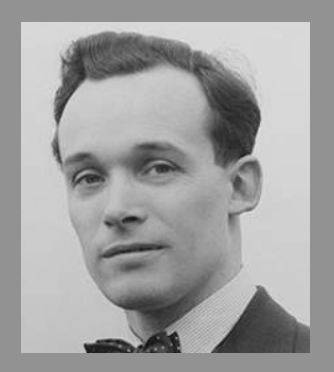
Charles Grant Gordon was born 21 August 1927 in Glasgow, into a family where whisky was not an aspiration but an inheritance with obligations. He was the great-grandson of William Grant, the founder of William Grant & Sons. Charles’ education followed a traditional path for a Scottish business heir of his generation: Glasgow Academy, then the University of Glasgow, where he earned a degree in accounting. In 1951, he qualified as a chartered accountant. That signaled he would not simply inherit a seat, but understand the machinery of a modern company. That same year he joined the family firm. When his father died in 1953, Gordon became a director of William Grant & Sons at just 26, stepping into real responsibility at the same time the Scotch whisky business was accelerating into a more international, brand-led era.
In 1954, Charles married Louise Eccles, and together they had three sons. The line between family and business, in his case, was never a neat one, and Charles was a central force in keeping William Grant & Sons strongly independent and family-owned, as the global drinks industry consolidated around it.
By the early 1960s, the company’s success created a new vulnerability: dependence. William Grant & Sons was an ambitious blender and malt producer, but grain whisky, at least at the volumes required for Grant’s many blends, was largely controlled by a small set of suppliers. Gordon and his colleagues wanted control over their own production decisions, including modern marketing choices that were not always welcomed by suppliers. The response was direct and industrial, and the final decision was that the company should build its own grain distillery. So in 1963, Gordon oversaw the construction of the Girvan complex in South Ayrshire, a feat the company would later describe as being completed in only nine months, with hundreds of local workers involved. During the build it was said that Gordon supervised on site, famously riding his bicycle around the grounds during construction. Girvan soon became the principal source of grain whisky for the company’s blends, especially Grant’s, allowing the firm to scale without surrendering control of its supply chain.
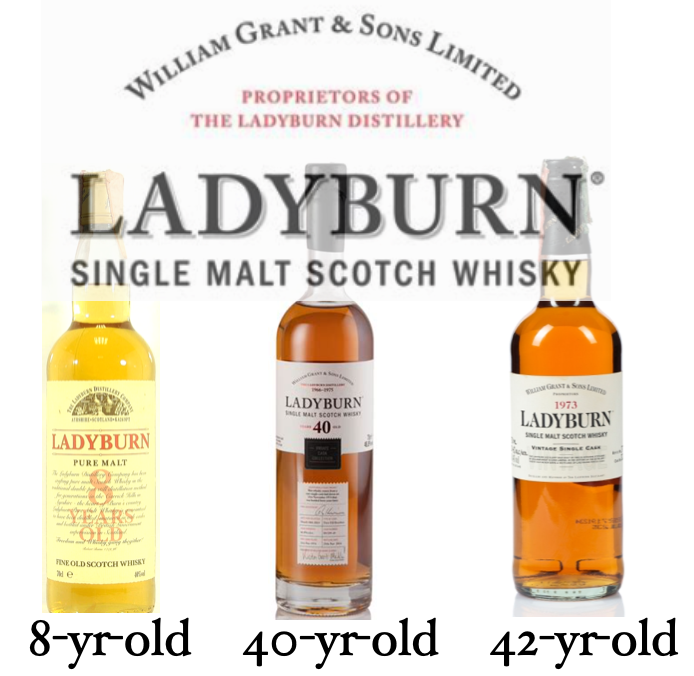
By 1966, Girvan grain distillery had just been completed, but in order to secure their own malt whisky, also needed for blending, they added a malt distillery that they named Ladyburn inside the same Girvan complex. It was hoped that they could free up more of Glenfiddich’s output, since Glenfiddich was starting to grow as a single-malt brand. Ladyburn initially consisted of two pairs of pot stills, allowing the company to produce a steady but limited volume of single malt spirit. The two operations, grain and malt, were therefore physically integrated, sharing site infrastructure, warehouses, and maturation at Girvan, both feeding blended Scotch production. For Gordon, Ladyburn was not a passion project separated from the rest of the firm; it was a logical extension of blending.
The through-line of Gordon’s working life was building capacity, protecting independence, and pushing William Grant & Sons further into the modern world market. His career is regularly framed in the industry press as one of the key forces that helped take Glenfiddich and Grant’s to global prominence while the company stayed outside the orbit of the big conglomerates.
Unfortunately, Ladyburn ran for a remarkably short span of only ten years. It was then dismantled and the Girvan site demolished. Nevertheless, Gordon remained deeply embedded in industry leadership well beyond Ladyburn. By the time he stepped down as chairman in 2008, he had become Life President of the company. His first wife, Louise, died in 2008, and he later married Francesca Morales. Charles Grant Gordon died on 21 December 2013, in New York City, aged 86 years. In the wake of his death, trade and whisky press emphasized not just his position, but the type of authority he carried. Grant was a family chairman who could still be described through the tangible outcomes of the brands he pushed outward, facilities he built from scratch, and independence he defended through infrastructure. In that summation, his Ladyburn was short lived, but is profoundly remembered as an ideal business solution at a critical time in William Grant & Sons blending history.
In 2021, William Grant & Sons began a modern Ladyburn series with Ladyburn 1966 Edition One, built around an exceptionally old surviving cask selection. Brian Kinsman is the Malt Master tasked with selecting the casks used for the Ladyburn 1966 editions, one of which sold at auction for over £80,000. The success of the Ladyburn resurrection has been so evident that in 2025, Kinsman and William Grant & Sons extended the “rebirth” further with a 50-year-old Ladyburn collection.
Sources:
WhiskyCast blog, “Charles Gordon: 1927–2013”, 23 December 2013, whiskycast.com
William Grant & Sons website, “Our Whisky Distillery”, williamgrant.com
Whiskypedia, “Girvan”, scotchwhisky.com
Ladyburn distillery official website, “Heritage”, www.ladyburn.com
GPAGlobal, “Ladyburn Whisky 1966 Edition One”, www.gpaglobal.net
The Spirits Business, “William Grant Unveils 50-year-old Ladyburn” Miona Madsen, 06 February 2025, thespiritsbusiness.com
Contributed by Tracy McLemore, Fairview, Tennessee USA