Daniel Greenlees

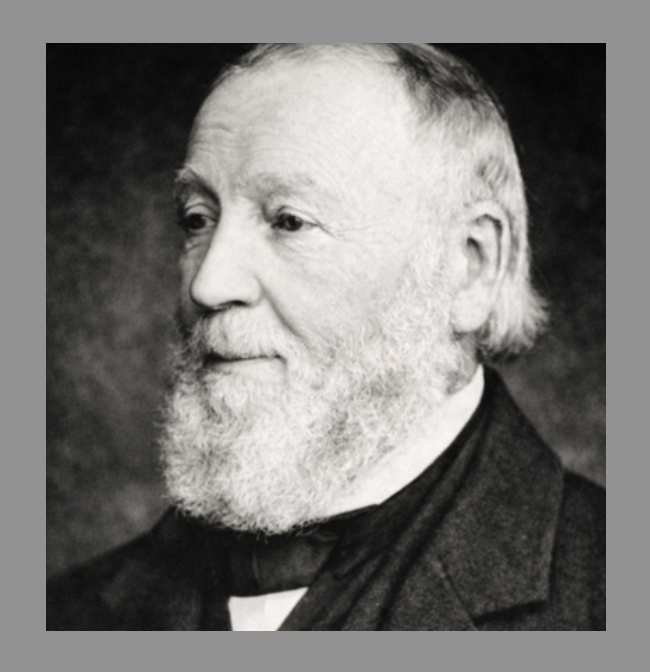
The above image of Daniel Greenness is AI-enhanced
from a real 19th-century low-quality photograph.
Daniel Greenlees was born on 14 April 1796 in Campbeltown, Argyll, the son of William Greenlees, a merchant, and Agnes Andrew. He grew up in a household that included two brothers (Matthew and James) and a sister, Agnes. It was a family constellation that appears again and again in the local record of Campbeltown’s trading and distilling surnames. Even when later profiles admit that not much is known about Daniel’s earliest years, the setting is clear: he was born into a town whose economy was already turning toward whisky, and he lived long enough to see that industry expand into a dense web of partners, plant, warehouses, and shipping, then begin to thin out again.
In Daniel’s youth, Campbeltown was positioned to grow. Illicit distillation had been common on Kintyre, but legal distilling accelerated after the 1823 Excise Act encouraged licensing and investment; just as importantly, the Duke of Argyll improved local infrastructure by turning Crosshill Loch into a reservoir that supplied reliable water for distilling. A steamship link to Glasgow and access to local coal, peat, and barley helped make the town unusually practical for large-scale production. Those developments ensured that Daniel Greenlees would not remain a small, purely local maker. He became a figure in the kind of Campbeltown distilling that required capital, partners, and equipment: an industry, not a cottage trade.
A key date in his personal life, and in the social fabric that underpinned Campbeltown whisky, was 17 February 1824, when Daniel married Mary Colvill. Their union ultimately lasted nearly 65 years, until Mary’s death in 1888. They became parents to eight children; Margaret, Agnes, Janet, Charles, William, Mary, Catharine, and Daniel, and their household remained rooted firmly in Campbeltown the entire time.
Between the 1820s and 1840s, Campbeltown saw a surge of legal whisky-making, with dozens of sites operating, and the area earned its later reputation as a true whisky capital. Daniel’s connection to that boom became explicit almost immediately after his marriage, because in the mid-1820s, he was inside the ownership-and-management story of two of Campbeltown’s most important distilleries of the time: Dalaruan and Hazelburn.
Greenlees co-founded Dalaruan in 1824, alongside his father-in-law, Charles Colvill, and a handful of other prominent Campbeltown whisky figures. The physical facts of Dalaruan show what kind of distilling world Greenlees joined. A late-Victorian industrial description that was preserved through Alfred Barnard-derived summaries gives Dalaruan an annual output of 112,000 gallons. That number signals a plant organized for throughput; washbacks, still-house routines, cask movement, and sales networks beyond Kintyre. As with most of Campbeltown’s distilleries, Dalaruan drew its water from Crosshill Loch, the reservoir created solely to support local distilling.
If Dalaruan shows Daniel as a partner in the wave of early legal distilleries, Hazelburn shows him connected to one of Campbeltown’s true industrial giants. Hazelburn was originally associated with the Reid family and an earlier name, but by 1825, was owned and operated under the Greenlees & Colvill banner. By the 1880s, Hazelburn’s scale was extraordinary by town standards: in 1886 it employed 22 workers and produced about 192,000 gallons per year. That statistic allowed it the recognition as the largest distillery in Campbeltown at the time. A separate distillery profile, drawing on Barnard-era figures, notes the size of Hazelburn’s equipment in the mid-1880s, including a 7,000-gallon wash still and two 1,800-gallon spirit stills in operation for that level of output.
These numbers help explain why Daniel’s role at Hazelburn is remembered not as employment, but as ownership. In 1881, Captain Samuel Greenlees, Daniel’s brother-in-law and first cousin, is recorded as buying out his partnership interest, at which point, Daniel retired at the age of eighty-five. It was an age when many men of the era were long buried, yet Daniel had the leverage and standing to exit through a formal buyout and leave the concern to the next set of family hands.
Public roles followed the same pattern of local trust. Daniel Greenlees is described in period reporting as having been “for many years a bailie” (a civic magistrate), and as someone who refused the office of provost (mayor) multiple times, It was evidence that his name carried weight in the town beyond the stillhouse. Daniel outlived his wife Mary by about four years, after their long marriage anchored a household that spanned the heart of Campbeltown’s whisky boom. In old age he remained a known figure, and when he died he was still being described as “distiller” in news reporting, an occupational label that had become, in effect, a permanent title.
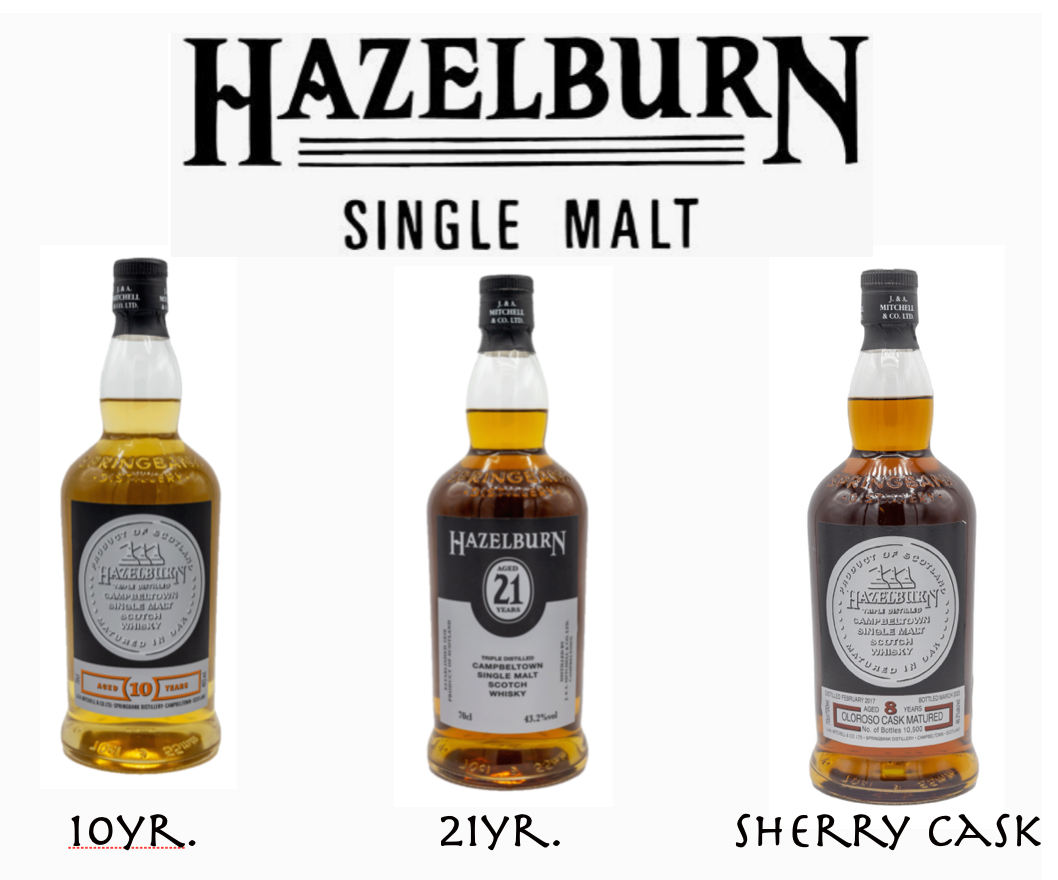
Daniel Greenlees passed away in Campbeltown at the (nearly inconceivable in that era) age of 96 on 25 June 1892, in Dalintober House, Campbeltown. Mercifully, he died before the full crash of Campbeltown’s distilling economy, yet late enough to sense the pressure that would eventually remake the region. Neither Hazelburn nor Dalaruan survived the twentieth century, with both closing in 1925. Hazelburn’s owners went into liquidation in 1921, and it changed hands and held on a few more years, but its buildings were finally demolished in 1926. Dalaruan’s remaining stocks were sold off at closure in 1925 and the distillery was unceremoniously demolished, with housing quickly occupying the site. Yet the name ‘Hazelburn’ did not totally vanish from the glass bottle: since 2005, Springbank Distillery in Campbeltown has distilled an unpeated, triple-distilled whisky under the Hazelburn name, an act of remembrance by the town’s surviving maker.
That revival is a fitting coda for Daniel Greenlees’ life. He belonged to the first generation that matured as legal, commercial whisky-making took hold in Campbeltown. He partnered into distilleries designed for scale, helped anchor a major firm during the height of the town’s output, served in civic roles, raised a large family, and retired only after a formal transfer of his stake. Hazelburn and Dalaruan became “lost” distilleries, but Daniel’s century-long presence inside Campbeltown’s whisky story remains unusually complete: not as a single dramatic episode, but as a long, steady career that matched the rise of a town, and, in name and record at least, outlasted it.
Sources:
FamilySearch (ancestry), “Daniel Greenlees”, familysearch.org
Wormtub, “Hazelburn Distillery,” wormtub.com
Archive.org (digitized text), “Genealogy of the Greenlee families”, archive.org
Archive.org (digitized text), “The West Coast directory for 1885–86” / “Daniel Greenlees, distiller”, archive.org
Wild About Argyll (blog), “Why Campbeltown was the Whisky Capital of the World”, wildaboutargyll.co.uk
ScotchWhisky.com, “On the Road: Campbeltown”, Gavin D. Smith, 24 September 2015
Contributed by Tracy McLemore, Fairview, Tennessee USA