George Leveson-Gower


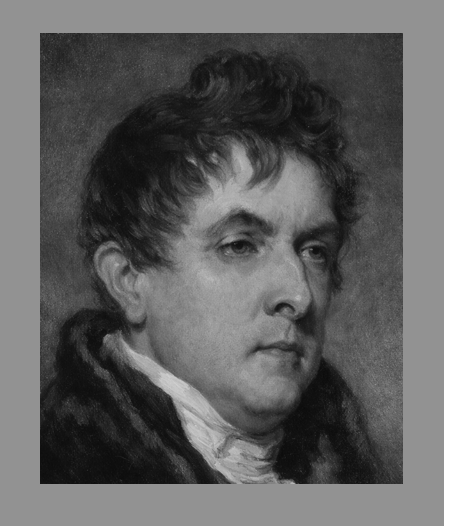
George Granville Leveson-Gower, the man later created 1st Duke of Sutherland, entered the world in London on January 9, 1758, at a time when titles, land, and politics were stitched tightly together. He was born in Arlington Street and grew up the eldest son of Granville Leveson-Gower, 1st Marquess of Stafford, by Granville’s second wife, Lady Louisa Egerton. From childhood, his health was described as delicate, and that circumstance pushed him toward books and languages more than rougher pursuits.
His early education was unsettled. He attended school at East Hill near Wandsworth, then spent the years 1768 to 1774 at Westminster School. He did not flourish quickly there, but his intellectual bent was obvious enough that friends of the family took an interest in shaping him. On the suggestion of Edmund Burke, he lived for a time in Auxerre in France, where he gained a strong working knowledge of French under the Rev. J. C. Woodhouse (who later became dean of Lichfield). In May 1776, he entered Christ Church, Oxford. At Oxford he became, by contemporary description, a solid Latin scholar, while letting Greek fall away. He read widely in English, French, and Italian literature, and he also acquired a “considerable knowledge” of chemistry and botany, a reminder that the educated aristocrat of the late eighteenth century was expected to be conversant with the sciences as well as politics and classics. After leaving Oxford, his young adulthood followed the itinerary of a grand tour, but with unusually extensive travel even by the standards of his class. In 1780 he traveled in Scotland and Ireland; in 1781 he traveled through France, Germany, Austria, and the Low Countries; and in 1786 he traveled in Italy. The pattern showed that he was a man learning Europe’s languages and courts first-hand, and those experiences would shape his later role as a diplomat and a political operator.
Before his life ever touched distilling, it had already entered Parliament. In September 1778, shortly before he came of age, he was elected to represent Newcastle-under-Lyme in the House of Commons and was re-elected in 1780. He did not sit after 1784, but returned to the Commons in 1787 as the member for Staffordshire, holding that seat until 1798. In that year he was elevated to the Lords as Baron Gower of Stittenham, using the family’s older barony as the vehicle. The most dramatic early test of his public life arrived in 1790, when, despite having no earlier diplomatic posting, he was sent as ambassador to Paris during the French Revolution. It was one of the most difficult diplomatic assignments in Europe. He remained until the embassy withdrew in August 1793. During that upheaval, his wife’s return journey became a story in itself: she was brought before the revolutionary tribunal at Abbeville, detained briefly, and then released.
In the years after Paris, senior offices were offered. He declined the posts of Lord Steward and Lord-Lieutenant of Ireland, with his weak eyesight specifically cited as a reason. In 1799, he accepted the role of joint Postmaster-General, which he held until 1810. That job that placed him close to the machinery of government and communications at the very moment Britain’s political world was modernizing.
His private life had become inseparable from vast Scottish landholding long before the title “Sutherland” was formally attached to him. On September 4, 1785, he married Elizabeth Sutherland, who held the title 19th Countess of Sutherland in her own right. The marriage tied him to an enormous Highland estate and to a name that would become both powerful and controversial. His wealth expanded further in March 1808, when he inherited from his maternal uncle, the last Duke of Bridgewater, including the Bridgewater canal and associated estates. Later that same year, on October 26, 1808, he succeeded his father as Marquess of Stafford, gaining additional major properties at Trentham and elsewhere. This combination, political weight, English estates, and the Sutherland lands, made him one of the largest proprietors in Britain. He became a controversial figure for his role in carrying out the Highland Clearances. Between 1811 and 1820, thousands of tenants were evicted and rehoused as part of a program of land improvement. It was in this context—estate management and “improvement,” that Clynelish first enters the story. In 1819, while still the Marquess of Stafford, he built the original Clynelish distillery near Brora. The distillery was explicitly framed as an economic measure: it was meant to provide a market for barley grown by his tenants. Clynelish was a legal, organized outlet for agricultural production in a region where land, tenancy, and local livelihoods were under intense pressure and scrutiny. Whatever later generations would think about the Sutherland estate’s wider policies, the founding logic for Clynelish, as preserved in modern distillery histories, was practical: create demand for tenants’ grain and channel local production into a controlled, taxable industry. His Sutherland interests were not confined to distilling. By 1811–1812, public grants were available to build roads in northern Scotland if landowners covered a portion of the cost. Contemporary biography states that in Sutherland there had been no roads in 1812 and only one bridge, and that the Marquess of Stafford moved quickly and on a large scale to take advantage of the road-building program. In that broader pattern, roads, bridges, estate infrastructure, and commercial outlets like distilling, Clynelish looks less like an isolated whisky venture and more like one piece in an estate-driven economic system.
In the final months of his life, the peerage reached its summit. In 1833, he was created Duke of Sutherland. He died later that year at Dunrobin Castle, in July 1833, after years of poor health, and was buried at Dornoch Cathedral. He and Elizabeth had four surviving children: their eldest son George succeeded him as 2nd Duke of Sutherland; they also had daughters Lady Charlotte and Lady Elizabeth, and a younger son Francis Leveson-Gower (later Earl of Ellesmere).
In the end, George Leveson-Gower’s tie to Clynelish is not the tale of a distiller at the still, but of a powerful landowner using distilling as an instrument—part agriculture, part economics, part governance. The distillery founded in 1819 at Brora began as an estate-linked solution: a new market for tenants’ barley, built by a man whose life had ranged from Westminster classrooms and Oxford libraries to the revolutionary streets of Paris and the administrative heart of Britain.
Sources (websites)
Dictionary of National Biography, 1885–1900, “Leveson-Gower, George Granville”, en.wikisource.org/wiki/Dictionary_of_National_Biography,_1885-1900/Leveson-Gower,_George_Granville
Malts.com, “Visit the Clynelish distillery”, www.malts.com/en-us/distilleries/clynelish
Diageo Bar Academy/Clynelish brand history, “Our Brands: Clynelish”, www.diageobaracademy.com/en-zz/home/our-brands/clynelish
Contributed by Tracy McLemore, Fairview, Tennessee USA