
John Galbraith

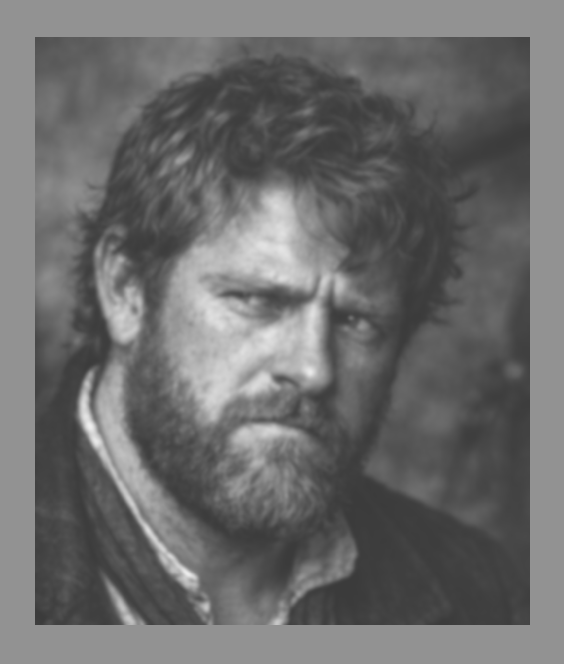
There are no known photographs of John Galbraith known to exist. Above
is an AI-generated image of him based on facts known about his life.
John Galbraith was born on 3 September 1809 in Campbeltown, Argyll and Bute, and lived there his entire life. John’s parents were Archibald and Jean Corbet Galbraith. He had a distinguished family background, and was descended from a long-established Kintyre family, specifically through the line of John of Kilteddan and Mary Mitchell. The family was always involved in Scottish politics to some degree, and John’s older brother, Andrew Galbraith, even served as the Lord Provost (analogous to mayor) of Scotlands largest city, Glasgow, from 1857 to 1860.
Campbeltown in John Galbraith’s lifetime was a place of loud ambition. The town sat at the head of a sheltered bay on the Kintyre peninsula, surrounded by the practical resources whisky-making required; barley in the hinterland, peat and fuel, and a good, reliable water source. By the early 1800s, the district already had a deep tradition of distilling, though much of it was illicit until laws and incentives made licensing more attractive. When the legal trade accelerated, Campbeltown’s industrial assertiveness became one of its defining traits, and the small, maritime town suddenly became a sort of overly optimistic whisky capital.
By the early 1830s, Galbraith was in his 20s, and by then, his good name was established enough locally to be a man who could enter partnership on a substantial industrial project. So in 1832, he joined with James Stewart, who was then Campbeltown’s Dean of Guild, to form the enterprise that built the Scotia Distillery on Campbeltown’s High Street. The timing of the Scotia distillery completion was important, because steam navigation and improving transport links in that day helped Campbeltown sell spirit beyond the peninsula. Distillery growth was thus rapid well into the mid-1830s. By then, steam ships could move whisky cargo directly to Glasgow in about nine hours, a logistical advantage that helped the town’s producers reach the blending houses and broader markets relatively quickly. After construction, licensing followed. Scotia obtained its license to distill in 1835, and with that, the distillery became part of the formal industrial wave that made Campbeltown briefly famous for whisky at scale. By 1835, 29 distilleries were thriving in Campbeltown, but soon it became clear that the town’s stability could prove more suspect than its swagger.
In the meantime, in 1838, Galbraith married Mary Colville McEwing, when he was 29 and she was 18. Within three years, they had the first of their two children. Their daughter, Elizabeth, was born in Campbeltown on 5 April 1841, and she ultimately lived to be nearly 90. It was also Elizabeth who later recorded much of the activities of her beloved father that make later retellings of his life possible. John and Mary also had a son, Archibald, named for his paternal grandfather. Archibald was born in 1845; he also lived a full life.
As for John, his own name was connected to Campbeltown civic life, and he served as the city’s Provost from 1860 to 1866. After that, the private outline of his life is harder to track cleanly. John Galbraith died on 12 September 1881, but he had lived long enough to see Campbeltown’s industry shift from exuberant expansion toward a harsher reality: markets began to change, reputations rose and fell, and the town that once seemed destined to be a permanent whisky capital learned how quickly a boom could ebb.
Although Galbraith didn’t tend the distillery for long, it remained in his family for nearly thirty more years, until 1919, when it was sold to West Highland Malt Distillers, whose plan was to bring together six Campbeltown distilleries to share costs. The plan failed, and by 1924 West Highland Malt Distillers collapsed when the owner went bankrupt. The doors, however, stayed open when Duncan McCallum, former director of West Highland Malt Distillers, took over. During that time, distilleries across the region were shuttering rapidly and Campbeltown’s distillery count fell from over 30 to fewer than ten. Although McCallum certainly had a keen nose for business (he also owned Ben Nevis Distillery), he was dealt a devastating blow when one of his deals turned out to be a scam, costing him his entire fortune. McCallum took his own life in 1930 by drowning himself in Crosshill Reservoir, the very water source for most of Campbeltown’s distilleries. At that point, Scotia closed and changed hands yet again. The new owner, Glasgow blender Bloch Brothers, had the stills running by late 1933. They also coined a new name for the distillery, first used in 1939: Glen Scotia.
The next 70 years remained a continually turbulent time for Glen Scotia as owners came and went faster than the distillery’s workers could keep up with whom their newest boss was. Veteran spirits conglomerates Hiram Walker, and A. Gilles & Co., both tried their luck with Campbeltown whiskey in the form of Glen Scotia, but times remained tougher for hard spirits than any of them could risk in their longterm portfolios. By 2007, the distillery had endured five more owners. But at that time, new leadership came in the form of engineer Iain McAlister. Since that time, McAlister has provided more stability that Glen Scotia has known since its founding nearly 190 years ago.
In the end and despite the later turbulence, the bigger lens shows that Galbraith succeeded. He co-founded a distillery that produced desirable whisky, supported local employment, and generated enough profit to remain in family hands for decades. Those outcomes were the practical benchmarks of success for a Victorian-era distiller, and he met them. What happened after the family era with mergers, closures, restarts, and repeated changes of ownership belongs to a later story. It does not erase the fact that John Galbraith’s original venture worked as intended. The distillery’s survival into the present, now under secure stewardship, quietly confirms that the structure he helped create in the 1830s was strong enough to endure far beyond the circumstances of his own lifetime.
Sources:
The Whisky Shop, “The Whiskiest Place in the World – Glen Scotia Distillery”, Gavin D. Smith, 11 Apr 2022, www.whiskyshop.com
Chilled Magazine, “A History Of Good Fortune: The Long Story of Glen Scotia Distillery”, chilledmagazine.com
Inside the Cask, “The Distilleries of Campbeltown”, (site article), 17 Feb 2020, insidethecask.com.
WikiTree genealogy, “Category: Provosts of Campbeltown”, www.wikitree.com
WikiTree genealogy, “John Galbraith (1809–1881)”, www.wikitree.com
Clan MacNicol Federation, “Nicol Genealogy”, July 1909, clanmacnicol.org
Whisky Monkeys, “Distillery Thursday: Glen Scotia and the Fall of the World’s Whisky Capital”, 20 November 2025, whiskymonkeys.com
Contributed by Tracy McLemore, Fairview, Tennessee