Alex Hutchison


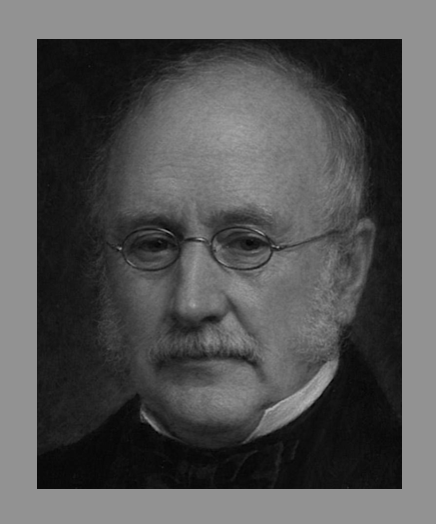
There are no known photographs of Alex Hutchisonknown to exist. Above is an AI-generated image of him based on facts known about his life.
Alexander “Alex” Oliphant Hutchison was born in 1838 in Kirkcaldy, Fife, the son of Robert Hutchison and Mary Oliphant. He entered a world already shaped by grain. Nineteenth-century Kirkcaldy was a working port with a vigorous trade in meal and flour, its docks and mills feeding both domestic markets and the growing industrial appetite of brewing and distilling. Alex’s father’s firm, Robert Hutchison & Co., appears repeatedly in local and industrial records as a substantial grain and milling concern, and by the end of the Victorian era Alexander Hutchison stood at its head.
As an adult, Alex quickly rose into the top tier of local commerce. He led a major milling operation at East Bridge Mills, a plant significant enough to warrant large-scale technological investment. In 1897, the engineering firm Henry Simon was brought in to modernize the works, installing washing and drying machinery and expanding capacity. By that point, Hutchison was not merely a miller, he was a recognized industrial figure in British milling circles and had been appointed President of the Association of British and Irish Millers.
His commercial authority was matched by civic leadership. Hutchison served as Provost of Kirkcaldy from 1896 to 1902. The provostship placed him at the center of municipal decision-making during a period when Fife’s industries, linoleum, coal, milling, and whisky, were consolidating and modernizing. By the late 1890s, Alex was simultaneously a local industrial head, a national milling figure, and the town’s chief civic magistrate.
It was during this same decade that Scotch whisky was reorganizing itself into corporate form. Cameronbridge Distillery, founded 80 years earlier by John Haig, had long since distinguished itself as an early adopter of continuous distillation technology. It stood at the forefront of large-scale grain spirit production, a technical shift that underpinned the rise of blended Scotch and transformed whisky from a regional trade into a national industry. In 1894, the Haig whisky business was floated as a limited company registered in Edinburgh. When John Haig & Co. incorporated, the first board of directors included Hugh Veitch Haig and Alexander Hutchison of Robert Hutchison & Co., Kirkcaldy.
Hutchison’s presence on that board was not ornamental. Cameronbridge sat within the same economic geography as Kirkcaldy’s grain trade. Grain distilling and grain milling were adjacent enterprises—different outputs, shared inputs. The distillery required reliable, large-scale supplies of grain; the miller understood sourcing, processing, transport, and capital investment in plant. Hutchison brought to the Haig enterprise deep experience in precisely the supply chain that sustained industrial grain whisky. His role was not at the stills but in governance, capital structure, and industrial oversight at a time when Scotch was professionalizing into the corporate age.
Hutchison married Margaret Whyte Key, on 28 November 1872, and together they had seven children. The family resided at Braehead House in Kirkcaldy, a home that appears consistently in biographical references to their sons. Two of those sons achieved national prominence: Major-General Robert Hutchison, was later 1st Baron Hutchison of Montrose. Another son, Sir Balfour Oliphant Hutchison, went on to a distinguished military career in World War I. Remaining in the army during the interwar period, Hutchison served in a variety of staff and regimental appointments before he served again bravely in World War II. The family’s civic footprint also extended beyond titles, with them participating in various philanthropic activities as a charitable unit.
Hutchison’s life closed in the same place it had unfolded. He died on 28 July 1904 at Braehead House, Kirkcaldy. The memorial language in the church record, “In loving memory of Alexander Hutchison,” confirms the community recognition that followed his death. By then he had completed a career that spanned the high Victorian industrial era: from the maturation of steam-powered milling through the modernization of plant machinery and into the corporate consolidation of Scotch whisky.
So Alexander O. Hutchison’s legacy in whisky is indirect, yet substantial. Cameronbridge’s history is often told through founders, inventors, and distillers, but large industrial distilleries also depend on boards, capital discipline, and mastery of supply chains. Hutchison appears precisely at that interface. He modernized a major milling enterprise in Kirkcaldy, presided over the town during years of industrial growth, and joined the directorship of the Haig company as Scotch whisky reorganized into limited companies capable of scaling production and distribution. And while his name may not be engraved on a still, it stands firmly within the commercial and civic structures that sustained one of Scotland’s most consequential distilling sites at the moment it entered the modern age.
Sources:
Clackmannanshire.scot, “The Haig Family”, www.clackmannanshire.scot
HaigWhisky.com, “How Old Is Your Haig Whisky? Expert Guide to Aging Haig”, www.haigwhisky.com
Henry Simon Milling, “The Flour Mills of East Scotland: Part one”, www.henrysimonmilling.com
Langtoun Central Church (St John’s), “History”, langtouncentralchurch.org.uk
Whiskypedia, “Cameronbridge”, scotchwhisky.com
Difford’s Guide, “Cameronbridge Grain Distillery”, www.diffordsguide.com
Ancestry, “Alexander Oliphant Hutchison”, www.ancestry.com
Contributed by Tracy McLemore, Fairview, Tennessee USA