Beaumont Hankey

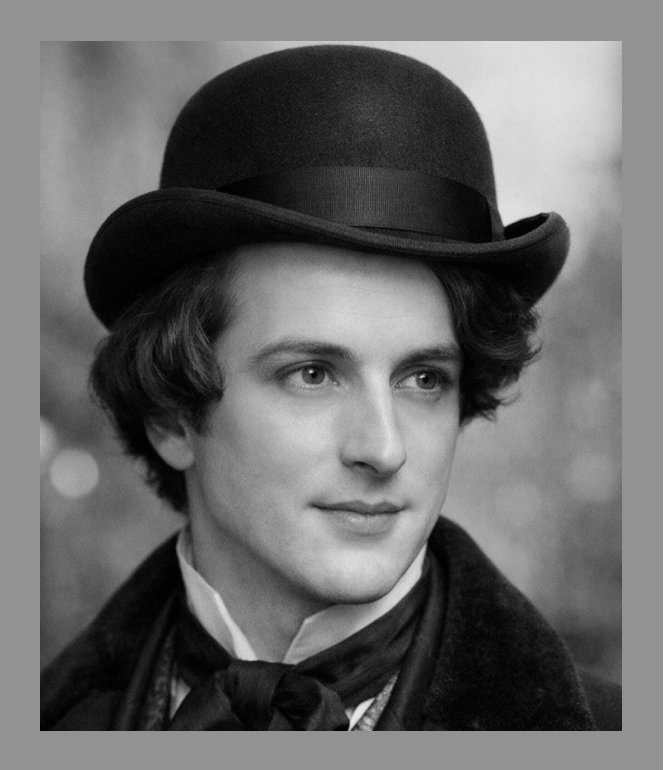
Above is an AI-enhanced image based on an actual photo.
The story of Beaumont Hankey begins long before his birth, in the commercial geography of eighteenth-century London. In 1757, on John Street in the West End, his grandfather established a firm known as Hankey Wine and Spirits Co. This was a period when London’s wine and spirit merchants occupied a position of unusual cultural importance. The merchant’s shop was not merely a place of trade but a site where taste was negotiated, reputations were forged, and social distinction was reinforced. A respected address could transform a supplier into an institution, and John Street placed the Hankey firm precisely at that hinge-point where imported wines, domestic spirits, and Scotch whisky flowed into a market increasingly shaped by fashion, club life, and elite consumption.
The firm remained in family hands, passed down through generations as both a livelihood and an inheritance of social standing. By the early nineteenth century, it was under the control of Thomson Hankey, who had thirteen children, but whose third surviving son, Beaumont Hankey, would eventually inherit the business. Beaumont was born on 13 September 1821 into a world where commerce and gentility were not opposing forces but mutually reinforcing ones. The Hankey name already carried weight, and from an early age Beaumont would have understood that the family enterprise depended as much on personal relationships as on the quality of the goods themselves.
In 1846, Beaumont married Eleanor Catherine Atkins Bowyer. Their family life unfolded alongside his growing responsibilities in the firm. Their first child, Wentworth Beaumont, later became a clergyman, followed by Evelyn Mary, Douglas, Helen, Mabel, and Maurice Beaumont, who died at only seven months old. These domestic details, though private, were typical of a Victorian mercantile household in which business, family, and reputation were tightly interwoven. Eleanor’s death in 1892 marked a personal loss that coincided with a period of increasing professional authority for Beaumont.
By the mid-nineteenth century, the firm had evolved into Hankey Bannister & Co., reflecting a partnership that defined its modern identity. Beaumont Hankey was a partner in the wine merchants’ business alongside G. H. Tod Heatley and, most importantly, Hugh Bannister. By 1884, Hankey had taken control of the firm, and shortly thereafter his partnership with Bannister became central to its character and success.
The contrast between the two men was striking and productive. Beaumont Hankey was a man about town—suave, socially fluent, and endowed with aristocratic connections. He understood instinctively the standards expected by ladies and gentlemen of quality when choosing wines and spirits. His confidence and charm made him a natural ambassador for the firm, capable of cultivating demand and loyalty among elite clients. Hugh Bannister, by contrast, was meticulous, reserved, and methodical. A man of understated elegance and considerable experience, Bannister excelled at the practical side of the business: credit, stock management, record-keeping, and the discipline required to maintain consistency as volume grew. Where Hankey embodied flair, Bannister supplied structure. Together they formed a classic merchant equation—client access paired with rigorous execution.
Their shared goal was clear: to provide the very finest wines and spirits to London’s most discerning consumers. This ambition took concrete form in the firm’s approach to Scotch whisky. Rather than owning distilleries, Hankey Bannister built its identity around selection and blending. The idea of a “superior blend” was central—a whisky defined by house style, reliability, and refinement. The stills might be north of the Border, but the brand’s center of gravity was unmistakably urban. Scotch whisky, in this conception, was not a rustic curiosity but a drawing-room commodity, worthy of West End tables and aristocratic approval.
Infrastructure played a crucial role in supporting this promise. The firm conducted business at Adelphi Arches, the great vaults newly erected by Robert Adam beneath Adelphi Terrace, London’s first major neoclassical riverside development. There, protected from the vibration of traffic and the fluctuations of London’s capricious climate, wine and whisky lay maturing year after year in darkness and calm. These cellars were not a footnote but the physical heart of credibility. Storage allowed the firm to hold inventory through price shocks and seasonal demand, to age and marry spirits carefully, and to operate on the long timelines that whisky requires. Later, for the convenience of fashionable customers, the offices moved to St James’s, while Adelphi continued to house the cellars until 1936.
As the nineteenth century progressed, Hankey Bannister expanded through amalgamation with other long-established wine merchants. The firm relocated again, this time from John Street to Sackville Street, further consolidating its fashionable clientele. Royal Warrants under King George V—and later Edward VII—confirmed its standing, and its whiskies were enjoyed by figures such as Winston Churchill, the Prince Regent William IV, and the Dukes of Norfolk and Queensberry. Word spread throughout the Empire, and the name Hankey Bannister came to justify its price.
Beaumont Hankey died on 18 February 1909 at the age of 86, leaving an estate valued at £69,000 (almost $3 million today). He was succeeded by his son Douglas Hankey, ensuring continuity of family involvement. Beaumont’s death marked the end of an era, but not the end of the firm he had shaped. By that point, Hankey Bannister was no longer simply a family business but an established West End institution, socially positioned and materially supported by infrastructure that signaled permanence.
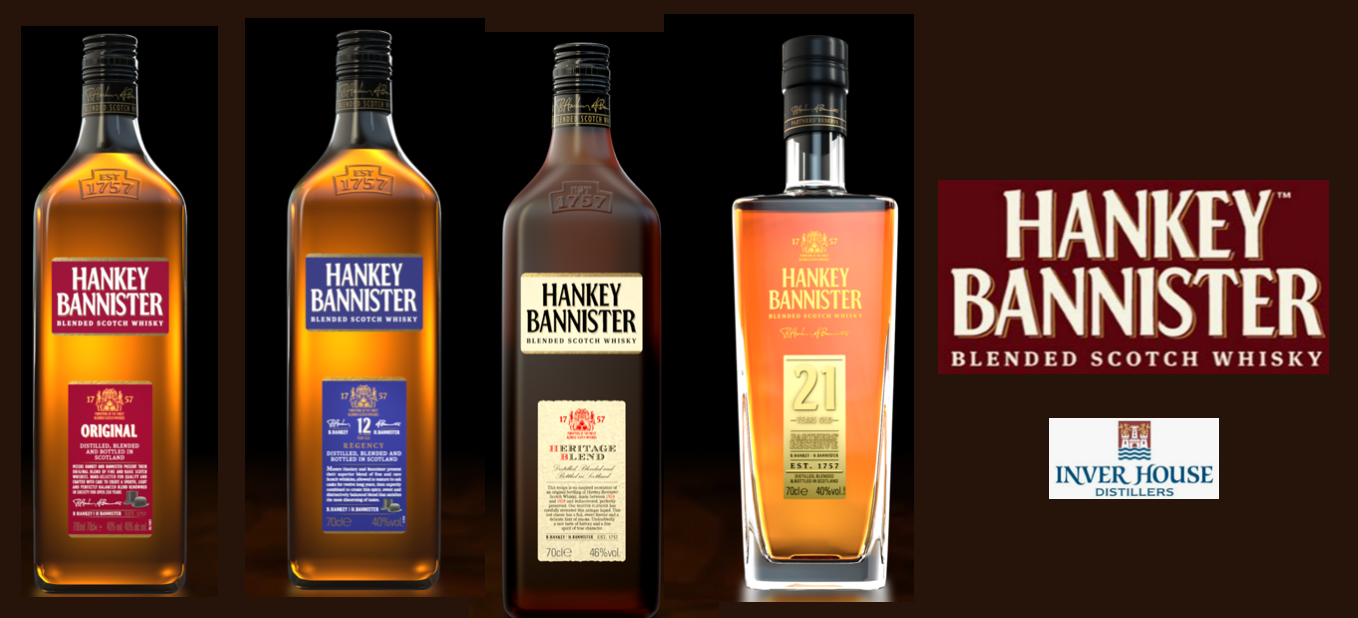
After Douglas Hankey’s death, ownership passed out of family hands. In 1932 the firm was acquired by Saccone & Speed, another respected London wine and spirit merchant. Saccone & Speed was later absorbed into International Distillers & Vintners (IDV), which would itself become part of the global conglomerate Diageo. In 1988, the Hankey Bannister brand was purchased by Inver House Distillers, and in 2001 Inver House became part of International Beverage Holdings Ltd, the international arm of Thailand-based Thai Beverage Public Company. Despite these corporate transitions, the brand remains under the management of Inver House Distillers today, drawing on malts from distilleries such as Pulteney, Balblair, and Knockdhu.
What endures is not merely a label but a set of values established by Beaumont Hankey and Hugh Bannister: shared respect, complementary skills, and a belief that quality is as much about judgment and consistency as it is about origin. From its eighteenth-century beginnings in a West End shop to its modern global reach, Hankey Bannister’s identity has remained tied to the idea that taste is made—carefully, collaboratively, and with an eye toward those whose expectations are always rising.
Sources:
Hankey Bannister official website, “Our History”, www.hankeybannister.com
Hankey Bannister official website, “Meet the Founders”, www.hankeybannister.com
Hankey Bannister, “Our Heritage”, www.hankeybannister.com
Find A Grave (genealogy), “Beaumont Hankey”
Hankeys of Churton, “Beaumont Hankey”, www.fieldtrial.info/familytree/HTML/beaumont-hankey.html
The Spirits Business, “Hankey Bannister brand profile”, www.thespiritsbusiness.com
Oxford Companion to Spirits & Cocktails, “Hankey Bannister”, 10 October 1993,
www.oxfordreference.comWhisky Magazine, “London Blending Houses and the Rise of Scotch”, whiskymag.com
Contributed by Tracy McLemore, Fairview, Tennessee USA