Brodie Hepburn


The original site of the current Deanston Distillery was established in 1785 as the Adelphi Cotton Mill by brothers Archibald and John Buchanan. The location had been chosen carefully. The River Teith provided a powerful and reliable water source, while nearby routes connected the site to central Scotland’s expanding industrial network. The mill was built during the height of Scotland’s Industrial Revolution, when textile production was transforming the country’s economy. Inspired by the water-powered factory systems pioneered by Sir Richard Arkwright, the Buchanans constructed an enormousoperation that quickly became one of the largest cotton mills in Scotland. The surrounding settlement grew alongside the mill itself. Workers’ housing, roads, and communitybuildings emerged around the factory, and the area gradually became known as Deanston. For generations, the rhythm of life in the village was tied directly to the mill’s operation. By the nineteenth century, hundreds of workers were employed there, and the mill had become an economic anchor for the region around Doune and Stirling. Eventually, though, the postwar decades brought irreversible change. Global competition weakened Britain’s textile industry, and traditional cotton manufacturing became increasingly unprofitable. By the early 1960s, the future of the mill was in doubt. Finally, in 1964, after nearly 180 years of industrial operation, the old cotton mill finally closed.
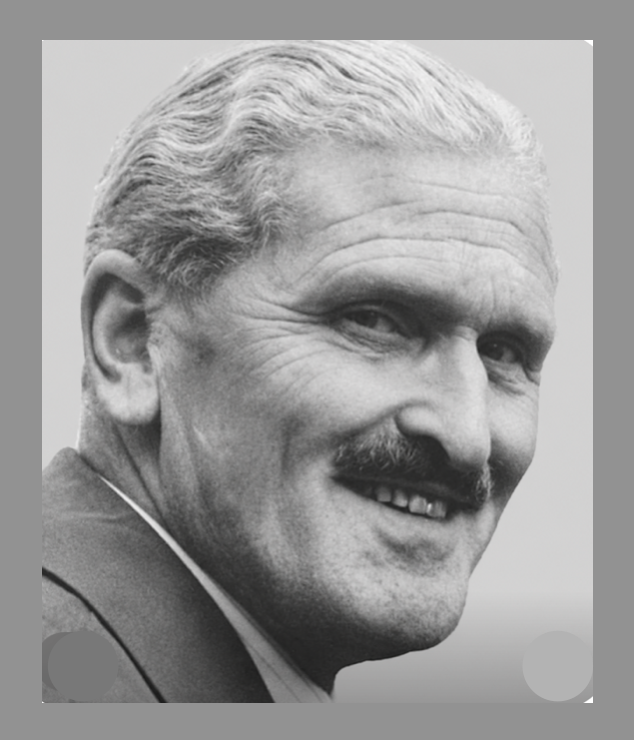
Enter Peter Brodie Hepburn. Hepburn was born in Broughty Ferry, Dundee, Scotland, on June 20, 1881. He was a decorated First World War veteran, having served at a Lt. Colonel with the Scottish horse. Upon returning home, he had founded the whisky broking firm of Brodie Hepburn, Ltd., in Glasgow in 1932, where his firm carried out business as wine and spiritbrokers, agents and merchants.
A true pioneer, Hepburn saw potential in the battered old complex. Perhaps more importantly, he saw an honest work ethic and a passionate community whose citizens were eager to become true whisky-makers. By then, Hepburn had spent decades in the Scotch whisky trade and understood both the growing international demand for blended whisky and the importance of securing dependable malt production. Also, the old Deanston mill offered something unusual: a massive industrial structure already designed around water power. The River Teith still flowed through the property with water that was soft enough for whiskey and at enormous force, while the buildings themselves were structurallyideal for industrial conversion. So, working alongside James Finlay & Co and other partners through a company known as Deanston Distillers Ltd., Hepburn oversaw the conversion of the former cotton mill into a whisky distillery beginning in 1965. The project represented one of the most ambitious industrial conversions in Scotch whisky history.
Deanston Distillery first opened its doors in 1966. Production officially began in October of that year. Unfortunately, Peter Brodie Hepburn did not live long after the opening of Deanston Distillery, and died soon after in Glasgow at the age of 85.
The distillery thrived for a while, but, like most others, suffered during the whisky downturn of the 1970s and early 1980s. Whisky overproduction across Scotland led to widespread distillery closures, and Deanston itself temporarily ceased production in 1982. The shutdown ended up lasting several years before the distillery found new life under Burn Stewart Distillers, which acquired the site in 1990. Production resumed shortly afterward, and Deanston slowly rebuilt its reputation during the growing global interest in single malt Scotch whisky.
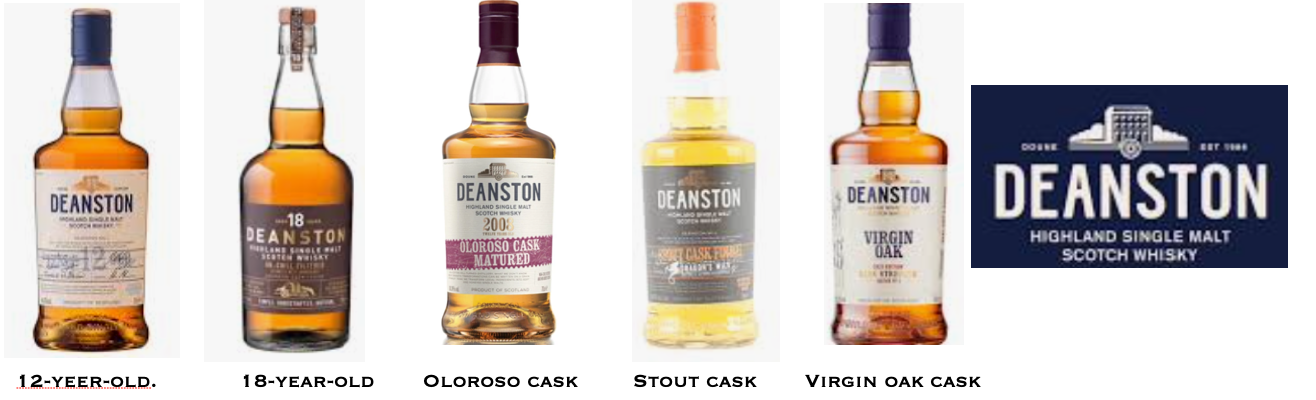
Today, the Deanston distillery is owned by the Distell Group, one of Africa’s largest alcoholic beverage producers. The river which it sits beside also powers Deanston's on-site hydroelectric plant, which produces enough power to contribute 75% of the energy produced to the national grid, with the distillery only utilizing about 25%. With that power, Deanston has an annual capacity of 3 million liters of alcohol produced via two 20,000 liter wash stills and two 17,000 liter spirit stills. Most of the whisky distilled at Deanston finds its way into the numerous blends of Burn Stewart, and only around 15% of annual whisky production is bottled as single malt.
In the end, fewscotch distilleries embody reinvention more completely than Deanston, and few men of that age were capable of harnessing that reinvention like Brodie Hepburn. Hepburn saw a depressed local economy with a run-down, empty industrial building, and had the foresight to turn that vision into an enduring whisky producer making product that is still highly sought-after some 60 years after its founding.
Sources
Deanston Distillery Official Website, deanstonmalt.com
Undiscovered Scotland, “Deanston Distillery”, undiscoveredscotland.co.uk
WhiskyMe, “Deanston”, 10 May 2023, whisky-me.com
Grace’s Guide to British Industrial History, “Brodie Hepburn”, gracesguide.co.uk
Contributed by Tracy McLemore, Fairview, Tennessee USA