Hugh Veitch Haig

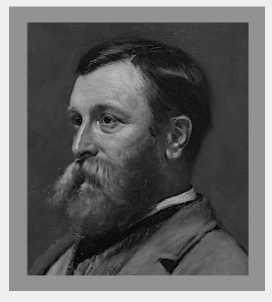
There are no known photographs of Hugh Veitch Haig known to exist. Above
is an AI-generated image of him based on facts known about his life.
When Hugh Veitch Haig was born on 10 February 1845 in Wemyss, Fife, he entered a Scotland already changing under the pressure of steam, iron, and commerce. His father, John Haig, was forty-two; his mother, Rachel Mackerras Veitch, just twenty-four. The Haigs were already no longer small rural malt distillers. They were grain men, industrialists of spirit, at the helm of Cameronbridge Distillery, founded in 1824 and among the early adopters of continuous distillation. By the time Hugh was old enough to understand the scale of the place, Cameronbridge was not merely a cluster of stills beside the River Leven. It was an engine with boilers breathing, Coffey stills humming, warehouses filling with spirit destined not for solitary bottlings, but for the new and fast-rising art of blending.
To be born into such a business in mid-nineteenth-century Scotland was to inherit both opportunity and obligation. The Scotch trade was shifting from localized craft toward corporate architecture. Grain whisky, once suspect in the eyes of purists, was becoming indispensable to blenders who sought consistency, affordability, and scale. Hugh came of age in that transition. He learned not simply how spirit was made, but how it moved: from stillhouse to warehouse, from ledger to ship’s manifest, from Fife to London and beyond.
In 1872, Hugh married Archie Anne Lindsay Fraser in Edinburgh. Together they would have five children; two sons, Oliver and John, and three daughters, Ruth, Althea, and Josephine. Raising a family in that environment stood at the intersection of domestic life and industrial ambition. The Haigs were not isolated country proprietors. They were woven into networks of trade, finance, and landholding. Hugh is linked in multiple references to Ramornie, an estate near Ladybank in Fife, suggesting a life lived partly in the rhythms of rural Scotland and partly in the accelerating tempo of commerce.
By the late 1870s, Cameronbridge became no longer merely a family affair. In 1877, it joined five other Lowland grain distilleries to form Distillers Company Limited (DCL). This was consolidation with intent: to protect pricing, secure grain supplies, and steady a volatile market. Hugh did not merely witness this moment; he matured within it. He belonged to the generation that understood a distillery’s future depended as much on governance and logistics as on fermentation and distillation.
The same year that DCL was founded, the Haig blending business moved from Cameron Bridge to Markinch and assumed the name ‘John Haig Sons & Company.’ It was a quiet but decisive shift. Cameronbridge would remain the powerhouse of production, but Markinch would become the commercial brain, involving blending, storage, and eventually bottling. In 1892, the first bonded warehouse rose there, a practical acknowledgment that whisky’s value lay as much in patient maturation as in spirited output.
During his years working at Cameronbridge, Hugh helped steer the distillery through a period when scale was everything. Continuous distillation through the Coffey still allowed for vast quantities of grain spirit, but quantity alone was insufficient. Blenders required reliability: a cask drawn in one season had to match another drawn months later. Under Hugh’s watch, attention to consistency became paramount. Improvements in plant capacity were paired with refinements in quality control. The distillery’s reputation as a dependable supplier strengthened, making it a cornerstone in the architecture of blended Scotch.
Hugh’s own life briefly mirrored that outward push. In 1879, he immigrated to New York City. The move was short-lived, and by 1881 he had returned to Markinch, but it was telling. America was a burgeoning market, and many Scottish firms sought footholds there. Whether Hugh’s time in New York was exploratory, commercial, or personal, it placed him at the edge of the Atlantic trade that Scotch would increasingly rely upon. He returned to Fife, then moved to Kettle in 1891, but the impression remains: the Haig business thought internationally.
In 1894, when John Haig & Co. incorporated as a limited company, Hugh took his place among its first directors, alongside figures such as Alex Hutchison, Forbes Thomson Wallace, Charles Taylor, and Capt. Douglas Haig. That moment formalized what had already been underway: the transformation from family concern to corporate entity. But the groundwork, the real labor, preceded the title. Throughout these years, Hugh stood as a second-generation custodian. He did not found Cameronbridge; he inherited its momentum. His achievement was not invention but consolidation by strengthening what his father’s generation had begun, and positioning it for the corporate age. By the time he became chairman in 1894, the structures of modern whisky commerce were already in place: limited liability, formal boards, bonded warehouses, rail connections, and international distribution networks. He had overseen the building of them all.
Haig’s death came unexpectedly, and far from Fife. On 16 February 1902, at the age of only fifty-seven, Hugh Veitch Haig died in Cairo, Egypt. The reason for his presence there is not fully elaborated in public record, but travel for health was common among Victorians. The juxtaposition is striking: a man born beside the predictable coalfields and gentle barley lands of Weymss ended his days along the exotic and dangerous Nile. When he was brought home to rest and buried in Kingskettle Cemetery, however, the arc of his life was forever anchored in the peat-rich soil of Fife.
In the end, Hugh Veitch Haig’s story is less about spectacle than stewardship. He belonged to the generation that ensured Scotch whisky would not remain a provincial curiosity but become a structured, scalable industry. Through modernization at Cameronbridge, expansion at Markinch, and engagement with corporate consolidation, he helped translate steam and grain into something enduring. The stills may have sung before he was born, and they would continue long after his death, but in the measured decades of his working life, he ensured they sang in tune with a changing world.
Sources:
Historic Environment Scotland, “Haig Business Park, bonded warehouse LB42945”, 1 Mar 1996, portal.historicenvironment.scot
Clackmannanshire.scot, “The Haig Family”, 10 Jan 2026, clackmannanshire.scot
Difford’s Guide, “Cameronbridge Grain Distillery”, diffordsguide.com
Find a Grave, “Hugh Veitch Haig”, findagrave.com.
Geni, “Hugh Veitch Haig (1845–1902)”, 29 October 2015, geni.com
Ancestry, “Hugh Veitch Haig”, ancestry.com
Find a Grave, “Rachel Mackerras Veitch Haig”, findagrave.com
Wikimedia Commons, “John Henry Lorimer–Portrait of Hugh Veitch Haig”, 12 September 2023, commons.wikimedia.org
East Lothian at War, “Air Accidents–Beech Hill House Crash”, eastlothianatwar.co.uk
Contributed by Tracy McLemore, Fairview, Tennessee