
James Henderson

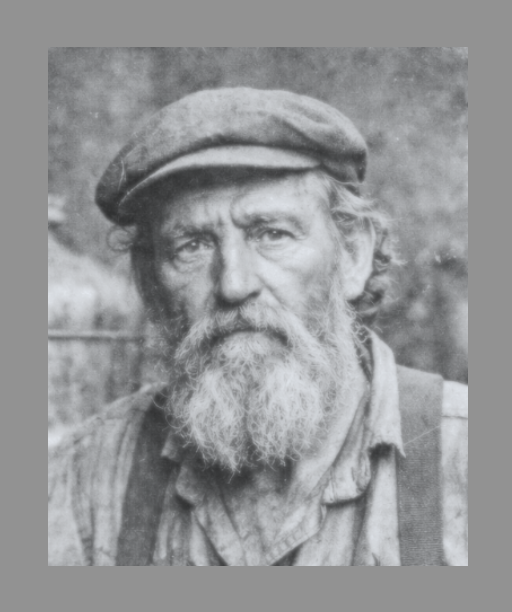
There are no known photographs of James Henderson known to exist. Above is an AI-generated image of him based on facts known about his life.
The Henderson family was always deeply rooted in extreme northeast Scotland, in County Caithness, near Wick. In the early 19th century, Alexander and Margaret Duthie Henderson who lived there, had 3 sons, 2 of whom, like their father, served in the Royal Navy; one son however, James Henderson, eschewed the armed forces and settled into distilling at an early age. This places him in the early decades of licensed Highland distilling, at a time when legal production was consolidating around operators who could secure permits, raw materials, and routes to market.
James was born in 1798, but his first distilling milestone appears in 1821, further west near Halkirk, where he worked for another distiller until 1826. At that time, Henderson made the move that tied his name permanently to Wick: he established Pulteney Distillery in the newly-developed district of Pulteneytown.
At this point, the settlement of Pulteneytown itself begs explanation. It was created as a planned fishing village on the south bank of the River Wick, built to serve a bigger idea than local growth: the late-18th/early-19th-century push to expand commercial fishing and develop harbors and stations along Scotland’s coasts. In the 1790s, the British Fisheries Society investigated building a new harbor and village at Wick, and in the early 1800s the town and harbor scheme was laid out by a builder named Thomas Telford with planning work for the harbor and town on behalf of the Society.
Before Pulteneytown, Wick’s life was still coastal, but severely limited by infrastructure. A small, inadequate quay existed before Pulteneytown, but the Fisheries Society’s involvement aimed to help scale the fishery into an industry. After Pulteneytown took shape, the town’s purpose was explicit: house and service a fast-growing fishing population, concentrate labor near improved harbor works, and turn seasonal fishing into a larger commercial economic machine. A side effect was that the new economy also created the conditions for legal distilling.
Seeing the evolvement of this new market, in 1826, James Henderson founded Pulteney Distillery in Pulteneytown. At the beginning, conventional roads were lacking, so barley came by sea and whisky went out by sea, often handled by offseason workers who also fished for herring when they could. In practical terms, Pulteneytown changed daily life by pulling more people into wage work tied to the harbor; boats, curing yards, barrels, and, in Henderson’s case, spirit, so the town’s rhythms became less purely local and more seasonal, crowded, and cash-driven. Henderson’s business logic is visible in the geography: a distillery in a port town could receive supplies and send product by sea even though overland transport was limited.
Henderson also built a meal mill to feed his distillery, and soon his whiskey not only provided drink and employment for Pultneytown’s residents, but was, apparently, a source of community pride. Local history writing from that day described industrial activity at Wick, and in a nineteenth-century civic/traditional history of Caithness the author noted that the “Distillery and Meal Mills of James Henderson & Co.” were important, and that the residents “celebrated their Pulteney Whisky.”
Documentation from that day also notes a “Contract of Marriage of James Henderson and Elizabeth MacLeay, of Newmore” dated May 1845. The marriage brought Henderson property that had historically been associated with the MacLeay family, namely, Rosebank House, a gorgeous Georgian mansion with many acres of land that the MacLeays had owned for decades. It was there that James and Elizabeth raised their two sons and four daughters.
Before long, Henderson’s distillery had grown enough that he made considerable additions to buildings and plant. The distillery he founded had by then become part of a larger Wick story, one tied to sea access, seasonal labor, and a port economy that could support production and distribution when roads could not.
When James Henderson died in 1879 at the age of 81, Pulteney did not immediately pass to an outside buyer. The distillery continued under Henderson family control, trading under the long-used firm style “James Henderson & Co.” That family-era ownership lasted for almost a century after the founding before the distillery was finally sold in 1920 to James Watson & Co. of Dundee. Watson held the distillery briefly, then it passed to John Dewar & Sons in 1924, and into Distillers Company Limited (DCL) in 1925. After a period of closure from 1930 to 1951 due to local Prohibition laws and then a series of ownership changes, including Hiram Walker & Sons and later Allied Breweries, the distillery’s single malt began to be more distinctly branded for export markets particularly after Inver House Distillers acquired Pulteney in 1995.
Under Inver House’s stewardship, the single malt was positioned and widely marketed as “Old Pulteney,” and key brand expressions such as Old Pulteney 12-Year-Old emerged, with the first official Inver House age-statement bottlings appearing in the late 1990s. The “Old” in the name helps signal both heritage and maturation character, and “Old Pulteney” today is the standard label for the distillery’s single malt range in global markets.
Sources:
Scotchwhisky.com (Whiskypedia): “Stemster”
Whiskypedia, “Pulteney Distillery”, scotchwhisky.com
Old Pulteney official website, “About Us / Our History”, oldpulteney.com
Scotchwhisky.com (Whiskypedia): “Pulteney”
Difford’s Guide: “Pulteney Distillery Company”, www.diffordsguide.com
Nucleus / High Life Highland (Caithness Archives catalogue PDF): “Contract of Marriage for James Henderson and Elizabeth MacLeay,” May 1845
Wick Heritage (The Wick Society): “Rosebank House”, 6 January 2021, wickheritage.org
Internet Archive (full text): “Caithness Family History, The Hendersons of Stemster”, 1884
Internet Archive (full text): “Sketch of the Civil and Traditional History of Caithness”
Scotch Whisky magazine, “Wick, whisky and the herring boom”, Richard Woodard, 09 January 2018
Undiscovered Scotland, “Pulteney Distillery”, www.undiscoveredscotland.co.uk/wick
Contributed by Tracy McLemore, Fairview, Tennessee USA