John Haig


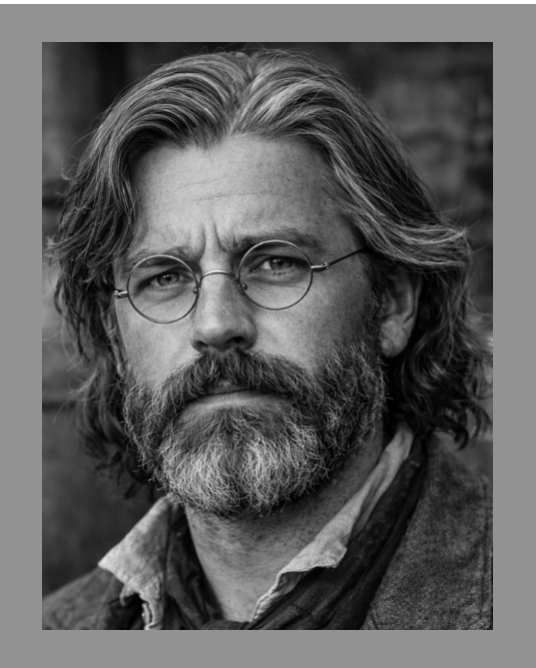
There are no known images of John Haig. The above AI-generated image is based on facts known about his life.
The earliest recorded moment in the Haig family’s association with whisky dates to 1655, when Robert Haig was summoned before church elders for “Illegally distilling whisky on the Sabbath.” The incident also places them among the earliest known Lowland distilling lineages. Nearly a century later, the family’s involvement in whisky became far more firmly established. In 1751, Robert Haig’s great-great-grandson, John Haig, married Margaret Stein, linking the Haigs with another prominent distilling family. The Steins owned distilleries at Kilbagie and Kennetpans, near Alloa, and were already deeply embedded in Scotland’s emerging legal whisky trade. This marriage bound two influential Lowland whisky families together and laid the groundwork for a distilling dynasty that would extend across Scotland and Ireland.
The next generation expanded those connections dramatically. John Haig’s sons, including John Haig and all five of his brothers, went on to found distilleries or become partners in established operations. Even the Haig daughters were drawn into whisky’s expanding world—one of the sisters married John Jameson, a relative of her brother Andrew’s distilling partner at Kincardine. She moved to Dublin, where her husband went on to establish what would become Jameson Irish Whisky.
It was within this already-established whisky network that John Haig, later known as John Haig of Cameron Bridge, was born on 24 October 1802 in Cameron Bridge, Fife. He was the son of William Haig and Janet Stein, reuniting the Haig and Stein families once again. Whisky-making in his household was not a romantic pursuit but a practical inheritance learned through daily work, and shaped by agriculture, water access, and production along the River Eden. From an early age, John grew up at the intersection of farming, milling, and distilling, the essential elements that enabled efficient Lowland whisky production in the early nineteenth century.
By the time John reached his early twenties, Scotch whisky was entering a transformative period. The Excise Act of 1823 made legal distilling more viable, encouraging rapid expansion and experimentation, particularly in the Lowlands. In 1824, John made the defining decision of his career. He acquired and adapted the old Cameron Mills site beside the River Leven and founded Cameronbridge Distillery, establishing John Haig & Company. Cameronbridge quickly became one of the most significant industrial distilleries in Scotland.
Cameronbridge’s importance lay not only in its scale but in part due to its role in technological change. In 1829, John installed a continuous still invented by his cousin Robert Stein. By 1830, Cameronbridge was producing spirit using this column-still method, initially from malt only. The still allowed for far greater efficiency and consistency than traditional pot stills, helping to supply reliable volumes of grain spirit that would become essential to the emerging blending industry. This innovation placed Cameronbridge at the center of a fundamental shift in Scotch whisky production.
In August 1839, at the age of 37, John Haig married Rachel Mackerras Veitch, who was still a teenager. Despite their nearly twenty-year age difference, the marriage produced a large family of ten children—five daughters and five sons. Among their younger sons was Douglas Haig (1861–1928), later known as Field Marshal Douglas Haig, 1st Earl Haig, whose WWI military career brought the family name to prominence beyond the whisky trade.
John Haig’s business interests expanded as Scotch whisky grew from a regional industry into a nationally organized one. In 1877, John Haig & Co. joined five other grain distillers to form Distillers Company Limited (DCL), an alliance designed to regulate the sale of grain whisky stocks to the wholesale trade. Growth brought logistical challenges. In 1882, the company addressed its lack of bonded warehousing at Markinch by acquiring David Smith & Co. of Leith. Overseas demand was also rising, particularly in the United States. To manage export sales, two of John Haig’s sons, Alicius and Hugh Veitch Haig, founded Haig & Haig in 1888, focusing on international markets. Late in his life, John Haig’s activities also extended beyond whisky, reflecting a common nineteenth-century pattern in which land, water, and capital served multiple industrial purposes.
John Haig of Cameron Bridge died on 20 March 1878. He lived long enough to witness the consolidation of Scotch whisky into a modern industrial enterprise and to see Cameronbridge firmly established as a cornerstone of grain whisky production. The distillery he founded in 1824 outlived him by generations and became a foundational supplier to the Scotch blending industry, ensuring that the Haig name remained permanently woven into the history of whisky.
DCL combined with John Walker & Son and Buchanan-Dewar in 1925, one hundred one years after its founding. It was held by Walker/Dewar until 1986, when it was then acquired by Guinness. Guinness merged with Grand Metropolitan to form the enormous Diageo family of spirits in 1997, where Haig remains today.
Sources:
FamilySearch, “John Haig”, ancestors.familysearch.org/en/LH19-N25/john-haig"
ThePeerage.com, “John Haig”, Edited 4 Sep 2008, thepeerage.com
Haig Whisky, “The History of Haig Whisky”, Stuart McNamara, haigwhisky.com
Scotch Whisky.com, “John Haig & Company”, whiskypedia.com
Electric Scotland (PDF): Fife Family Histories, electricscotland.com
Find a Grave, “Rachel Mackerras Haig”, findagrave.com
Capital Collections, Haig family photograph entry courtesy of the Museum of Edinburgh
Contributed by Tracy McLemore, Fairview, Tennessee USA
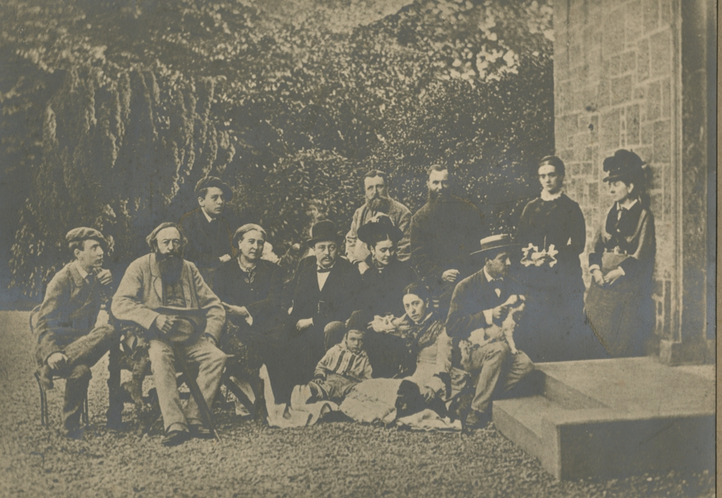
Haig family photo circa 1870
John Haig is seated second from left. His wife, Rachel sits beside him.
Future Field Marshal and 1st Earl Douglas Haig stands behind his mother, Rachel.
The others are the rest of John and Rachel’s ten children.