John Hopkins

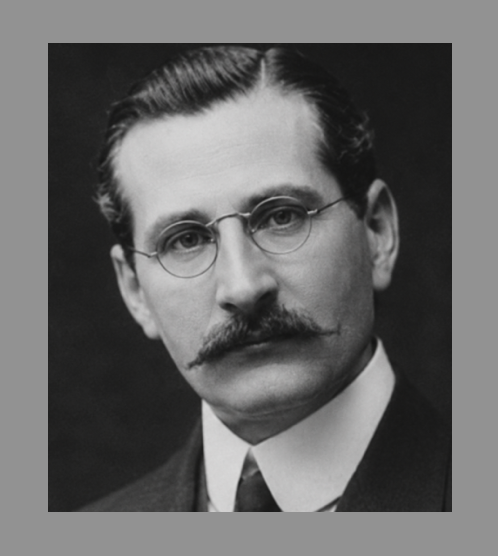
There are no actual photographs of John Hopkins
Above is an AI-generated image of him based on facts known about his life.
Speyburn Distillery was born out of one man’s determination to create a whisky worthy of one of the grandest moments in Victorian Britain. That man was John Hopkins, a successful wine and brandy merchant whose ambition, eye for engineering, and relentless persistence left a permanent mark on the whisky industry. The surviving story of his work at Speyburn reveals a forceful and inventive personality who combined commercial instinct with unusual business acumen and sense for timing.
John Hopkins was born about 1848, and from his teenage years, had become a fairly successful wine and spirits merchant working out of both London and Glasgow. By that period, blended Scotch whisky was becoming one of Britain’s great export industries, and demand for quality malt whisky was rapidly expanding. Merchants who understood both spirits and international trade could make fortunes.
In 1874, he had founded John Hopkins & Company with his brother Edward, and their cousin. But John recognized the opportunity before him and decided he did not simply want to sell whisky, he wanted to produce it himself. So in 1896, the brothers selected a secluded site near Rothes in Speyside, a region already famous for its concentration of pure water sources. There, Hopkins became captivated by the Granty Burn, a small stream flowing through a wooded valley near the River Spey. Hopkins believed the Burn’s mineral-rich water would produce outstanding whisky. Yet the decision to build there would not be simple. The valley was narrow, steep, and difficult terrain for industrial construction. Most distilleries of the era spread horizontally across flatter land, but Hopkins insisted on adapting the design to the natural environment rather than reshaping the landscape itself. To accomplish this, he hired Charles Chree Doig, already one of Scotland’s most respected distillery architects. Together, Hopkins and Doig created something unusual for its time: Instead of building outward, Speyburn was designed vertically across three levels, integrated into the contours of the valley. The distillery’s now-famous pagoda roof became one of the early examples of Doig’s influential architectural style.
Hopkins also embraced innovation. Speyburn became one of the first distilleries to use the Galland-Henning pneumatic drum maltings system, a major technological advance that mechanized parts of the malting process. Traditional floor maltings demanded constant manual labor to turn the barley by hand. The new drum system slowly rotated the germinating grain, preventing matting and dramatically reducing labor demands.
But the most famous chapter in Hopkins’s story came during the final weeks of 1897, the year that marked Queen Victoria’s Diamond Jubilee, celebrating sixty years on the British throne. Hopkins became determined that Speyburn would produce spirit before the year ended so the first casks could forever carry the prestigious date “1897.” Many believed the goal was unrealistic. Construction delays, brutal winter weather, and the challenging location all threatened the project, but Hopkins refused to abandon the deadline.
The distillery was still incomplete as winter storms swept through Speyside. Doors and windows had not yet been fully installed. Snow blew through the building while workers struggled to finish preparations. Nevertheless, Hopkins pushed forward. Under the supervision of distillery manager John Smith, the stills finally ran in December 1897 during severe weather conditions. Workers reportedly operated in heavy coats and mufflers against the cold while Speyburn’s first spirit flowed through the unfinished distillery. Ultimately, Hopkins achieved exactly what he wanted, when at least one cask of whisky was successfully filled and bonded before the year ended, an act that permanently associated Speyburn with Queen Victoria’s jubilee year. The story became one of the great foundation legends in Scotch whisky history, illustrating both the harsh realities of nineteenth-century distilling and Hopkins’s uncompromising determination.
In the early 1900s, Hopkins instituted more innovation at Speyburn, when it became the first distillery to recycle the pot ale (distillation residues) to use as cattle feed or agricultural fertilizer rather than simply being discarded as a copper-toxic waste product into the environment. This early form of environmental awareness pushed other distilleries to refrain from dumping distillate waste into nearby rivers and farmland, and was an early form of sustainability that is still being followed, albeit in a more efficient form, by modern distilleries today.
By 1916, less than twenty years after Speyburn’s founding, John Hopkins & Company and his Speyburn distillery were acquired by the powerful Distillers Company Limited, commonly known as DCL. The sale placed Speyburn within one of the largest whisky conglomerates in the world and ensured the distillery’s long-term survival through the turbulent decades ahead.
Hopkins himself faded completely from the historical spotlight soon after the sale, likely due to his unheralded death, as he would have been nearing 70 years old by that point. Yet his legacy endured in the physical structure and operational philosophy of Speyburn. The distillery’s integration into the landscape, its embrace of industrial innovation, and its association with perseverance under impossible conditions all reflected Hopkins’s personality and priorities.
Today, the still-beautiful Speyburn is called the most photographed distillery in all of Scotland. Visitors walking through the wooded valley still encounter the results of John Hopkins’s decisions from the 1890s. The narrow site beside the Granty Burn remains visually distinct from other Speyside distilleries. The pagoda designed by Charles Doig still rises above the trees. Most importantly, the distillery continues producing whisky more than 125 years after Hopkins insisted on filling that first cask during a freezing winter storm. In the end, John Hopkins’ legacy combines the instincts of a merchant with the determination of a builder and the imagination of an innovator. In doing so, Hopkins created one of Speyside’s most enduring distilleries and secured his place in the enduring history of Scotch whisky.
Sources:
Speyburn distillery official website, “Our Heritage”, speyburn.com
Difford’s Guide, “Speyburn Distillery History”, diffordsguide.com
scotchwhisky.com, “Speyburn”
whisky.com, “Speyburn Distillery”
Master of Malt (blog), “Speyburn Distillery: Tours, Tastings, and 125 Years of History”, masterofmalt.com
Contributed by Tracy McLemore, Fairview, Tennessee USA