William Harvey

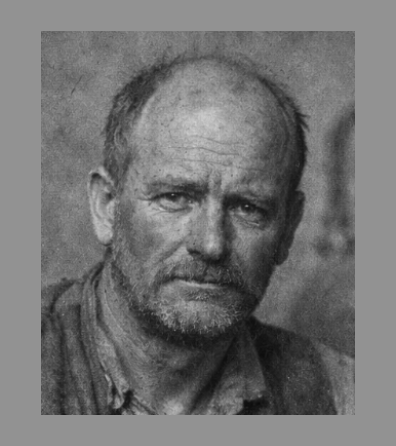
There are no known photos of Willliam Harvey. Above is an AI-generated image of him based on facts known about his life.
William Barnett Harvey’s Bruichladdich story begins with inheritance and unfinished business. William was the oldest son, born 5 September 1849, but still a teenager when his father, also named William (IV), died, leaving the family’s distilling interests in Glasgow’s Yoker and Dundas Hill distilleries to three sons, William (V), John, and Robert. In the early years, their inherited stakes in the distilleries were overseen by uncles Barnett Harvey and John Harvey, Sr. Even with the inheritance, William did not start out as a “distillery man.” He began his working life as a clerk in Glasgow’s sugar trade, and over time became a successful broker, an early clue as to why he would later become the venture’s key financial driver and the brother most suited to carry the burdens of capital, debt, and shareholder politics.
By the late 1870s, the timing for a new distillery looked unusually promising. The Harvey brothers were watching the industry evolve, and two changes mattered enough to act on. One was the 1880 Spirit Act, which shifted how duty was charged, and crucially, the Act enabled bonded warehousing that could defer tax until whisky was sold. The other evolution was a practical breakthrough in transport known as a steam “puffer.” It was a flat-bottomed boating vessel that made it far easier to move coal and barley to Islay, as well as transporting finished product back to mainland shore, greatly improving the efficiency and economics of an island distillery.
In 1881, William married his wife, Sarah, and subsequently had eight children. Also in 1881, the three brothers decided to build a third Harvey distillery, this one on Islay, on the shore of Loch Indaal. They divided the roles in a way that fit their strengths: Robert was an engineer, and would build it; his fingerprints are still visible in Bruichladdich’s bones. John would provide distilling expertise once built, and William would supply business acumen and, in practice, much of the funding. The design for the distillery was said to be “exceptionally convenient” for the time. It was laid out on a hill to exploit gravity flow; brewing tanks highest, then mash tuns and associated equipment stepping downward, with pumping minimized. It had a practical safety device for the wash still: a mechanism intended to prevent a still collapsing through vacuum if procedures were mishandled, something that had unfortunately became widespread in Scotland. Even the building methods signaled ambition. The distillery used cavity-wall construction and concrete reinforced with pebbles from the foreshore, and it was erected as a square around a central courtyard. Contemporary histories repeatedly emphasized Bruichladdich as a purpose-built, “state-of-the-art” plant rather than an adapted farm complex, which was most common in Victorian Scotland.
But if the founding vision was collaborative, the operating reality quickly became solitary. As a result, William Harvey ended up carrying that solitude for decades when a planned “combine,” or coordinated family enterprise linking Yoker, Dundas Hill, and the new Islay distillery was arranged verbally and without a formal written agreement. Before Bruichladdich was even completed, the brothers fell out, and the combine collapsed. The Harveys had imagined a self-contained business that could blend and bottle across distilleries, but without it, Bruichladdich whisky became what its geography and style made it easiest to sell as: Islay malt for blenders.
Unfortunately, only a small proportion of Islay malt was needed in blends, so Bruichladdich could largely sell only to blenders and major firms; therefore it faced pressure on price. The consequences were financial as much as emotional: for twenty-six years from 1881 until 1907, only two times were dividends paid. Within that environment, William’s “broker” background became less a biographical footnote than a survival skill. By 1893, he controlled 51% of the shares, holding influence through his own stake, plus shares held by his wife and smaller family shareholders. Notes attributed to William indicate a struggle for control within the extended family, with William opposed by other relatives who together controlled a large minority.
That share-and-control story is tied to a grim family episode. Bruichladdich history recounts that William lent his brother Robert £1,209 in 1891 when Robert went to Australia. Unfortunately, Robert died there in 1892, and so William sued the estate for the outstanding sum. He was eventually awarded Robert’s Bruichladdich shares, an event that also reflects how precarious the business already was, with shares valued far below their original figure, not to mention the further erosion of the family dynamic after William won the suit.
By 1907, Bruichladdich stopped distilling entirely. By 1912, large stocks of unsold whisky coincided with and a major bank overdraft, with other banks unwilling to advance against the buildings and plant. In 1913, an offer was made for unsold whisky by the brokers MacIntyre & Train; the sale paid off the bank overdraft, but some of the family later discovered the buyer behind the transaction was connected to the trade in a way that left them feeling exploited.
The Great War did not help Bruichladdich’s situation, either. When it began in 1914, whisky prices began moving, but the distillery was constrained by wartime restrictions and then by quota rules tied to production. After the war, in October 1919, there was a restart, and progress continued steadily until 1925. Eventually, though, the cycle of scarcity returned: limited funds for inputs, then a slump, then “no sales,” and by 1929 the distillery stopped again, amid repercussions resulting from the Great Depression, and the distillery remained closed into the mid-1930s. In the middle of those hard decades, William Harvey remained the constant figure at the center of Bruichladdich’s ownership and management story. But then came the final blow: a fire hit Bruichladdich in 1934, destroying the entire complex. The family debated dismantling it and dividing the insurance proceeds, but instead, the distillery was restarted in 1935 after rebuilding key parts, with the idea of selling it later as a going concern.
Not long after, William Harvey died at age 87 on 19 December 1936, and is buried at Kilchoman graveyard on Islay. His youngest son, Kenneth, who was invalided from World War I with shellshock, took over as distillery manager at age 40. But the era of Bruichladdich as a Harvey-held concern was nearing its end. The Bruichladdich history describes entrepreneur Joe Hobbs purchasing the distillery for a mere £8,000 in 1937 and quickly flipping it into a wider set of dealings, with the site refurbished and production resuming in 1938.
If Robert Harvey is the engineer’s story, and John Harvey the distiller’s role, William Harvey is the founder who lived in the long middle: the decades where a “state-of-the-art” distillery had to endure the blunt forces of capital, control, market power, and bad family dynamics. The founding of Bruichladdich was a moment; William’s life with Bruichladdich was the cost of making that moment stay real over time.
Sources:
Bruichladdich Distillery official website, “The History Of Bruichladdich Distillery”, Carl Reavey, 16 July 2012
IslayInfo.com, “Bruichladdich Distillery”, October 2025
Harvey & Hayward family histories, “Harvey at Bruichladdich”, harveyhaywardfamily.co.uk
Contributed by Tracy McLemore, Fairview, Tennessee