Casey Jones

In western Kentucky, the name “Casey Jones” is not associated with a handsome, virtuous railroad engineer. On the contrary, Alfred “Casey” Jones was both a moonshiner and, even more notably, a master still builder whose work shaped how illegal whiskey was produced across the region for decades. Jones was born May 2, 1898, to John Morgan Jones and Dollie Berkley in Golden Pond, Kentucky.
Not much is known about Casey’s early life, but on February 9, 1918, Casey Jones married Felma Wattle Spurrier. The couple had one child, Lillie Maie Jones. After World War I, jobs in the area were scarce, especially for a young man with a new family to feed. Moonshining became a necessity for many. After all, there was plenty of good water, corn, sugar and yeast; all of them the ingredients that made decent corn whiskey possible almost anywhere, but especially in a rural landscape threaded with creeks, timber, and back roads. But in that world, the difference between “possible” and “profitable” often came down to equipment. Moonshiners needed a still that could run efficiently, withstand use, and move fast if the law came looking. Casey saw an opportunity, and before long, everyone in Trigg County knew that if you wanted a quality still to make corn whisky or moonshine, you went to Casey Jones to have one made.
Casey’s reputation centered on fabrication. Over three decades, he built stills all over Kentucky, using only copper. He refused steel because it was often coated with zinc, which he considered dangerous. He was so practiced that he could judge how much copper, and at what gauge a still required almost instinctively. He then shaped it into three pieces with his own hands using manual tools, so that that could be quickly assembled or disassembled and moved quickly. His hallmark was the square “coffin” still, a design meant for real-world evasion as much as distillation. The square pot was said to fit neatly into a wagon bed or the back of a truck, and the added handles were in the right places to make it easy to carry. In that context, a still that could be partially dismantled and hauled away in mere moments wasn’t a novelty, it was insurance.
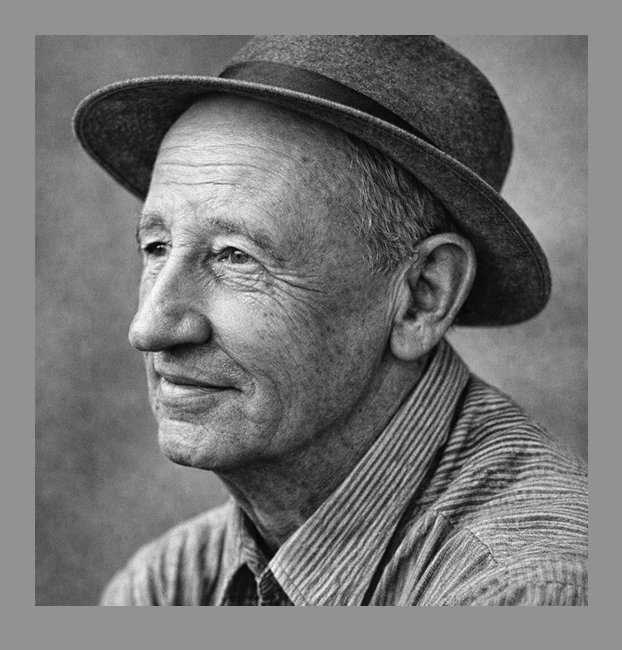
The above depiction of Casey Jones is an AI-derived image taken from a realistic illustration
Casey’s reputation centered on fabrication. Over three decades, he built stills all over Kentucky, using only copper. He refused steel because it was often coated with zinc, which he considered dangerous. He was so practiced that he could judge how much copper, and at what gauge a still required almost instinctively. He then shaped it into three pieces with his own hands using manual tools, so that that could be quickly assembled or disassembled and moved quickly. His hallmark was the square “coffin” still, a design meant for real-world evasion as much as distillation. The square pot was said to fit neatly into a wagon bed or the back of a truck, and the added handles were in the right places to make it easy to carry. In that context, a still that could be partially dismantled and hauled away in mere moments wasn’t a novelty, it was insurance.
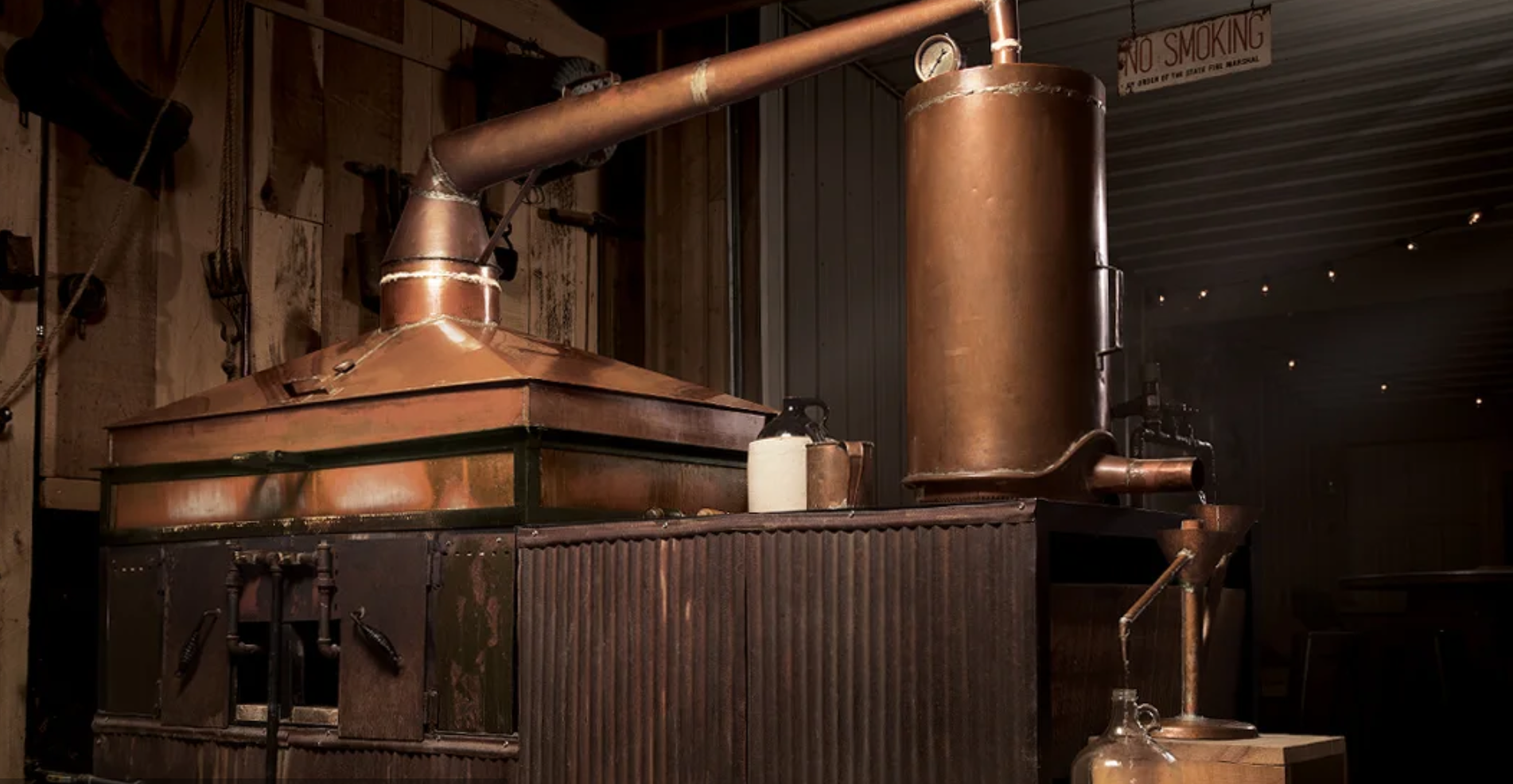
Casey’s square “coffin” still
With his stills, Casey also addressed a bottleneck that moonshiners complained about regularly. That was that the coil condensers utilized on most stills were too slow for the demand. So Casey created a cylindrical condenser that produced a higher-proof, better-tasting spirit in less time, an innovation that was important in an era when the woods could be crawling with revenuers. The economics of Casey’s work were as practical as the engineering: his casual charge for a still was “about $20,” and “a gallon or two” of the resulting whiskey.
But Casey’s fame did not come without consequences. His work was so recognizable that revenuers could identify a still as Casey’s just by looking at it. Eventually, the law finally caught up, and he was sentenced to significant jail time twice in his life; the last time at Mill Point Federal Penitentiary in West Virginia. After his last stint in the “pen,” Casey Jones thereafter retired from still-making forever.
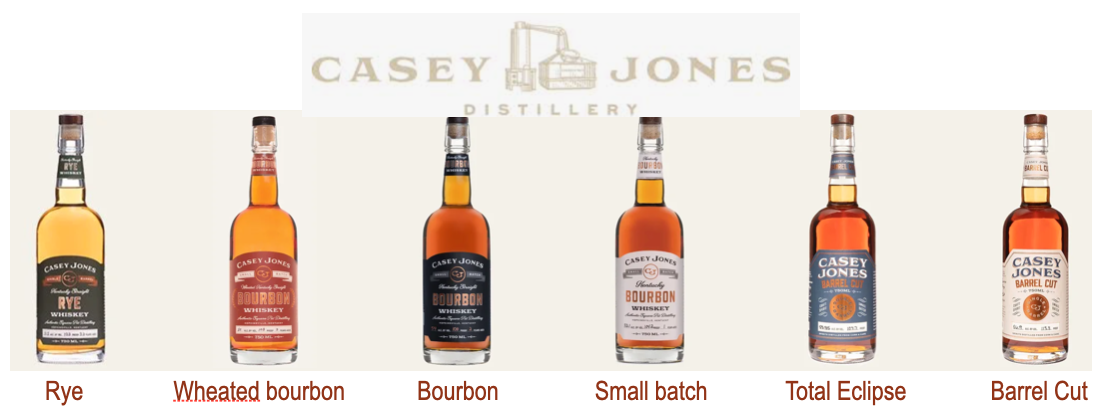
Casey’s legacy has stayed tangible nearly 100 years later because at least one major artifact survived: the last still he built was in 1967. It is now producing legal spirits at the modern Casey Jones Distillery. For a time, it was displayed at the Golden Pond Visitors Center before the family negotiated to bring it back into use at its builder’s namesake distillery. The continuity of an illegal tool of the trade becoming a legal centerpiece helps explain why Casey Jones’ name is still spoken with regard in western Kentucky.
In the end, Alfred “Casey” Jones is remembered less as a brand and more as a kind of rural engineer; someone who read the physical needs of his neighbors’ clandestine economy and met them with copper, math, and muscle. Whether one views that work as necessity, defiance, or crime, the historical outline is clear: he did what he had to do to survive. He built whiskey stills for decades, paid his dues to society for it, and in doing so, left behind a design so distinctive that a later generation could recognize it as heritage and eventually put it back to work—this time proudly in the open.
Sources
Casey Jones Distillery, “Our Story",caseyjonesdistillery.com
WKMS 91.3FM Radio, “Hopkinsville Distillery Crafts ‘Prohibition Era’ Whisky Using Antique Family Still", Matt Markgraf, January 13, 2015, wkms.org
Visit Hopkinsville, “Casey Jones Distillery", visithopkinsville.com
FamilySearch (Ancestors), “Alfred Casey Jones (1898–1980)",familysearch.org
FamilySearch (Ancestors), “John Morgan Jones (1864–1966)", familysearch.org
FamilySearch (Ancestors), “Felma Wattle Spurrier (1901–1974)",familysearch.org
Whisky Advocate, “New Whiskeys To Seek Out…”, November 26, 2024, whiskyadvocate.com
Contributed by Tracy McLemore, Fairview, Tennessee