Charles Julian


Charles H. Julian was born in 1893 in an era when London’s merchants and brokers played a decisive role in shaping what the world came to think of as Scotch. His name rarely appears on a bottle’s label, yet his fingerprints, even today, are still all over the Scotch shelf. In an industry where the blender’s responsibility was to do his job then vanish behind the brand, Julian became one of the few whose reputation survived in print. Charles was first a renowned tea blender who is still remembered for having the nerve to rankle the romance of the whiskey craft with a blunt line about blending that still gets repeated. As such, he was one of the most influential professional blenders of the twentieth century, shaping several of the world’s best-known Scotch brands at a moment when blending, not distilling, defined international whisky taste. Julian also played a central role in the rise of modern premium blends and his work helped establish stylistic standards that endured long after his career ended.
Entering the whisky trade in London, then the nerve center of the Scotch blending world, Julian first worked for the firm Porter, Dingwall & Norris, where he developed a reputation for precision and consistency, qualities that were essential in an era when blends were required to remain stable despite fluctuating supplies and fickle international demand. In 1923, Julian created the blend that became Cutty Sark, produced for Berry Bros. & Rudd. The whisky was notable for its light color and approachable profile, characteristics that distinguished it from heavy Victorian-era whiskies, and which helped it succeed in overseas markets that did not fully appreciate the heavily peated flavors associated with some Scotch brands. This achievement established Julian as a leading blending professional well before mid-century.
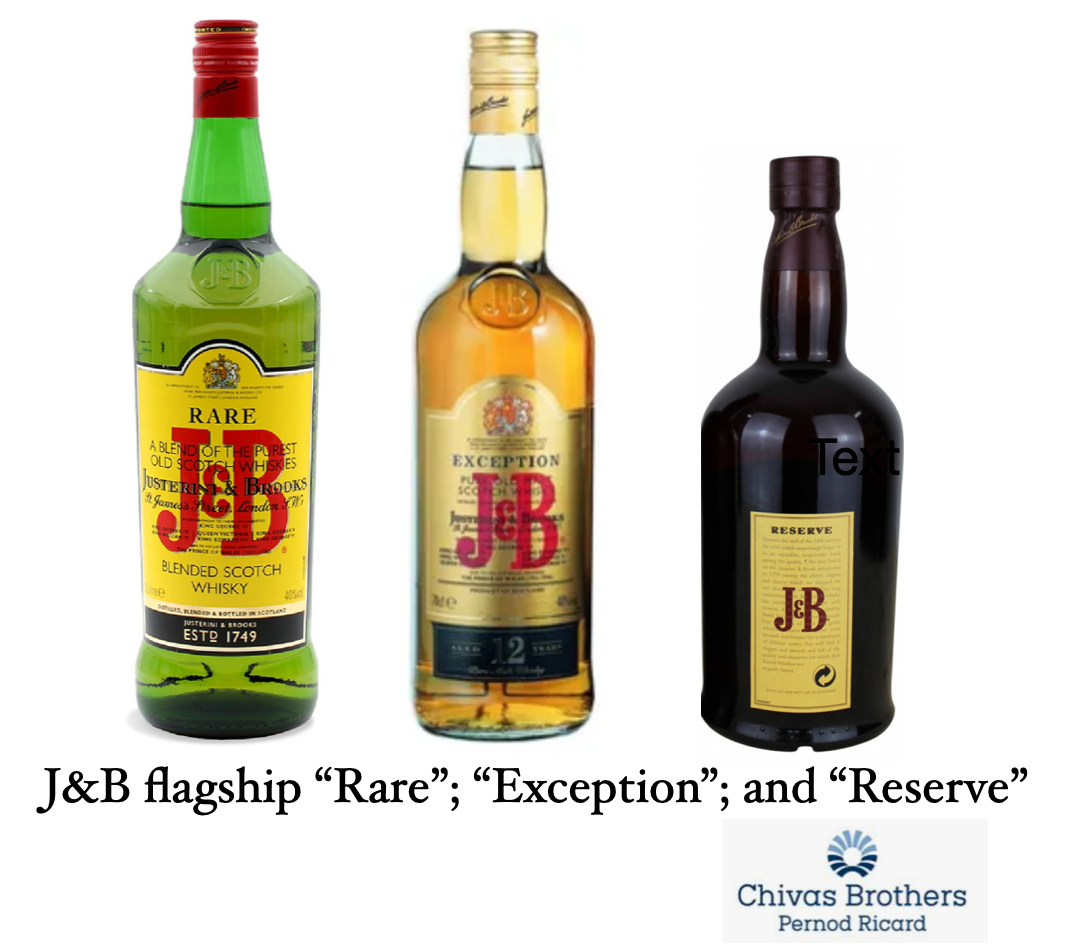
By the 1930s and 1940s, Julian’s career had brought him into association with Justerini & Brooks, where he continued to work on blends that emphasized smoothness, balance, and drinkability. He is closely linked to the development of J&B Rare, a whisky that would later become one of the world’s best-selling Scotches. Julian’s work during this period continues to reflect the broader shift in Scotch whisky toward lighter, internationally-oriented styles.
A decisive chapter in Julian’s career began in 1949, when Seagram acquired Chivas Brothers. That same year, Julian was appointed Master Blender at Chivas, a position he held until 1958. His tenure coincided with Chivas Brothers’ transformation into a global premium brand, particularly in the United States. But Julian’s most enduring legacy at Chivas Brothers is the creation of Royal Salute 21 Year Old, first released in 1953 to commemorate the coronation of Queen Elizabeth II. Inspired by the 21-gun royal salute, the blend was composed entirely of whiskies aged at least twenty-one years. Royal Salute established a new benchmark for prestige-blended Scotch, and remains one of the category’s defining luxury expressions.
In the 50s, Julian became involved in Canadian whisky through his professional relationship with Samuel Bronfman. At that point, Bronfman, as head of Seagram, controlled the world’s largest inventory of aged whisky, most of it Canadian. Julian, now settled in his role as Master Blender at Chivas Brothers, was operating within what could be a frustrating, Seagram-controlled system in which Canadian whisky stocks played a strategic role. During this period, Seagram routinely evaluated, transferred, and allocated mature whiskies across its portfolio to support blending programs, particularly when demand for Scotch outpaced available Scottish stocks. Of his situation, Julian who was known for his pragmatic view of blending, remarked, “There ain’t art in it, but for God’s sake, don’t tell Mr. Sam!” [Bronfman]
During his years as Master Blender, Julian was ultimately responsible for maintaining the house style of Chivas Regal while also overseeing the selection, maturation, and marrying of stocks laid down decades earlier. His approach emphasized reliability and structure rather than mystique, a philosophy that aligned with the industrial scale and global ambitions of postwar Scotch whisky, as well as with Seagram’s long-term goals.
Charles Julian passed away in 1974 at the age of 81, and by the time of his death, Scotch whisky had become a truly global commodity, with blended brands dominating international markets. Although Julian left no memoir and little personal documentation, the whiskies he helped shape, including Cutty Sark, J&B Rare, Chivas Regal, and Royal Salute, remain enduring fixtures of the Scotch landscape. His career proudly illustrates the quiet authority of the professional blender: a figure whose success lies not in personal visibility, but in the ability to make consistency, balance, and trust taste the same, bottle after bottle, and year after year.
Sources:
Chivas Brothers Archive (history.chivasbrothersarchive.com), “Timeline – Chivas Brothers | Discover our history since 1786” (dates for Charles Julian; Master Blender tenure; Royal Salute responsibility). Chivas Brothers
ScotchWhisky.com (scotchwhisky.com), “Royal Salute” entry (Royal Salute created for the 1953 coronation; 21-gun salute inspiration; 21-year-old concept). Scotch Whisky
Whisky Magazine (whiskymag.com), “100 greatest whisky people” (profile note describing Julian as whisky and tea blender; association with J&B Rare; Chivas Master Blender role; quote). Whisky Magazine
Whiskey (Eyewitness Companions) PDF (aussiedistiller.com.au), reference passage identifying Julian as a London blender with Porter, Dingwall & Norris and tying him to Cutty Sark’s creation for Berry Bros & Rudd (1923). Aussie Distiller
The Indy (indypat.com), “BBR launch | The Indy” (secondary narrative linking Julian to light-style blending, J&B development, and influence on Chivas profile)
Contributed by Tracy McLemore, Fairview, Tennessee USA