
Michael Jackson


Michael James Jackson was born on 27 March 1942 in Wetherby, Yorkshire. Jackson would emerge as one of the most influential writers ever to interpret Scotch whisky for a global audience. His authority did not come from marketing or industry affiliation, but from a journalist’s discipline, a traveler’s curiosity, and a writer’s ability to translate sensory experience into precise, enduring language. By the end of his career, he had fundamentally reshaped how Scotch whisky was understood, categorized, and appreciated.
Jackson was born into a working-class family of Lithuanian Jewish descent. His grandfather, Chaim Jakowitz, had emigrated from Kaunas, and Jackson’s father anglicized the surname to Jackson. The family moved to Leeds in the difficult postwar years, where his father worked as a truck driver and his mother as a baker. Jackson grew up alongside a sister, Heather, and had a twin brother who died shortly after birth. His early life was defined less by privilege than by necessity. He attended King James’s Grammar School in Almondbury but left formal education at the age of sixteen to support his family. He entered journalism as a cub reporter for the Huddersfield Examiner, learning the craft in the most traditional way through deadlines, local reporting, and relentless output. It was this early immersion in journalism that shaped the rest of his career. Jackson developed habits that would define his later whisky writing: observation, categorization, and the ability to explain complex subjects in accessible prose. His early assignments took him beyond Yorkshire, eventually leading to a formative period in Edinburgh. There, he encountered Scotch whisky not as a commodity, but as a cultural and geographic expression. The distilleries of Scotland, each tied to a landscape, a water source, and a tradition, presented a narrative structure that matched his instincts as a writer.
After returning to London, Jackson worked briefly as editor of the advertising trade journal Campaign, but his career was already shifting toward a broader form of cultural journalism. Through the 1960s and 1970s, he wrote for a variety of publications, building a reputation as a perceptive observer of food and drink.
His personal life during this period included marriage to Maggie O’Connor in 1966, a relationship that lasted until her death in 1980. He later formed a long-term partnership with Paddy Gunningham, with whom he remained for the final 26 years of his life. Jackson had no biological children, but he was lovingly made part of Gunningham’s family, including her daughter and grandchildren.
Although Jackson first gained wide recognition for his work on beer, particularly with The World Guide to Beer (written in 1977), his influence on Scotch whisky soon proved equally transformative. Prior to Jackson, whisky writing tended to be either technical or promotional. He introduced a new model: whisky as a subject worthy of the same literary and analytical treatment as wine.
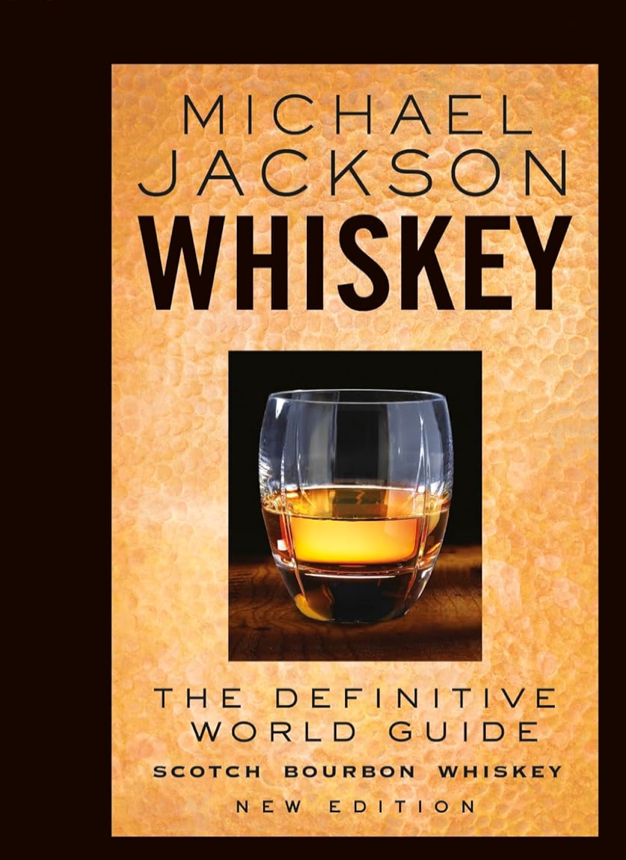
His 1987 book The World Guide to Whisky marked a turning point. In it, Jackson applied a systematic framework to whisky, identifying relationships between regions, production methods, and flavor profiles. He treated Scotch not as a monolith, but as a collection of distinct regional traditions; Highland, Lowland, Islay, Campbeltown, each with identifiable characteristics tied to geography and technique.
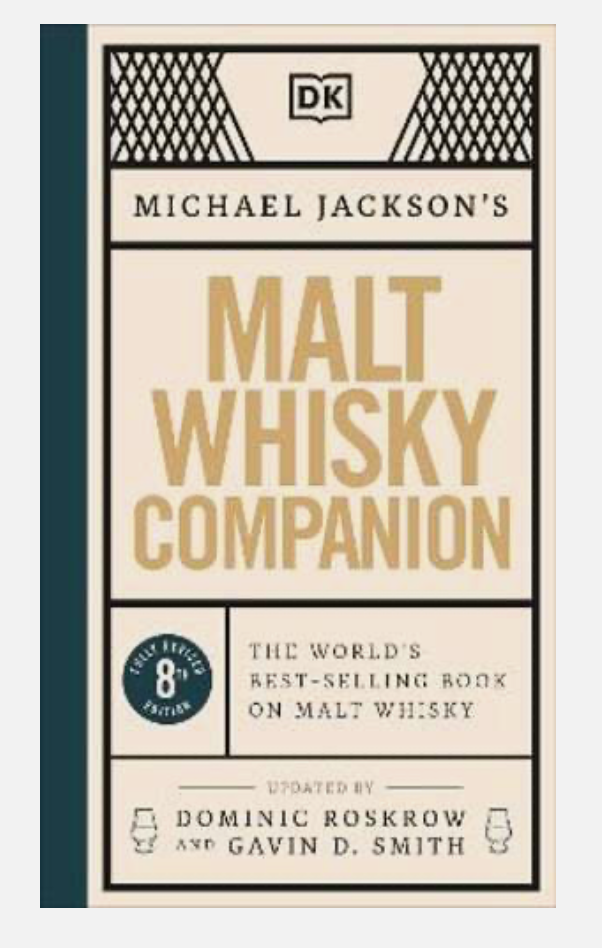
This approach reached its fullest expression in Michael Jackson’s Malt Whisky Companion (first published in 1989). In that work, Jackson cataloged individual distilleries and expressions, assigning scores on a 0–100 scale and providing concise tasting notes. He established a standard of evaluation that balanced technical accuracy with sensory description. Importantly, he refused to reduce whisky to mere numbers; his notes consistently emphasized context in water sources, still shapes, maturation environments, and regional influences. He also restored historical continuity. By comparing modern distilleries with earlier traditions, most notably those documented by Alfred Barnard in the 19th century, Jackson positioned Scotch whisky within a long narrative arc. His writing made it clear that each distillery was not simply a production site, but a continuation of a local legacy. Jackson’s influence extended beyond print. Through lectures, tastings, and television appearances, he introduced audiences around the world to Scotch whisky’s diversity. His method was consistent: begin with geography, explain production, and then interpret flavor. This structure allowed both novices and experienceddrinkers to engage with whisky on deeper terms.
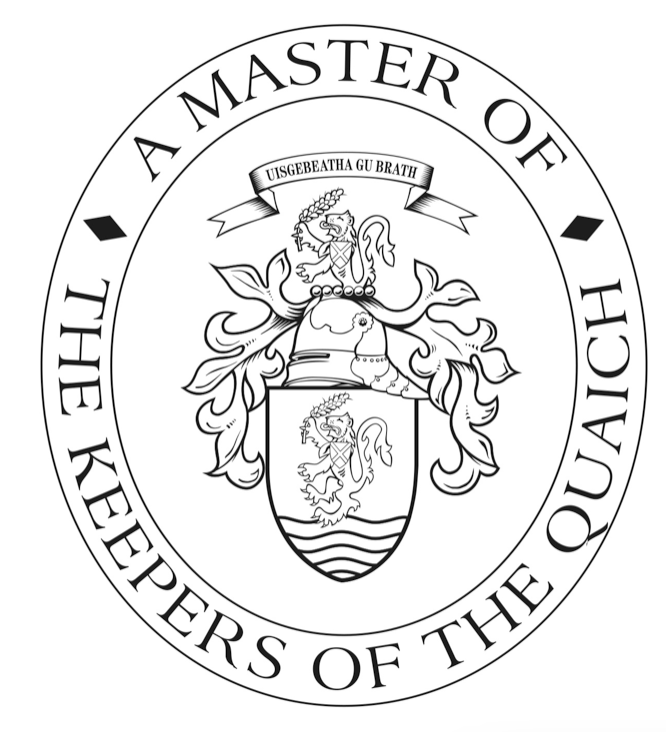
Despite his growing reputation, Jackson remained a journalist at his core. He traveled extensively, visiting distilleries across Scotland and maintaining direct relationships with distillers. His authority derived from firsthand observation rather than secondhand reporting. He wrote not as an outsider, but as a chronicler embedded within the industry. In recognition of his contributions, Jackson was awarded the title Master of the Quaich, one of the Scotch whisky industry’s highest honors.
His later years were marked by significant health challenges. Jackson struggled with Parkinson’s disease for more than a decade, he progress of which led to sometimes rambling speech, rocking motion, and growing lack of balance in his gait. “Understandably, people sometimes think I am drunk, especially given my profession. I am not,” Jackson insisted. He also suffered from severe diabetes, but despite these obstacles, he continued to write and travel, maintaining his output and influence until the end of his life. Sadly, Michael Jackson ultimately died of a heart attack brought on by his Parkinson’s at his home in London on 30 August 2007, at the age of 65.
His legacy within Scotch whisky is enduring and structural. He did not simply describe whisky, he created the vocabulary through which it is now discussed. The modern understanding of single malt Scotch, including regional identity, tasting methodology, and comparative evaluation, bears his imprint. Distilleries that once operated in relative obscurity became globally recognized in part because Jackson documented them with clarity and authority.
In the decades since his death, countless writers have followed his model, but none have replaced his foundational role. Michael Jackson established Scotch whisky as a subject worthy of serious study, and in doing so, he ensured that itsstories, rooted in place, process, and people, would be preserved and understood on a global scale.
Sources
The Guardian, Roger Protz, “Obituary:Michael Jackson”, Roger Protz, 3 Sep 2007
The Independent, “Michael Jackson, writer and journalist”, Paul Levy, 2 September 2007
Beer Connioisseur, “Michael Jackson: The King of Beer Writers”, Jay Brooks, 12 August 2020
Spirits and Distilling (From Oxford Companion to Spirits and Distilling)”, Michael Jackson”, www.spiritsanddistilling.com/dictionary/acref-9780199311132-e-18
Contributed by Tracy McLemore, Fairview, Tennessee