
Roderick Kemp

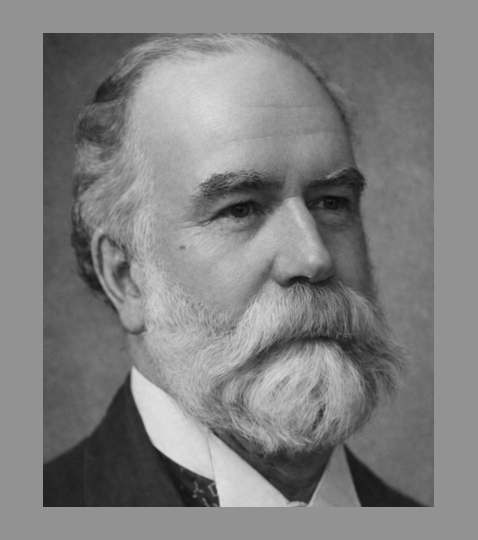
Roderick Kemp, appeared in the world of Scotch whisky from the commercial side of the trade, not from farming or brewing. He was born 6 November 1838, in Urquhart and Glenmoriston, Inverness-shire, and he built his working life as a wine and spirits merchant in Scotland’s northeast before he ever set foot on the Inner Hebridean Isle of Skye.
By the time Kemp arrived on wild, salty, windswept Skye and into Talisker’s history, the distillery was already famous in reputation yet frighteningly fragile in practice: a remote distillery on Loch Harport, with supply and shipping problems that often turned routine business into risk. In 1880, Kemp and Alexander Grigor Allan (the Morayshire procurator fiscal) jointly took over Talisker, a purchase that marked a decisive but reluctant shift from instability to modernization.
By the late 19th century, Kemp had the capital, connections, and commercial experience to take on Talisker’s biggest problem: making a world-class whisky business function at the hard edge of the map. But at Talisker, the challenges were not abstract. Even into the modern era Skye can feel distant; in the 1880s it was a place where moving casks was a physical operation, not a paperwork exercise. A distillery without easy road access depended on sea transport, and Talisker’s lack of a proper pier forced crews into hazardous work; heavy casks, small boats, open water, and ships anchored well offshore. In fact, the most revealing surviving glimpse of Kemp’s day-to-day reality at Talisker comes from his own words about transport risk. In 1891, Kemp wrote to MacLeod of Dunvegan describing the danger of moving casks from small boats onto waiting ships, stressing that only witnesses could truly understand the hazard. The point of the letter was practical: Talisker needed a pier because the business was exposed every time whisky had to be manhandled across water. The landlord refused, and Kemp’s response was equally practical. In 1892, frustrated by the refusal, he sold out of Talisker, which was by then a dramatically more valuable concern than when he and Allan took over.
That exit was not a retreat from whisky, it was a pivot to a different kind of distilling bet. That same year, Kemp bought The Macallan and in doing so, he became the proprietor most often credited with then pushing that brand toward broader prominence. Major reference accounts emphasize that he renamed it Macallan-Glenlivet and expanded the site, treating the distillery as a quality-driven enterprise shaped by a wine merchant’s eye for maturation and cask influence. Modern Macallan storytelling still frames Kemp as foundational to the brand’s identity, repeatedly highlighting his role as owner from 1892 to 1909.
Even though Kemp had by then left Talisker, the cultural footprint of the whisky continued to sharpen after his ownership. That era is closely linked to Robert Louis Stevenson’s famous line, “The king o’ drinks…Talisker!” It was a quote widely repeated in whiskey lore to acknowledge the malt’s growing prestige. Kemp’s significance was not that he created the praise, but that he had helped build the commercial structure that could carry that reputation beyond Skye.
Kemp’s personal life looked like the typical existence of a Victorian-era merchant building a family while expanding a business footprint. He married Catherine Leslie on 27 April 1866 in Hendon, London. Their children are not comprehensively documented in the same open sources that cover his distillery work, but one daughter is well established in the Macallan record: Janet Isabella “Nettie” Harbinson, who is repeatedly described as Kemp’s daughter and who later became central to Macallan’s family-era continuity.
Kemp’s mortal life ended on 5 January 1909 at St. Guildry Street, Elgin, Moray, at age 70. His legacy, however, kept working after him. His daughter Nettie is was by then part of the family story that preserved Macallan’s continuity through the early 20th century, and multiple modern whisky histories continue to trace Macallan’s long family-linked stewardship back to Kemp’s ownership era. For Talisker, Kemp’s importance is concentrated into a crucial dozen-year window: he helped pull a great but precarious distillery into a more modern footing, then left when the physical constraints of the place threatened to surpass what could possibly be done. The pier that Talisker pleaded for eventually arrived later, approved under a subsequent laird and built in 1900 after Kemp was gone, but his 1891 letter captures the exact point: world-class whisky had outgrown improvised infrastructure.
Kemp’s story, at its most verifiable, is the story of a merchant-owner who treated whisky like a serious long game with capital investment, physical plant, distribution realities, and brand reputation, then made hard decisions when geography and governance set limits. Talisker’s windswept pepper-and-sea identity survived many owners, but the Kemp era stands out because it reads like modern business thinking applied to a remote Victorian distillery: stabilize it, upgrade it, grow it, and if the constraints can’t be solved, redeploy capital into the next great site.
Sources:
Difford’s Guide, “Talisker Distillery—History”, www.diffordsguide.com
Diack (Genealogy), “Ancestors of Roderick Kemp”, diack.co.uk/diackped/1116.htm
Ancestry, “Roderick Kemp:1838-1909”, www.ancestry.com
Contributed by Tracy McLemore, Fairview, Tennessee, USA