Greg Lehman


Greg Lehman, founder of Columbus, Ohio’s Watershed Distillery, was born on October 29, 1977. Raised in Ohio, he pursued higher education at Miami University in Oxford, where he studied business and developed the foundational knowledge that would later support his transition into entrepreneurship. After graduating, Lehman entered the corporate world, joining Procter & Gamble, one of the Midwest’s most influential employers. There, he worked in brand management and marketing, gaining experience in product development, consumer positioning, and large-scale operations. This period proved formative, exposing him to disciplined business practices and the mechanics of building recognizable consumer brands.
While his corporate career offered stability, Lehman’s interests gradually shifted. By the late 2000s, he had become increasingly drawn to distillation, particularly as the craft spirits movement began gaining traction across the United States. At the time, Ohio had very few active distilleries and almost none producing their own aged whiskey. However, changes in the regulatory environment were beginning to open the door for new entrants, creating an opportunity that Lehman recognized.
During this same period, his personal life was also taking shape. In the early 2000s, he married Leigh Anne Davis, and the couple soon welcomed two children, establishing a family foundation that would remain central to his life even as his professional ambitions evolved.
Lehman’s transition from corporate executive to distillery founder took form through a partnership with Dave Rigo, a trained distiller who would become his co-founder. In 2010, the two established Watershed Distillery in Columbus. The name “Watershed” reflected both a turning point in their own careers and a broader moment of change in Ohio’s distilling history. From the outset, the operation was designed as a grain-to-glass distillery. Rather than sourcing whiskey from outside producers, Lehman and Rigo committed to producing, aging, and bottling their own spirits.
This decision carried significant financial and operational risk, particularly in bourbon production, where years of aging are required before revenue can be realized. To manage this challenge, early production focused on clear spirits such as vodka and gin, which could be brought to market quickly and generate cash flow while their whiskey matured in barrels.
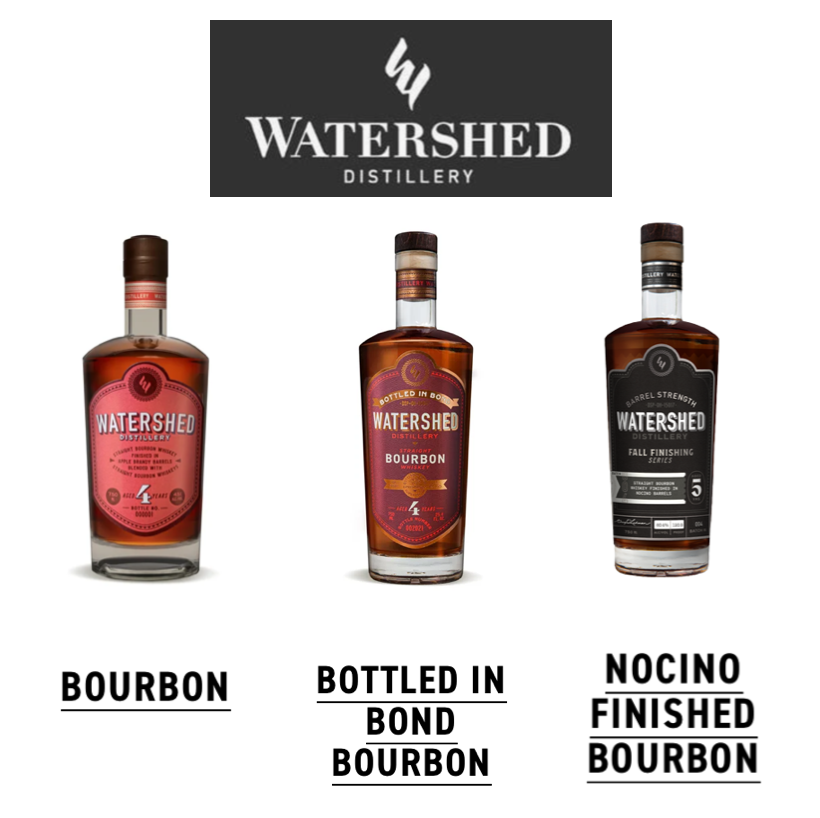
From the beginning, Lehman positioned Watershed as a premium, Ohio-made product, distinguishing it from both mass-market bourbons and sourced craft offerings. Under his leadership, the distillery steadily expanded its production capacity, increased distribution throughout Ohio, and entered additional markets. In 2012, Watershed released its first bourbon, marking a significant milestone not only for the company, but also for Ohio’s re-emerging whiskey industry.
As the bourbon program matured, Watershed invested heavily in barrel inventory, a key indicator of long-term commitment in whiskey production. The company developed multiple expressions, including standard straight bourbon and finished variants, while maintaining control over the full production cycle. This approach reinforced its identity as a true distiller rather than a bottler or blender of sourced whiskey.
Growth continued in 2017 with the opening of an on-site restaurant and bar, integrating hospitality with production. This expansion reflected a broader industry trend in which distilleries increasingly functioned as destination experiences as well as manufacturing facilities. It also demonstrated Watershed’s financial stability and its ability to diversify revenue streams beyond bottle sales.
Throughout its development, Watershed remained closely tied to the broader resurgence of distilling in Ohio. The company became an active participant in the Ohio Distillers Guild, contributing to the visibility and credibility of locally produced spirits. Its bourbon, in particular, achieved strong in-state sales and was frequently cited among the top-selling Ohio-made whiskeys.
By the early 2020s, Watershed Distillery had established itself as one of Ohio’s most recognized craft distilleries, supported by a mature bourbon program and a stable operational base. Continued investment in aging stock ensured a steady pipeline of future releases, while its early entry into the market secured a lasting position within the state’s whiskey landscape. In a state with deep agricultural resources but limited modern distilling history, Watershed demonstrated that locally produced bourbon could compete in both quality and market presence.
In April 2023, following the distillery’s sale to Marussia Beverage Company, Lehman announced that he would step down as CEO. He cited a desire to spend more time with his family and to focus on other ventures, including Saddleberk Pork, a brand he also founded.
Today, Watershed Distillery continues to produce bourbon and other spirits from its Columbus facility. Its identity remains rooted in its founding principles: in-house production, controlled aging, and a long-term commitment to building a whiskey program rather than relying on external sources. Lehman’s role in shaping that approach places him among the defining figures in Ohio’s contemporary whiskey movement.
Sources:
Watershed Distillery official website, “About…”, watersheddistillery.com
Ohio Distillers Guild, “Ohio Distillery Trail”, ohiodistillersguild.org
Columbus Monthly, “Watershed Distillery story and growth”, columbusmonthly.com
The Columbus Dispatch, “Watershed Distillery expands operations”, dispatch.com
Miami University, “Alumni profiles and business graduates”, miamioh.edu
Contributed by Tracy McLemore, Fairview, Tennessee