
Ian Lockwood

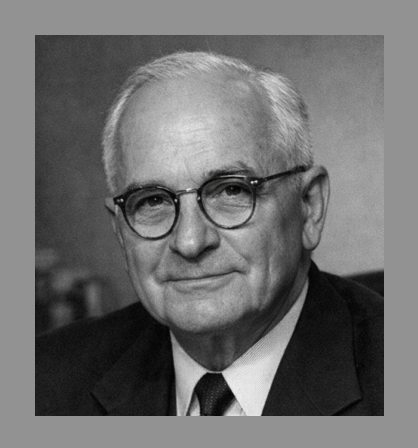
There are no known photographs of JIan Lockwood known to exist. Above
is an AI-generated image of him based on facts known about his life.
Born in April of 1942, Ian Victor Lockwood enters the Glen Scotia story as a marketing executive who stepped into ownership at a moment when Scotch whisky, and especially that in Campbeltown, was fighting for its very survival. By the late 1980, Glen Scotia was already living through the hard math of the industry: falling demand, corporate consolidation, and the growing practice of mothballing smaller sites rather than keep them running through a downturn. While the Glen Scotia distillery itself had lineage, pedigree did not pay the bills. As a result, the distillery had moved through several ownership changes since its 1832 founding, with many shutdowns and restarts across the later half of the 21st century.
By 1970, the distillery’s then-owner, A. Gillies & Co, had just merged into Amalgamated Distilled Products (ADP), and in doing so, had acquired Glen Scotia. Ian Lockwood served as the Group Marketing and Brand Director for Amalgamated Distilled Products. His title was not a fanciful job description, it was a powerful one. In Scotch whisky, “Marketing and Brand Development” was often the job that made the difference between a distillery being viewed as an “asset” to be traded, and one being treated as a living source of identity that might be invested in, visited, collected, and even celebrated. After all, at that time, the distillery had equipment, know-how, and an address that carried history. But Campbeltown, crowded with distilleries, had become a symbol of decline by the late-20th-century. To endure, Glen Scotia needed not only to produce spirit, but to mean something again. It needed to quickly find a way to predictably blend the charm of place into the practical world of distribution, consumer attention, and pricing.
In 1987, Lockwood led a management buyout of a portion of ADP’s struggling business. This acquisition included the Glen Scotia Distillery, which had increasingly seen more and more limited production in the immediate years prior. At first, Lockwood operated the distillery under a new entity called Gibson International, and under his direction, the distillery soon resumed production.
The beginning of Lockwood’s tenure at Glen Scotia was marked by an effort to revitalize what had been largely dormant, and so, it fully reopened in 1989. Still, productivity remained relatively low compared to modern standards. During that era, production was focused on maintaining the distillery's presence in the market rather than delivering high-volume output. A believer in consistency and reliability, Lockwood maintained the distillery's traditional 1830s distillery design, utilizing its original mash tun, stillroom, and dunnage warehouse, which, though increasingly inefficient, served to preserve the distinct Campbeltown character and flavor.
While primarily known for Glen Scotia, at the same time, Gibson International managed various other smaller blended scotch brands that it also inherited from ADP. With those, it focused on regional distribution and specialty bottlings. For instance, bottling and packaging for Moncreiffe Malt was provided by Glen Scotia. Though that single malt offshoot was produced only between 1986 and 1988, it places Lockwood as a link between companies, the sort of person whose seat at the table could open doors for collaborations and logistics. At that time, Lockwood also managed Lowlands distillery Littlemill for Gibson International, where a similar, though smaller revitalization was taking place.
Unfortunately, Glen Scotia’s recovery under Gibson International was not a smooth ascent, nor was it a permanent one. Rather, it was another hard lesson in the volatility of whisky ownership in that era. Gibson International as a firm ultimately went into receivership/bankruptcy in 1994, and Glen Scotia was again mothballed for a short time. Glen Catrine Bonded Warehouse Ltd then acquired Glen Scotia later in 1994, and the distillery was put on hold and ran only intermittently until 1999, when a key restart came. At that time, small-scale production resumed, including assistance/arrangements involving Springbank staff. From around 2000 onward, Glen Scotia’s operation was increasingly overseen/managed within the wider Loch Lomond/Glen Catrine orbit. Ownership then shifted at the parent-company level in March 2014, when private equity firm Exponent acquired the Loch Lomond Distillery Company/Glen Catrine business, including Glen Scotia and the Glen Catrine bottling plant, under the “Loch Lomond Group” banner. In June 2019, Loch Lomond Group (and therefore Glen Scotia) moved again when Hillhouse bought out the group’s Scotch whisky operations.
After Glen Cartrine Bonded Warehouse acquired Gibson’s interests in 1994, Lockwood worked briefly for Kingsburn Distillers, Associated Spirits Brands, and Charles H. Julian, amongst others. He partially retired from full-time work in 2004 after more than 40 years in the spirits business, but as of this writing is still sitting on the boards of several organizations well into his eighth decade of life.
In the end, Ian Lockwood’s Glen Scotia narrative is the story of a whisky executive whose principal responsibility was brand development, and who then led the deal that brought underdog distillery Glen Scotia into a new ownership structure at a moment when the distillery’s continued chance of existence was all but nil. It is also the story of how fragile any rescue of that type could be, for even after production resumed in 1989, the distillery’s fate remained for years tied to corporate solvency and the strategic priorities of whoever held the keys.
If you stand back, though, the significance becomes clearer. Lockwood’s moment in the timeline sits between two realities of modern Scotch whisky. On one side is the era when distilleries were mothballed as “excess capacity.” On the other is the era we live in now, where distilleries like Glen Scotia are once again treated as destinations and brands with character, and are now something to tour, to collect, to debate, and to build new releases around.
Glen Scotia’s later revival under subsequent owners does not erase the earlier instability, but it does highlight why Lockwood’s short window mattered. The distillery reopened; it made spirit again; it stayed in the realm of the living. In its doing so, Ian Lockwood’s remains one of the names whose decisive leadership securely attached Glen Scotia distillery to that hinge point.
Sources:
Financial Times (UK), April 1, 1980, archive.org.
Whiskypedia, “Glen Scotia”, scotchwhisky.com
Must Have Malts, “Glen Scotia Distillery,” musthavemalts.com
Find and Update Company Information Service, “Ian Victor Lockwood”, find-and-update.company-information.service.gov.uk/
The Auld Alliance, “Glen Scotia”, theauldalliance.com.
Whisky Auctioneer, “Moncreiffe Malt”, whiskyauctioneer.com.
Contributed by Tracy McLemore, Fairview, Tennessee USA