Alexander Matheson

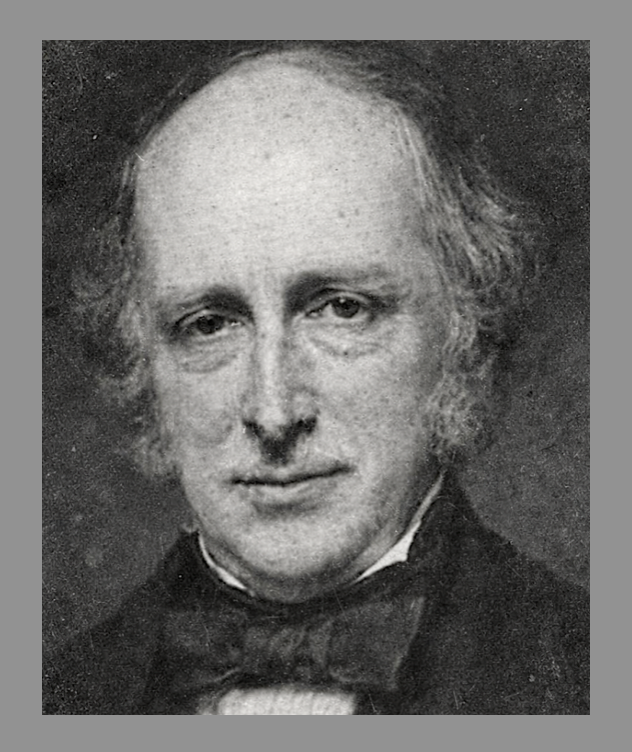
Alexander Matheson’s name sits at the introduction of The Dalmore’s narrative, but the account of his thrilling, sometimes tragic life reached far beyond a single distillery. He was born into a Highland family with land, ambition, and connections that would pull him outward, first into global commerce and then back into Scotland. He was a buyer of estates, a developer, and a long-serving Member of Parliament. The distillery he established at Dalmore in 1839 was one expression of a larger pattern involving the creation of assets and infrastructure intended to endure long after the founder stepped back.
Matheson was born at Attadale, Ross-shire, on 16 January 1805. His formal education included the University of Edinburgh, after which he entered international trade, becoming primarily associated with operations in Asia. He was connected with Jardine Matheson & Co., for whom he traded widely, principally in tea and opium. By the late 1830s, Matheson’s overseas career had given him the capital to reshape his life in Scotland. In 1839, he returned and, in that same year, created a whisky-making footprint that still defines a corner of the Highlands. The site at Dalmore, on the banks of the Cromarty Firth near Alness, had previously been a mill and farmyard, and Matheson converted it into a distillery. After completion, the distillery was leased to the Sunderland family, who provided most of the labor involved in its operation until 1867. In other words, The Dalmore began as Matheson’s project, but it was never his daily trade.
While Dalmore was taking its first steps, Matheson’s personal life was also moving through defining turns. In 1840, he married Mary Macleod, the only daughter of James Crawford Macleod. Tragically, the marriage was brief, with Mary passing unexpectedly in 1841. The couple had no children.
The 1840s also marked the beginning of Matheson’s role as a major estate purchaser and improver. In 1845, the 2nd Duke of Sutherland sold the Ardross estate to Matheson. The property covered about 60,000 acres, and it was there that Matheson undertook extensive estate development, including the construction of roads, land improvements, and workers’ housing. Matheson entered public life when he was elected to Parliament as Liberal MP for the Inverness District of Burghs in 1847. During the middle of his parliamentary career, in 1853, he married again. His second wife was Lavinia Mary Stapleton. She died early in the marriage in 1855, but the union produced children who would later hold Matheson’s estates and, indirectly, Dalmore’s ownership. These included Kenneth James Matheson, born in 1854. In 1860, the twice-widowed Matheson married for a third time, this time to Eleanor Irving Perceval. Eleanor brought with her a prominent political lineage as a granddaughter of Spencer Perceval, the British Prime Minister assassinated in 1812. That marriage produced a large family, including Alexander Perceval and Roderick Mackenzie, both born in December 1861.
The year 1867 marked a hinge point in Dalmore distillery’s operating history. That was when descendants of Clan Mackenzie, Andrew and Charles, took over the distillery after purchasing it outright for £14,500, equivalent to roughly £2 million today.
Matheson’s status rose formally by the early 1880s. In 1882, his public service was recognized with a baronetcy. On 15 May 1882, he was created Baronet of Lochalsh. Around the same period, the architectural statement most associated with his later life was taking physical form. Ardross Castle, designed for Matheson by Alexander Ross in Scottish Baronial style, was constructed in 1880 and 1881.
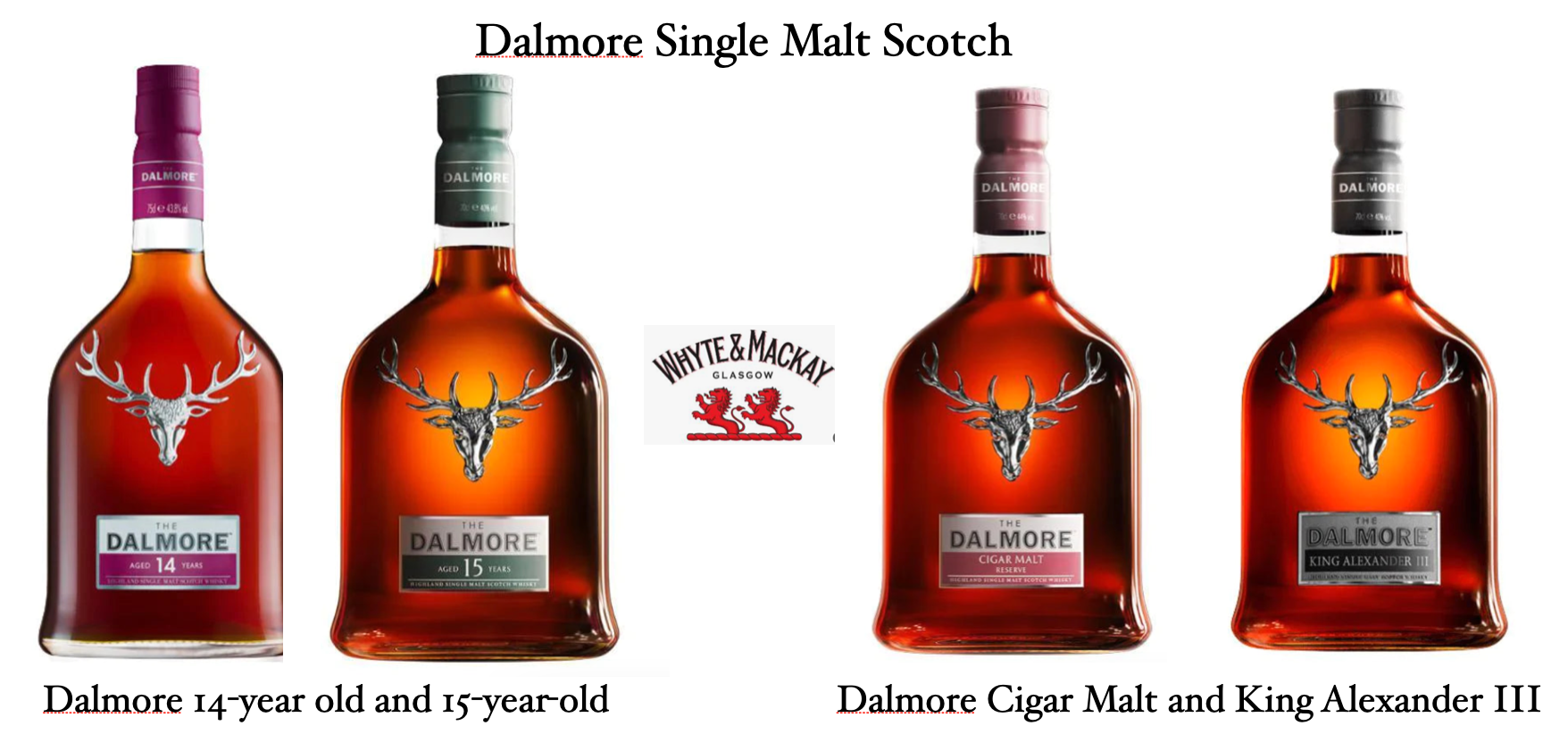
Respected, wealthy, and powerful, Matheson died on 27 July 1886 at the age of 81. His eldest son, Sir Kenneth James Matheson, succeeded him as the second baronet. As for Dalmore’s ownership, the distillery moved in and out of Matheson family control through Sir Kenneth and his children over the next 90-plus years after the Mackenzies relinquished it. Part of that period included government wartime control, when the distillery was commandeered for medicinal and industrial alcohol production. Finally, in 1960, The Dalmore was acquired by the Scottish conglomerate Whyte & Mackay Ltd., under whose control it remains today.
For a man commonly remembered simply as having “founded The Dalmore in 1839,” the fuller record supports something far more substantial. He was a Highland-born Edinburgh graduate turned international merchant, a three-time husband, and father of a large and socially prominent family, an estate buyer and improver, an MP with decades of service, and a founder who carefully built a distillery that he never personally ran yet positioned securely enough to endure for nearly 190 years. The Dalmore’s later iconography, including the stag crest, the export ambitions, and the Mackenzie tenure, came from others. But the land it stood on, and the initial conversion of plans into a robust, working distillery on the Cromarty Firth, began with Alexander Matheson.
Sources:
Electric Scotland, “History of the Mathesons”, Alexander MacKenzie, 1900, electricscotland.com
The Dalmore official website, “Our Story”, thedalmore.com
The Dalmore official website, “History of The Dalmore Distillery”, thedalmore.com
Difford’s Guide, “Dalmore Distillery”, diffordsguide.com
History of Parliament Online/Members after 1832, “Alexander Matheson”, historyofparliamentonline.org
Historic Environment Scotland, “Ardross Castle”, portal.historicenvironment.scot
Ardross Castle (venue site), “Heritage”, ardrosscastle.co.uk
Mollie Stone’s Markets, “At the Apex of Single Malt Scotch”,Tim Bratton, 9 June 2017
Gratitude to Mollie Stone’s Markets for Original likeness of Alexander Matheson
Contributed by Tracy McLemore, Fairview, Tennessee USA