Duncan McCallum

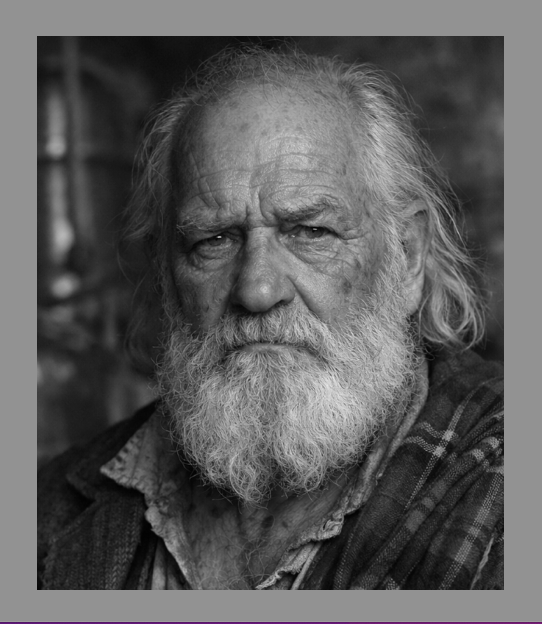
The above image of Duncan McCallum is an AI-created depiction based on facts known about his life.
Duncan McCallum enters the surviving story of Campbeltown whisky not as a peat-burning legend, but as a well-liked but hard-driving industrialist/distiller whose sentimental choices were large enough to be remembered despite, or perhaps because of, his unexplained demise.
The distillery at the center of McCallum’s story began life in 1832 on Campbeltown’s High Street, and was named “Scotia”. It was created by town leaders James Stewart and John Galbraith, and their families operated it for decades following. Then, in 1891, Scotia was bought by 44-year-old Duncan MacCallum, and was soon incorporated as Stewart, Galbraith and Company, Ltd. MacCallum was, by that time, a major figure in the trade and had already established Glen Nevis distillery in 1877, which was, at that time, one of Campbeltown’s most notable distilleries. By the time he acquired Scotia in 1891, he was operating in an era when Scotch whisky was industrializing rapidly: companies were forming, consolidating, and financing distilleries as assets. The Scotia site itself was considered a serious industrial unit, and was equipped with multiple stills and a defined annual capacity that far exceeded what it typically ran day-to-day.
Personally, MacCallum was described as happy-go-lucky; a bit of an eccentric in post-Victorian Scotland. He was a single man who traveled lavishly and extensively; his journeys included Canada, the United States, the West Indies, South America, Australia, New Zealand, India, and China. He also had a passion for sailing, and owned a cruising yacht. Once he even took whisky writer Alfred Barnard on a voyage around Campbeltown Loch. A journalist’s account from MacCallum’s later travels reported that on a 1930 cruise to Norway and the U.S.S.R., McCallum seemed so youthful that fellow passengers were shocked to learn he was 83, and that he had to show his passport to prove it. During the cruise, he was also noted as being public-spirited, popular, and immensely wealthy.
By the early 1900s, MacCallum was being depicted not as a single-site proprietor but as a figure with fingers in many projects. By 1905, MacCallum held controlling interests in several distilleries, namely, Benromach, Glen Albyn, and Glendronach, in addition to Scotia, and he was described as a “hugely capable businessman.” Unfortunately, in 1919, the world was still reeling from the financial and social difficulties left over from The Great War, and by then, Campbeltown’s market pressures had intensified. As a result, Scotia found itself part of a collective strategy as one of six Campbeltown distilleries brought together under a hastily-formed conglomerate called ‘West Highland Malt Distilleries’ to share costs and try to prevent closures. That experiment, however, failed. West Highland Malt Distilleries entered administration/voluntary liquidation in the early 1920s, and most of the other member distilleries disappeared permanently. By 1924, distilleries were still falling in rapid succession, but MacCallum re-purchased Scotia as an intervention that kept it from the same fate as the others. The brutal truth is that his rescue did not reverse the wider economics, and production stopped again in 1928. Scotia is repeatedly framed as a survivor only because MacCallum kept stepping back in when closure looked imminent.
Two years later, on 23 December 1930, Duncan McCallum was found drowned in Crosshill Loch, the water source which supplied Scotia distillery. He was 83 years old at the time. His demise was ruled a suicide, but mysterious circumstances still surround his death, and the historical puzzle remains unsolved: the gregarious, well-traveled businessman/distiller who, despite his failure at Scotia, had few worries in the world, yet he was found lifeless in the loch. Later retellings link the death to a financial betrayal or “crooked” deal, while also acknowledging that the full reason has remained uncertain for nearly a century.
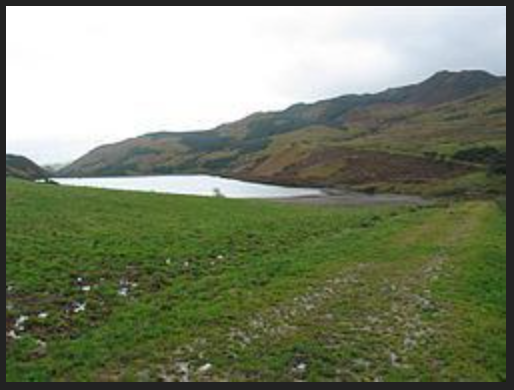
Crosshill Loch
After Duncan McCallum’s death in 1930, Scotia distillery passed into a long sequence of corporate owners. It was first acquired by Bloch Brothers (who added “Glen” to the name), and while the site continued on, production was suspended during the Second World War before restarting in early 1945. In 1954 Bloch Brothers’ distillery interests were sold to Hiram Walker, but after only about a year Glen Scotia was sold again, this time to the Glasgow blender A. Gillies & Co. Gillies’ ownership ended in 1970 when it became part of Amalgamated Distilled Products (ADP), a bulk-and-bottled Scotch group that kept Glen Scotia within a larger, consolidation-era portfolio. The late 20th century was marked by stop-start operation and more handovers. Despite reconstruction work in the late 1970s, Glen Scotia closed from 1984 to 1989; when it reopened, it did so under Gibson International, which had purchased ADP’s distilling interests, before Gibson’s whisky business was bought in 1994 by Glen Catrine Bonded Warehouse. Glen Catrine promptly mothballed Glen Scotia again, with intermittent operation until it returned to fully staffed production in 1999, and the modern era of investment accelerated after private-equity firm Exponent acquired the Loch Lomond Distillery Company (including Glen Scotia and the Glen Catrine site) in 2014, forming today’s Loch Lomond Group ownership structure.
One of the ironies that still surrounds Duncan McCallum is that, despite his grisly ending, even now, his life reads as unusually vivid. He is there at Scotia’s pivot point in 1891; he is there in 1919 when Campbeltown tries collective defense through West Highland Malt Distilleries; he is there again in 1924 when he buys Scotia back during the collapse. Finally, he is there, two days before Christmas in 1930 when the entrepreneur who had kept moving capital and machinery around Scotland ends up in the dark water that supplied a distillery, which, for reasons no one understands, he refused to let go.
Sources:
The Whisky Shop Journal, “The Whiskiest Place in the World – Glen Scotia Distillery”, Frances Wilson, 13 April 2022
The Whisky Shop Journal, “Expert Tasting: Glen Scotia…”, Frances Wilson, 11 August 2022
Scotchwhisky.com (Whiskypedia), “Glen Scotia”
Scotchwhisky.com (Whiskypedia), “Glen Nevis”
Master of Malt (blog), “Spooky whisky ghost stories…”, Adam O’Connell, 21 October 2021
Contributed by Tracy McLemore, Fairview, Tennessee USA