Eilidh Muir


Eilidh Muir was born in 1993 in Ayrshire, a region long associated with the whisky trade. Her eventual entry into the whisky industry did not begin through family inheritance, but through academic and technical interest as she studied Chemical Engineering at the University of Edinburgh. It was an entry point that later proved highly relevant to the analytical side of whisky production and blending.
Growing up in Ayrshire, Muir often visited distilleries, but her potential interest in working in the industry deepened after her university years after she began to contemplate the breadth of careers available in whisky. That 2015 event led her to join William Grant & Sons through the company’s graduate program. Her entry point was not blending itself, but an Engineering and Technical Graduate role that rotated her through multiple parts of the business. Those placements included project engineering, spirit supply, finance, and maturation operations. The structure of the program gave her unusually broad exposure to the mechanics of whisky production before she ever entered a blending room.
That progression mirrors the increasingly interdisciplinary nature of modern Scotch whisky production. Earlier generations of blenders often rose through warehouse work or production management alone, but Muir entered the profession during a period when data analysis, inventory management, engineering, sensory evaluation, and long-term cask planning were becoming more tightly integrated. So after completing her graduate rotations, Muir worked at Girvan as a Spirits Supply Planner. Girvan, William Grant & Sons’ major grain distillery in Ayrshire, is one of the most important industrial sites in Scotch whisky production and supplies spirit for many of the company’s blends. Her work there placed her close to the logistical side of whisky creation, balancing stock, forecasting spirit requirements, and managing maturation resources that may not be bottled for decades.
In January 2021, Muir joined the company’s Whisky Stocks team, where she began working more directly with blending operations. During this period she worked alongside Master Blender Brian Kinsman and malt master Kelsey McKechnie, gradually developing the sensory skills required for professional blending. Most of her early roles involved translating blending-room decisions into operational instructions for distillery teams, ensuring that experimental and production work aligned properly across departments. Over time, however, Muir increasingly focused on sensory development and blending itself. She explains that the process requires patience, repetition, and mentorship rather than sudden advancement. That gradual progression reflects the traditions of Scotch whisky blending, where authority is often earned slowly through years of nosing, tasting, and stock familiarity. Her eventual transition into the formal role of Whisky Blender placed her among a comparatively small number of women occupying high-level creative positions in Scotch whisky production.
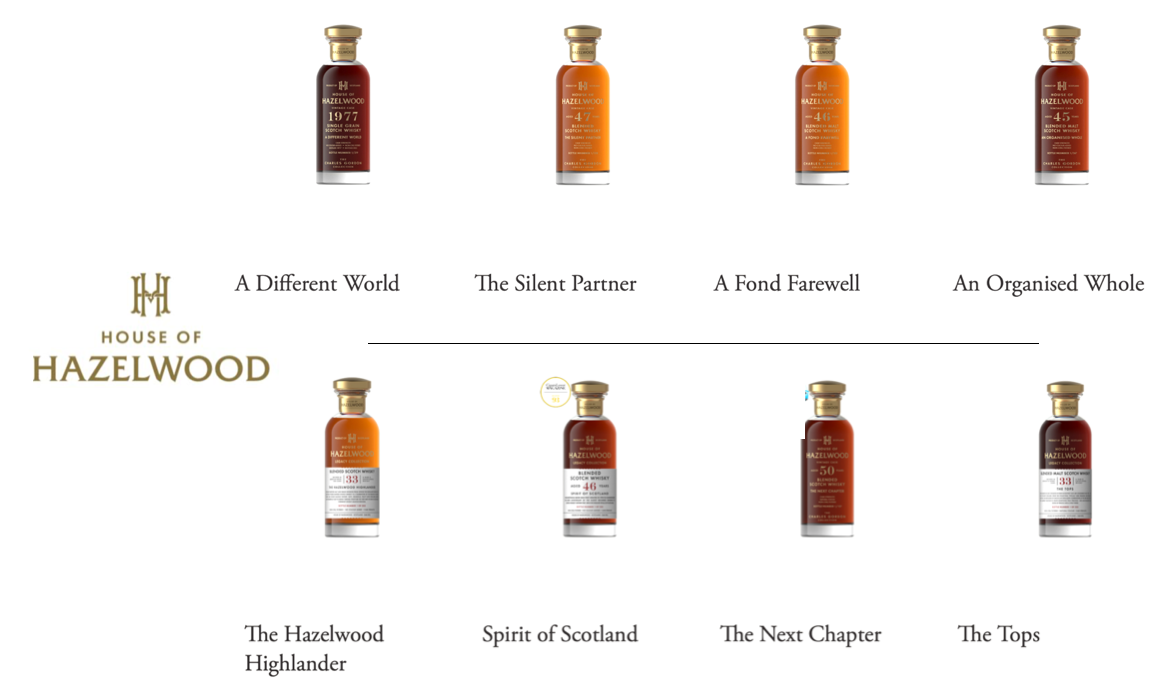
Now, Muir sits among the newer generation of whisky makers at William Grant & Sons. She has emerged as a notable figure in blending and whisky development, particularly through her work with the company’s luxury whisky venture connected to the Gordon family stocks. House of Hazelwood focuses on exceptionally old and rare whiskies drawn from generations of family-held casks. In that environment, Muir became both a custodian of historical inventory and a public-facing representative of the company’s blending philosophy. One of her notable projects was The Accelerator & The Brake, a 33-year-old blend created in collaboration with whisky writer Dave Broom. The whisky explored an unconventional balance between grain and malt whisky, inspired by the contrasting personalities of Charles and Sandy Gordon, two influential members of the Grant family business. Muir supervised the blending process and shaped the final profile. Later, she also created The Long View, a one-off whisky released to support the OurWhisky Foundation, an organization focused on supporting women in the whisky industry. That bottling paid tribute to several women connected to the Hazelwood legacy, including Janet Sheed-Roberts, granddaughter of company founder William Grant.
Muir has also become part of a broader shift toward greater visibility for women in Scotch whisky production. Historically, women played important roles in ownership, bookkeeping, warehousing, and family operations, but were often excluded from public recognition as blenders or production leaders. Interviews connected to House of Hazelwood and the OurWhisky Foundation places Muir within a contemporary generation helping reshape that perception. Muir has expressed hope that the industry would eventually reach a point where women working in whisky would no longer be considered remarkable or unusual.
For a modern Scotch whisky figure, Muir’s trajectory is revealing in itself. Rather than inheriting authority, Eilidh Muir has built it methodically through technical competence, long apprenticeship, and immersion in one of Scotland’s most historically important whisky companies.
Sources:
William Grant & Sons, “Eilidh Muir”, williamgrant.com
Our Whisky Foundation, “Eilidh Muir & Kirsten Grant Meikle: The women behind Hazelwood's whisky legacy”, Becky Paskin, ourwhiskyfoundation.org
The Whiskey Wash, “Quick Fire Introductions: Inside House of Hazelwood”, Mark Littler, thewhiskeywash.com
Whisky Magazine, “House of Hazelwood and Hedonism Wines create ‘a blend of pure indulgence’,” whiskymag.com
House of Hazelwood, “New Release: The Accelerator and The Brake”, houseofhazelwood.com
House of Hazelwood, “The Women Behind House of Hazelwood”, houseofhazelwood.com
Club Oenologique, “The Drinking Hour podcast: House of Hazelwood”, cluboenologique.com
Contributed by Tracy McLemore, Fairview, Tennessee USA