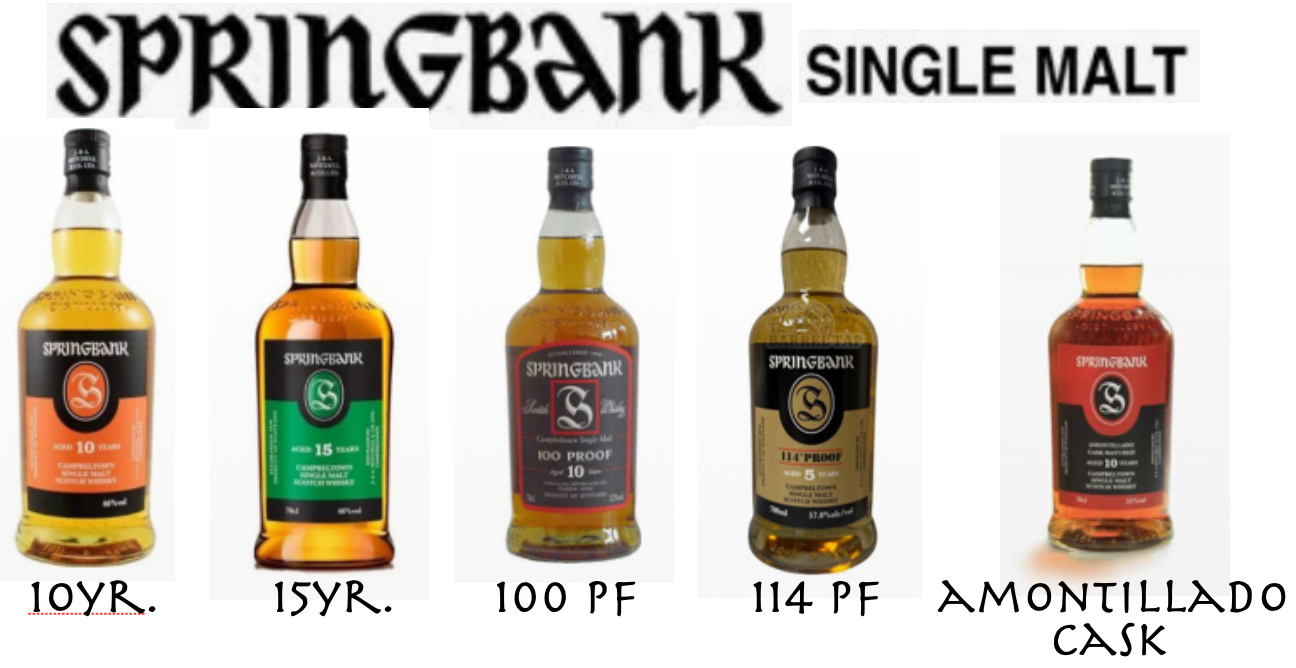
Frank McHardy

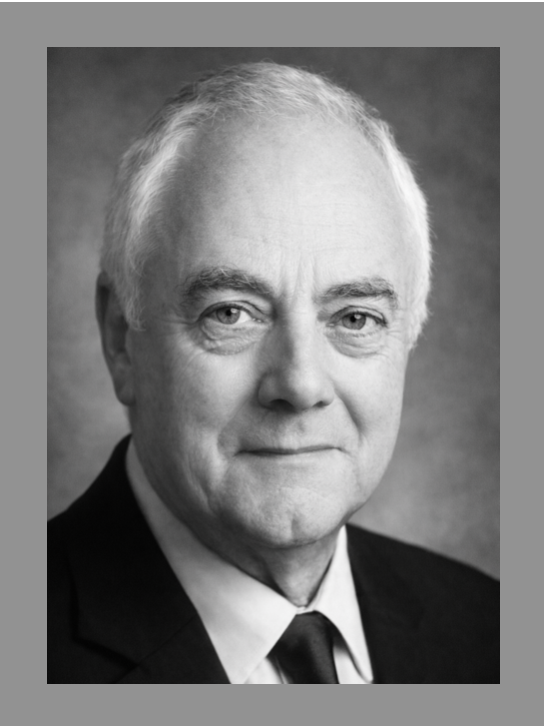
Frank McHardy’s career in Scotch whisky was first experienced in some of the industry’s most unglamorous places: the yard, the grain cars, the mash house, and the still house. Those were jobs where the day’s success was measured in steam pressure, clean transfers, and whether tomorrow’s spirit will be better than today’s. Long before his name appeared on commemorative bottles at Springbank, McHardy was learning the trade through rough, hands-on work across Britain’s whisky regions, then transferring that accumulated knowledge to Campbeltown. And it was there that he then became one of the key figures behind the modern return of Glengyle Distillery, and the rise of Kilkerran.
McHardy was born in St Andrews, Fife, in March of 1945. There, his working life began early. He left school at 14 with no qualifications and began working on farms, eventually attending agricultural college on day release. It was a background that gave him comfort with long hours, physical routines, and the kind of practical problem-solving that later fits naturally into distillery life. His pivot into that world came in 1963 at the age of 18, when he joined Invergordon, a major industrial site on the Cromarty Firth. His day started by sweeping floors and doing whatever work needed doing. Invergordon was as a training ground in scale, a place that taught systems of shift work, maintenance rhythms, and the discipline of running production day after day.
From Invergordon, his job path moved through a sequence that reads like a practical survey course in Scotch making. He worked at Tamnavulin for several years as a process worker involved in operations, then moved to Bruichladdich on Islay, where he served as Assistant Manager before leaving for Campbeltown. This early circuit of grain distilling, Speyside-style malt operations, then a maritime Islay distillery helped form the kind of distiller who knows that different sites demand different solutions, even when many of the principles are shared.
In 1977, McHardy joined Springbank Distillery in Campbeltown, beginning what would become the central relationship of his professional life. Springbank is famously thought of as “idiosyncratic” by modern industry standards. It is that way because it keeps a wide spread of traditional processes in-house, and it produces multiple styles from the same site. Over time, McHardy became closely associated with that approach, so much so that he soon became the “face” of Springbank for visitors and whisky enthusiasts, and a strong advocate for Campbeltown’s wider history. Springbank, however, was not the whole story. From 1986 to 1996, McHardy spent a decade at Bushmills Distillery in Northern Ireland as Master Distiller. That decade broadened McHardy’s perspective on wood policy, stock planning, and long-range thinking, disciplines that become especially important when you’re responsible for making decisions whose consequences won’t be fully known for ten, fifteen, or twenty years. In interviews, he explicitly tied Bushmills to learning the importance of laying down inventory for the future, and then applying those lessons back in Campbeltown.
It was to Springbank that McHardy returned in 1996, again in a senior management role. This was a period when the distillery’s range expanded in a way that demonstrated both ambition and confidence in its technical control. One of the clearest examples was the development of Hazelburn, Springbank’s unpeated, triple-distilled style. First produced in 1997, it sat alongside the Springbank brand itself, as well as the heavily peated Longrow label.
Yet McHardy’s most defining chapter began around the year 2000, when he was credited with the responsibility for sourcing equipment and designing the layout of the revived Glengyle Distillery. The process was to occur over four years between 2000 and 2004. Glengyle had last produced whisky in 1925, and bringing it back was not a matter of cosmetic restoration, it required a modern working distillery be built inside old, inherited walls. There were choices to be made about stills, flow, safety, and the practical realities of running spirit reliably from a 80-year-old distillery.
There is a symbolic detail that captures how central he was to that effort: after construction was complete, the principal Glengyle building on campus was named the “Frank McHardy Production Building” in recognition of his contribution. That is an unusually direct institutional statement about one individual’s impact on a brand. In other words, Glengyle’s modern rebirth is not simply “Mitchell’s reopened a distillery”. It is a story of a veteran distillery man applying decades of experience he gained with manual labor, further refined through malt production and management across Britain, and leading to a complex resurrection project in Campbeltown.
In his later years, McHardy has formally stepped back from full-time employment, but has not disappeared from whisky life. Even after retirement from his main role, he has continued to conduct specialist tours at Springbank, presided over Whisky Schools, and worked as a consultant. The shape of his “retirement” fits the pattern of McHardy as a distiller whose knowledge is valued not only in production, but in translation: teaching visitors and younger makers what the equipment is doing, why certain methods remain, and how, after all this time, Campbeltown’s distinctiveness survives through deliberate choices at the still.
Sources:
World Drinks Awards Hall of Fame, “Frank McHardy”, worlddrinksawards.com
Whisky Magazine Issue 35, “Frank’s wild years”, Dave Broom, 17 November 2003
Companies House (UK government), “Frank McHardy personal appointments”, find-and-update.company-information.service.gov.uk
Tyndrum Whisky, “Springbank 25yr. Frank McHardy 40th Anniversary”, tyndrumwhisky.com/springbank-25yo-frank-mchardy-40th-anniversary.html
Luxuo, Joseph Low, “Whisky Legend Frank McHardy…” , Joseph Low, 18 October 2022
Saveur, “Campbeltown Original”, Colman Andrews, 28 January 2008, saveur.com/article/Wine-and-Drink/Campbeltown-Original/
Dartmoor Whisky Distillery official website, “Our Master Distiller”, dartmoorwhiskydistillery.co.uk
Contributed by Tracy McLemore, Fairview, Tennessee USA