Hugh MacAskill

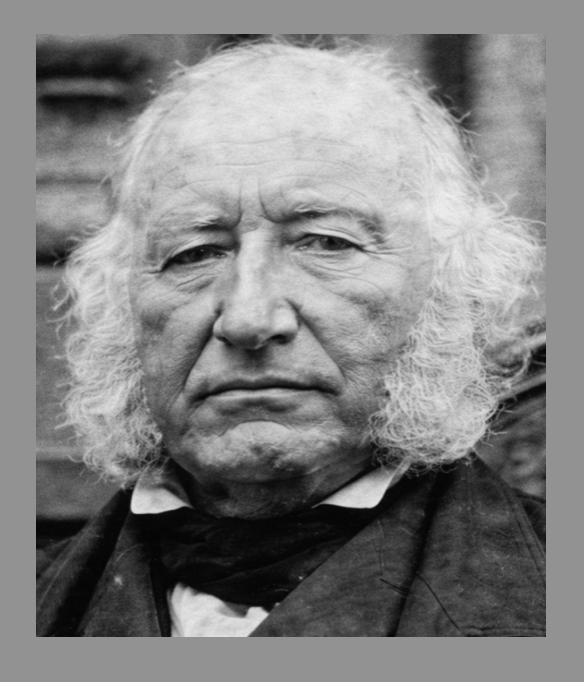
Hugh MacAskill arrived on the Isle of Skye at a moment when land, money, and whisky were being reorganized all at once, and he helped turn a remote shore of Loch Harport into the site of what became the area’a oldest and most enduring distillery. MacAskill was born in 1799 at Fort William, within reach of the garrison-town economy of the West Highlands. As an adult, MacAskill ultimately became tied to the hard, local power structures of Skye; namely, leases, rents, and the authority of the tacksman (a tacksman was not usually the landowner, but on many Highland estates, he functioned as the working manager who made the tenant system run).
MacAskill’s familial roots lie with the small Inner Hebrides Island of Eigg, and within a large sibling group. One modern scholarly work on Gaelic culture describes him as “Margaret (Hope) MacAskill Tolmie’s brother,” and another depicts him as, “the relative who took a newly widowed family under his roof,” during a period of financial hardship and homelessness; an image that, whatever one thinks of his estate policies, shows him operating as a household head with empathy, resources and space to spare. A separate Skye-based historical society publication reviewing MacAskill family research describes ten children in the family of an Eigg doctor, and identifies Hugh as the eldest brother in that household.
By 1825, Hugh MacAskill appears clearly as the tacksman who took over the Talisker estate when his brother-in-law, landowner Donald, emigrated to New Zealand. Where Donald had begun, Hugh then completed an undoubtedly violent clearance of rudimentary, but inhabited dwellings, some of which had been tenanted for decades. In historical records, Hugh was presented as a practical improver and landlord’s agent, but his name is also tied to bitter local memory, language that survives because communities remember the insensitive changes he made. In truth, MacAskill was determined that Skye’s future income would not come only from traditional farming. Whisky was by then a proven market good, and by this time, licensed distilling had begun to outcompete many small, informal operations. Talisker’s origin story sits right inside that shift. Clearly, Hugh’s sentiments wouldn’t have been shared by those already within the farming community, particularly by who also distilled illegally. In fact, few locals welcomed the idea of a lawful distillery. The former parish Minister, Roderick Macleod, declared the distillery to be "one of the greatest curses that could befall it or any other place,” regarding the MacAskill’s construction with even more evil than Hugh’s earlier clearance of his tenants from land their families had occupied for generations.
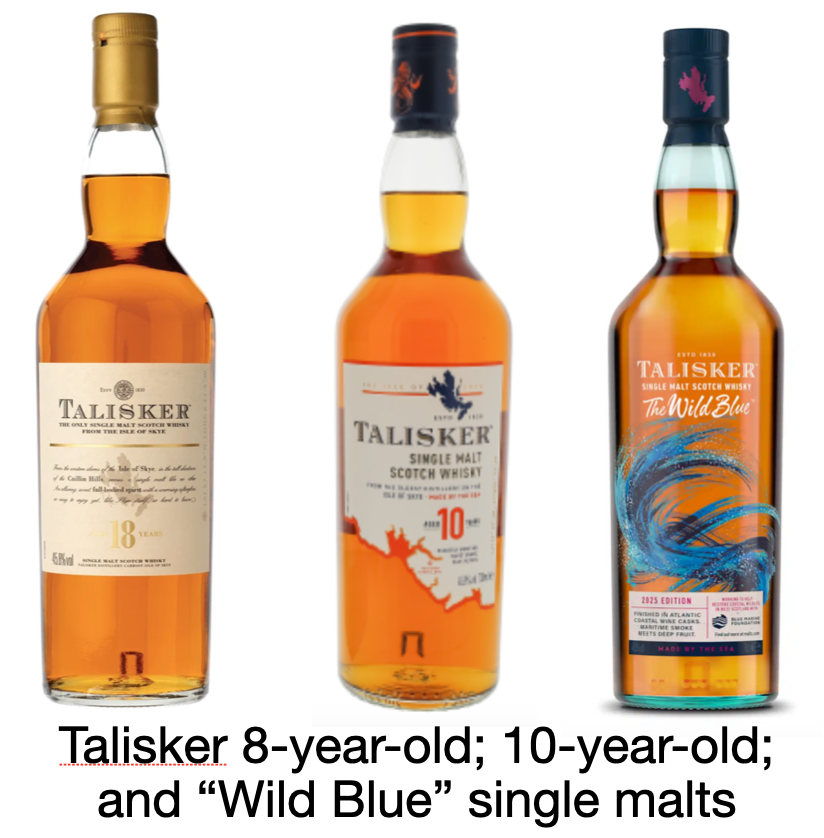
Nevertheless, in 1830, Hugh and his brother Kenneth MacAskill built and established the Talisker distillery at Carbost on the shore of Loch Harport. The founding is sometimes described through Hugh’s practical steps: he leased the site from the MacLeod clan, raised about £3,000, and built the works. The controversial name choice was his, too. Rather than naming the distillery for the village upon where it stood, he obstinately called it Talisker, after his own estate to the West, an act of stubborn branding before branding was a modern word. The distillery’s actual operations began in 1831. At that time, Talisker wasn’t a romantic craft venture tucked into a croft; it was a capital project tied to landholding and access to money. Clearly, the MacAskill brothers enjoyed a certain business posture; estate income, the building of a large enterprise, and operating within the licensed system rather than outside it. It undoubtedly helped that Kenneth ran the bank in Portree, a reminder that the most distillery’s births, even now, sit close to local finance. The same pattern of land plus credit shows up repeatedly in nineteenth-century distilling, especially where remote sites required significant infrastructure.
MacAskill’s personal life surfaces only in fragments, but a few pieces recur. Hugh’s wife was Jessie Mackinnon, the daughter of Lachlan Mackinnon of Corry. Regrettably, children of the couple are not documented and there is no verifiable recorded information that indicates Hugh and Jessie had any, though in reality that would have been extremely uncommon in the Scottish Highland social structure of the day.
The distillery years, meanwhile, moved rather quickly from confident launch to financial stress, and Talisker’s early corporate history indicates that by 1848 the MacAskill operation had been taken over by the bank after insolvency. That date aligns with the wider context: the late 1840s were years of crisis in the Highlands and Islands, tied directly to devastated finances after the potato famine era. The end result in Talisker’s case, was that the founders lost control. In 1849, a man called Ewen Cameron, a Glenelg sheepfarmer, is described as having assumed control over Talisker. In other words, the founder’s “Talisker” chapter as proprietor was effectively over less than two decades after the first spirit ran.
Hugh MacAskill did not live to see Talisker move on from that fate to become a global single-malt emblem. He died on 29 March 1863, at the age of 64, outliving his wife Jessie by 6 years. His depiction shows in a characteristically Highland nineteenth-century posture: a proud man rooted in kin and place, shaped by estate power, capable of sheltering family in crisis, and yet also having seen his share of troubles, then described in the harsh language that prosperous estate management and non-traditionalism could provoke. But above all, he is remembered because he set a permanent institution into motion: Talisker’s later fame may have grown under other hands, but the distillery’s first hard choices: site, lease, capital, and name, belonged to Hugh MacAskill and the tough Highland world that produced him.
Sources:
Moët/Hennessy/Diageo official website, “The Story of Talisker”, https://www.mhdkk.com
Undiscovered Scotland, “Talisker Distillery”, https://www.undiscoveredscotland.co.uk/skye/taliskerdistillery/index.html
WhiskyInvestments, “Talisker Distillery”, Charlie Agutter, 02 April 2024, whiskyinvestments.com
Carmichael Watson Project (blog), “Carmichaels in the Census”, 08 October 2010, carmichaelwatson.blogspot.com
University of Edinburgh, PhD candidate Priscilla Scott, 2013-14, era.ed.ac.uk/bitstream/handle/1842/9913/Scott2014.pdf
Rubh’ an Dùnain, “MacAskills in the New World” (Book Review), Gordon Mack, 11 December 2015, Rubh-an-Dùnain.org.uk
Skye Gravestones, image photo 569, “Jessie Mackinnon MacAskill”, skyegravestones.co.uk
Facebook entry/Great Book of Skye, www.facebook.com/Greatbookofskye/photos
Contributed by Tracy McLemore, Fairview, Tennessee USA