Hugh Munro


Hugh Munro entered the world in the year 1770, the son of Captain James Munro, a naval officer and laird of the Ross-shire Teaninich estate (from the Gaelic taigh an aonaich, meaning ‘house on the hill’). The James Munros were part of the Highland landed class, and as the oldest son, Hugh grew up learning the responsibilities and expectations of estate management, tenant oversight, and local influence.
In 1788, when Hugh was just eighteen years old, his father died. The inheritance passed immediately to him, making him the eighth Laird of Teaninich at a remarkably young age. This early transition into authority defined the trajectory of his life. He was intelligent and resourceful; his position required competence in estate administration, agriculture, and social leadership, and these were skills he would later deploy with notable effect. The Munro family itself was extensive, and Hugh had a younger brother, John, who was to later be an important figure in his estate’s future.
A clever, wealthy young laird, Hugh Munro became enthralled with Jane Munro, the neighboring daughter of General Sir Hector Munro, also a prominent Highland landowner. In keeping with the patterns of late-18th-century Highland society where elite families frequently intermarried to consolidate land and influence, the relationship probably involved cousins, but the two were in love and became betrothed at the age of 20. The interruption of war, however, postponed marriage, because, despite his privileged position, Hugh Munro chose a military career, joining the 78th Highlanders. Once there, he quickly rose to the rank of Captain.
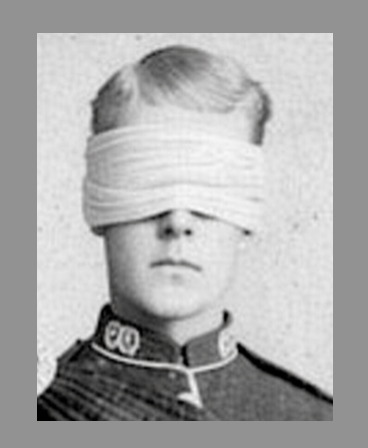
Unfortunately, in 1794, during the French Revolutionary Wars, Munro’s regiment was deployed to the Netherlands. That November, in the fighting at Nijmegen, Munro was struck by a musket ball to the side of his head, passing behind the bridge of his nose before exiting out the other side. The wound was devastating, the projectile having destroyed both of his eyeballs. In an era of limited medical knowledge, survival alone was remarkable. That Munro recovered, returned to Scotland permanently blind, and carried on with his life despite both the physical and social consequences of such an injury was near-miraculous.
Released from his Army duties because of his injury and back home in Ross-shire, Munro resumed control of his estate. His blindness did not diminish his authority; instead, it simply reshaped his method of leadership. He rebuilt and improved Teaninich Castle, personally overseeing construction despite his absence of sight. Accounts note that he would physically measure spaces by pacing them out, an approach that produced the castle’s famously irregular interior proportions.
Unfortunately, Munro’s personal life after his injury was marked by misfortunate rather than continuation, as his earlier engagement was broken, when, owing to his injury, Jane’s family forbade her marriage to the grief stricken war veteran.
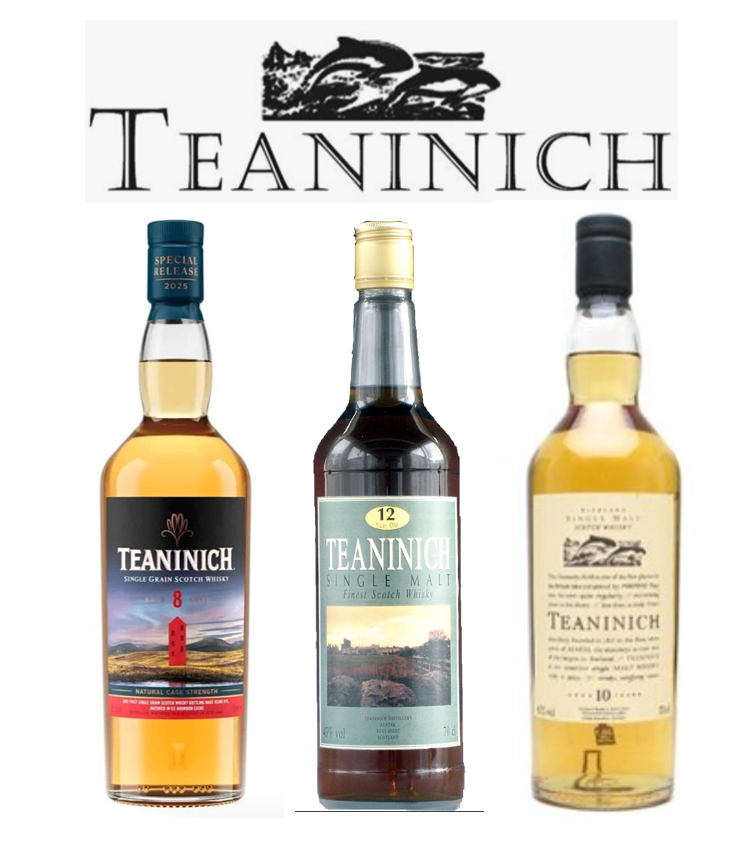
Munro then turned his attention to agricultural reform. He worked to improve the conditions of his tenants and sought ways to stabilize the local economy. One persistent problem in the Highlands at the time was the dominance of illicit distilling, which undercut legal agriculture and left barley growers without reliable markets. Munro’s response was decisive. In 1817, he founded the Teaninich Distillery on his estate. The distillery served a clear purpose: First, it created a legal outlet for barley grown by his tenants, thereby anchoring economic activity on the estate. It also aligned with emerging reforms that would culminate in the Excise Act of 1823, which legalized and regulated whisky production. Munro responded by investing significantly in his venture. Early records show that by 1822, the distillery had accumulated thousands of gallons of whisky in storage, a notable departure from the common practice of selling spirit immediately off the still.
Clearly, the combination of his blindness and the broken engagement had left Munro without a direct heir in a day where noble landowners were all but required to produce male descendants. In 1819, Munro, by then 50 years old, sold Teaninich Castle to his brother John Munro, though he retained involvement with the distillery for 10 more years. By 1831, Munro had effectively retired from any active management, eventually passing full control of the estate and all its enterprises into family hands. John, himself a Lieutenant-General with a distinguished military career in India, dutifully oversaw the next phase of the distillery’s development, and began leasing it to professional operators.
Hugh Munro spent his final years at Coul Cottage, a smaller residence on the estate. He died in 1846, closing a life that had traversed privilege, war, disability, and enterprise. His legacy endures most visibly in Teaninich distillery itself. Established as one of Scotland’s early licensed operations, it became a significant producer of malt whisky, contributing heavily to blended Scotch, most notably within the portfolios that would later form Diageo’s global whisky empire. Yet the deeper significance of Munro’s life lies in the transformation he achieved. Blinded at twenty-four, he returned to the Highlands not as a diminished figure, but as a landowner who reshaped his estate’s economic foundation. By founding a legal distillery at a time when illicit production dominated, he positioned Teaninich at the forefront of a changing industry.
Hugh Munro’s story is not one of gradual ascent, but of inherited privilege, then abrupt rupture followed by deliberate reconstruction. His estate placed him in command; war nearly ended his life; blindness altered it irrevocably. But what followed was a disciplined redirection of purpose. Teaninich distillery stands as the physical expression of that redirection; a structure born from necessity, shaped by reform, and sustained across two centuries. Munro did not merely survive his injuries, he converted them into a different kind of authority, one rooted not in sight, but in extraordinary resolve, in loss as well as in life.
Sources:
The Whiskey Wash, “Meet Blind Captain Munro; Shot, Jilted, And Founder Of Teaninich”, Mark Littler, September 5, 2024
Distilando, “Teaninich Distillery History”, distilando.com/teaninich
ScotchWhisky.com, “Hugh Munro: The Blind Captain”, 21 December 2015, Iain Russell
Whisky.com, “Teaninich Distillery”, whisky.com/whisky-database/distilleries/details/teaninich.html
Cask Trade, “Teaninich Distillery Focus”, www.casktrade.com
Speyside Capital, “Teaninich Distillery”, speysidecapital.com
Contributed by Tracy McLemore, Fairview, Tennessee