James Moir

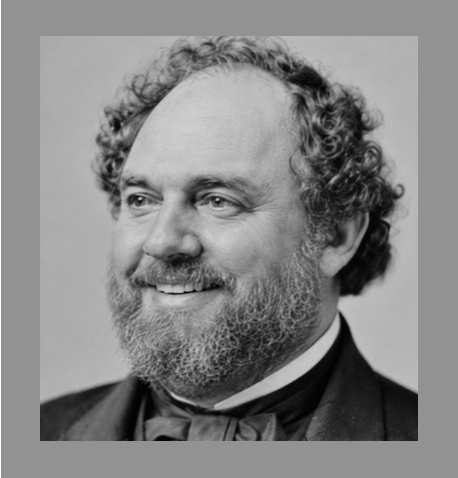
There are no actual photographs of James Moir. Above
is an AI-generated image of him based on facts known about his life.
Among the many nineteenth-century whisky founders who helped shape Scotland’s distilling industry, few seem to have carried as much influence within their local community as Glenglassaugh Distillery founder James Moir. Moir was a local merchant, banker, civic booster, shipping investor, and distiller in the tiny coastal hamlet of Portsoy in Banffshire. He was one of the driving commercial figures in his area during the late Victorian era, and the distillery he founded in 1875 would endure closures, ownership changes, and decades of silence, yet Moir’s name remains inseparable from Glenglassaugh and its original vision.
James Moir was born in 1812, and not much is known about his early life, but he was already a prominent and successful businessman on many fronts long before he entered whisky production. He had built an expanding grocery business in Portsoy, an area deeply tied to fishing, agriculture, and maritime trade. At that time, Moir’s interests touched nearly every important commercial activity in the town, including working as the first manager of the North of Scotland Banking Company in Portsoy. He also invested in shipping ventures, and had several vessels of his own. Moir supported local agricultural development, and leased salmon fishing rights on the River Deveron. He was president of the Portsoy Horticultural Society, and director of the Portsoy Harbor Committee. He was also principal shareholder and chairman of the Portsoy Gas Company. Moir was a fierce campaigner for the extension of the Strathisla railway to Portsoy and, at his own expense, arranged for the opening of a telegraphic communication line that linked the town with nearby cities, his only request being that the cost of sending a message be kept affordable so that it might be used by everyone. Together, these facts reveal a businessman with both capital and influence at a time when Scotland’s whisky industry was entering a period of dramatic expansion. But Moir’s legacy also tells the story of a man that truly cared for his community with passion, pride, and a strong desire to leave the world a better place than he found it.
When a local volunteer Defense Force was created in 1860, the popular Moir was appointed Captain of the Battery. He remained a dedicated volunteer with the Force until he retired from duty in 1873, at which time he was given the rank of Honorary Colonel in recognition of his loyal service. Thereafter, Moir was known locally as “Colonel,” and proudly sported his uniform for parades and events.
But his most lasting enterprise came through his grocery business. There, Moir astutely began to identify an increase in his customers appetite for scotch whisky. He then made it a priority to secure a reliable supply of good liquid, but he found that task difficult in the busy, but geographically remote Portsoy. So Moir decided to build his own distillery; he would call it Glenglassaugh, named for the beautiful crystal clear, gray-green burn that ran nearby.
Construction of Glenglassaugh began around 1873, and the distillery officially opened in 1875. The location was carefully chosen. The site possessed access to the pure waters of the Glassaugh Springs, nearby barley-growing districts, and convenient coastal transport routes. Prior to passage of the Excise Act of the 1820s, illicit distilling had flourished in the surrounding countryside, providing an experienced and ready workforce with a lengthy reputation for producing fine spirit.
Moir, by then more than 60 years of age, did not operate alone. He brought his nephews, Alexander and William Morrison, into the business, effectively creating a family-managed enterprise. Together the trio quickly established a reputation for quality whisky. Even modern Glenglassaugh histories emphasize the esteem the distillery gained during its first decades. The whisky’s coastal location, access to excellent water, and proximity to agricultural suppliers all contributed to its success during an era when Highland malt whisky was becoming increasingly valuable to blenders. As a result, Glenglassaugh was enormously successful, and for the next decade or so, Moir and the Alexander brothers could barely keep up with demand for their sweet, briny, coastal Highland whisky. Further, with a railway now nearby, there was no problem getting supplies in and whisky out of the distillery at any time.
Unfortunately, Moir died after a short illness on 3 March 1883. His funeral was the largest ever held in Portnoy to that time and lasted all day long, with hundreds of mourners. He left the distillery jointly to his nephews, who did the best they could to keep up with demand, but five short years later, in 1892, William Morrison also died unexpectedly. After William’s passing, Alexander struggled mightily to continue operating the distillery on his own as well as the multiple ventures inherited from his uncle. After debating for weeks, he finally determined to sell Glenglassaugh to Highland Distillers. His timing was impeccable.
From that point on, despite its promising beginning, Glenglassaugh’s future became uncertain, and it soon it ran into problems, beginning with the Pattison Crisis of 1898. That crisis was precipitated by Pattison’s Ltd., a wildly successful and aggressive blending and distilling company based in Leith, Edinburgh. The scandal exposed massive financial fraud and dubious blending practices. It resulted in a tanking of scotch prices and an overall severe slump in whisky sales, bankrupting many distilleries and forcing the prolonged closure of several of even the strongest blenders and bottlers.
The once-beautiful Glenglassaugh distillery was among the first affected, and it was mothballed by Highland Distillers during the industry-wide slump and remained silent for many years, slowly slipping into a state of disrepair. Then, just as recovery had partially begun, World War I again forced the closure of most distilleries, followed by U.S. Prohibition, then World War II. In the end, for the next 50 years, Glenglassaugh experienced repeated periods of lengthy closure followed by bursts of revival, then closure again.
Finally it was rebuilt in 1960, when, bolstered by the success of their blended Scotch brands, Highland Distillers installed a new mashtun, washbacks and stills in an attempt to create a light, delicate single malt that could be used in great quantity across their various recipes. Soon, however, it became apparent that Glenglassaugh’s liquid wasn’t what they were looking for. The distillers continued to tinker with the process for the next twenty years, but by 1986, they had run out of patience, and the distillery was again closed. Finally, in 2008, after more than two decades of silence, it was purchased the BenRiach Distillery Co. and revived, yet officially changed hands again when the parent company of BenRiach was purchased by Brown-Forman, where it remains today.
Unfortunately, the surviving historical record says remarkably little about Moir’s private world. No firmly documented information regarding any marriage, children, parents, siblings, or formal education could be verified through the accessible sources referenced. Yet even with those gaps, James Moir emerges as an important figure in the history of Scotch whisky. He was not merely a distillery owner. He was part of a generation of Scottish entrepreneurs who transformed local industries into internationally recognized enterprises. His work in banking, shipping, communications, and civic improvement reveals a man deeply connected to the roots of his region. Glenglassaugh itself stands as the clearest monument to that ambition: a coastal Highland distillery founded during whisky’s great Victorian expansion and still carrying his name and vision more than a century later.
Sources:
Glenglassaugh Official Website, “The Place”, glenglassaugh.com
A Scot on Scotch, “Glenglassaugh Revival”, 24 June 2019, ascotonscotch.com
ScotchWhisky.com, “Glenglassaugh”
Contributed by Tracy McLemore, Fairview, Tennessee USA