
John Mitchell

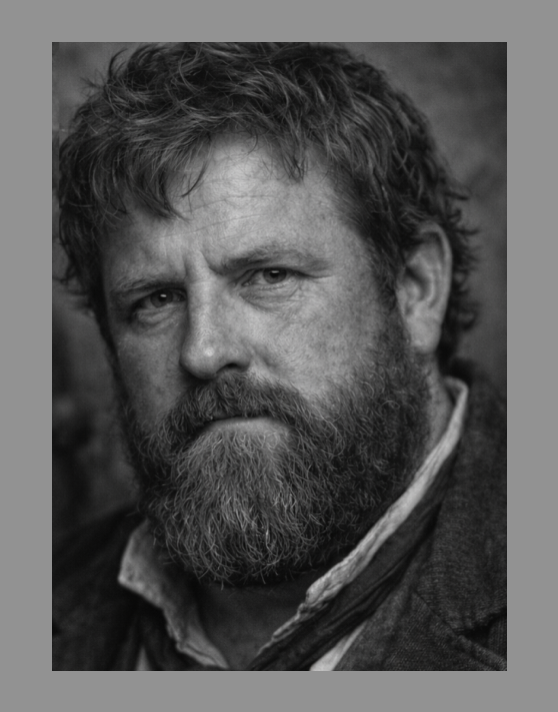
There are no known photographs of John Mitchell known to exist. Above
is an AI-generated image of him based on facts known about his life.
John Mitchell was born on 4 August 1811 in Campbeltown, Argyll, the son of Archibald Mitchell and Isabella Ferguson. His father, Archibald, had founded Springbank as a legal distillery on the site of an earlier illicit still, making it the fourteenth licensed distillery in Campbeltown. John Mitchell’s place in Scotch whisky history, then, rests not in invention or spectacle, but in hard work and continuity: he helped turn Springbank from a modest local enterprise into a durable family concern whose identity would survive long after most of Campbeltown’s early distilleries vanished. His entire working life remained anchored in Campbeltown distilling, where he was born into a family first associated with illicit, and then licensed whisky production.
In early nineteenth-century Campbeltown, whisky was not a distant or abstract trade. It was local infrastructure, utilizing malt barns, barley fields, cooperages, coastal shipping, and employing families whose labor moved fluidly between farming and distilling. By the time John reached adulthood, Springbank was already operating legally, and the Mitchell family was positioned to deepen its investment in the business rather than merely maintain it.
By 1837, family patriarch Archibald Mitchell was more than seventy years old and prepared to pass control of Springbank to John and his brother William, both of whom had worked under their father’s direction for years. The timing proved favorable. In 1838, records note that a buyer from Kilmarnock—roughly one hundred miles across the Firth of Clyde—purchased 118 gallons of Springbank whisky. The detail is small, but its significance is not. It places John Mitchell’s early ownership period within a marketplace that already extended well beyond Kintyre. Campbeltown whisky was traveling outward, and Springbank was part of that movement.
In 1839, John Mitchell, now firmly established as Springbank’s lead distiller, married Mary Wylie in Campbeltown. Less than a year later, their first daughter, Isabella—known as “Dickie”—was born. She would be followed by nine siblings in close succession. In total, John and Mary had ten children: seven daughters and three sons. Their youngest son, Alexander, would later enter the business and play a decisive role in shaping Springbank’s corporate identity for generations.
John’s interests were never confined to distilling alone. In 1844, he leased Balliemenach Farm, north of Campbeltown, and began farming and raising livestock. Over time, John and William together farmed more than 17,000 acres (7,000 hectares). This scale reflects a broader Campbeltown pattern. Distillers who farmed were not supplementing their income; they were securing supply. Control of barley and land meant stability, and stability meant production could continue when less integrated firms faltered. The Mitchells’ ability to link farming and distilling under one family structure helped explain Springbank’s durability through periods that proved fatal to weaker operations.
The most consequential turning point in John Mitchell’s business life came in 1872, when his partnership with William was dissolved following a dispute. John purchased William’s interest in Springbank, while William used the proceeds to establish his own legacy at Glengyle distillery. From that moment forward, Springbank’s continuity became directly tied to John Mitchell alone. The distillery’s identity as a Mitchell family concern narrowed around his line, setting the stage for the generational structure that followed.
After the brothers’ separation, John brought his son Alexander into the business, forming the firm J&A Mitchell. The arrangement formalized what had already become essential to Springbank’s survival: a partnership that balanced production with commerce, ensuring whisky could be made, financed, and sold into an expanding market. Around this core, the Mitchell family’s wider ventures in Campbeltown continued to shift through new builds, closures, and reorganizations, reflecting the volatile economics of a town whose fortunes rose and fell with whisky.
John Mitchell died in 1892. By that time, Springbank had already entered the long arc that would make it unusual in Scotch whisky history: a distillery that remained in the hands of descendants rather than being absorbed, renamed, or stripped of its original identity. Later chapters, including survival through industry crashes, the contraction of Campbeltown to only a handful of operating distilleries, and the region’s modern revival, belong to subsequent generations. Yet John Mitchell’s imprint remains clear in the simplest measure of all: Springbank stayed open, in Campbeltown, with the Mitchell name still attached, at a time when so many neighboring distilleries disappeared entirely.
Sources:
Springbank distillery official website, “Our Story”, springbank.scot/about/story/
McTear’s, “Springbank’s Family History”, mctears.co.uk
Find a Grave, “John Mitchell (1811–1892)”, sv.findagrave.com
WikiTree genealogy, “John Mitchell (1811–1892)”, wikitree.com
FamilySearch genealogy, “Agnes Mitchell / Annie Mitchell / Alexander Mitchell”, ancestors.familysearch.org
My Ain Folk, “Mitchell”, www.myainfolk.ca
WhiskyDrinks.net, “The Making of Whisky: Kilkerran”, Ernst Scheiner, 27 March 2024
Contributed by Tracy McLemore, Fairview, Tennessee USA