
Kevin MacPherson

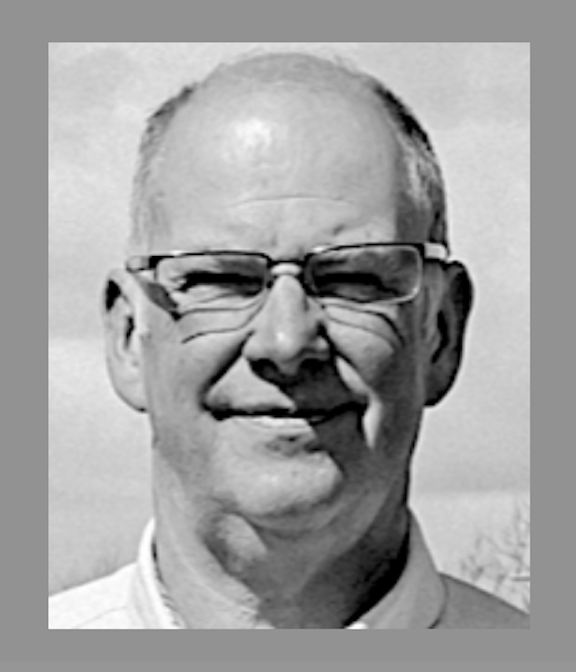
Kevin MacPherson built his career in Scotch whisky the traditional way: from the warehouse floor upward. Long before he became the distillery manager at Balmenach Distillery in Speyside, he worked among maltings, bottling lines, warehouses, brewhouses, and still houses, learning nearly every stage of whisky production firsthand. That practical background made him representative of a longstanding Scottish distilling tradition in which production leaders emerge through years of operational experience rather than corporate visibility.
MacPherson was born in the mid-1970s in Moray, eventually settling in Cromdale, the Speyside village beside Balmenach Distillery. He has remained rooted in the same region where he built his career. That fact reflects the intensely local nature of Scotch whisky culture, where generations of distillery workers and managers have often lived within sight of the still houses where they worked.
MacPherson entered the whisky industry through Chivas Brothers, one of Scotland’s major whisky companies. His first role was in the floor maltings at Benriach Distillery. At the time, traditional floor maltings had already become increasingly rare in Scotch whisky production, replaced in many cases by industrial maltings capable of supplying multiple distilleries. Working in that environment exposed MacPherson to one of whisky’s oldest production methods. Malted barley would be spread across large stone floors, turned by hand, and carefully monitored as it germinated before kiln drying. The work was physically demanding and highly dependent on judgment developed through experience.
After Benriach, MacPherson moved to Glenfiddich, where he worked in the bottling hall. Glenfiddich had become one of the world’s most recognizable single malt brands, and the experience exposed him to whisky at the opposite end of the production chain. Instead of raw barley and fermentation, bottling work required precision, consistency, packaging discipline, and an understanding of global export standards. In about 2005, MacPherson returned to Chivas Brothers and expanded his experience through a range of warehouse and shift-operator positions across several distilleries. Those roles immersed him in the operational realities of Scotch whisky maturation and distillation. Warehousing in Scotland is a specialized trade in itself. Casks must be monitored over decades as spirit interacts with oak, climate, and warehouse conditions. Shift operation inside distilleries requires careful management of mashing, fermentation, distillation, and spirit cuts, all while maintaining consistency from batch to batch.
A subsequent move to Whyte & Mackay broadened his responsibilities even further. There, MacPherson progressed from warehouseman to brewer. Brewing is among the most important stages in whisky production because fermentation largely determines the character of the wash entering the stills. Brewers oversee mash conversion, yeast performance, fermentation timing, and consistency of the resulting liquid before distillation begins. By the time MacPherson reached that role, he had accumulated experience in nearly every major operational phase of Scotch whisky production.
In 2014, MacPherson joined International Beverage as Distillery Manager at Balmenach Distillery. The appointment placed him in charge of one of Speyside’s oldest legal distilleries. Balmenach had been founded in 1824 by James McGregor, only a year after the Excise Act of 1823 transformed Scotch whisky production by encouraging illicit distillers to become licensed operators. Located near Cromdale beneath the Cairngorm hills, Balmenach had long been known within the blending industry for producing a muscular, weighty Speyside malt. The distillery itself carried a complicated history. It had passed through the hands of the Balmenach-Glenlivet Distillery Company, Distillers Company Limited, and eventually Inver House Distillers. Production ceased during periods of wartime disruption and again during the whisky downturn of the early 1990s before Inver House revived the site after purchasing it in 1997. By the time MacPherson arrived, Balmenach had re-established itself as an important production distillery within the Inver House portfolio.
MacPherson explains that the opportunity to oversee the upgrading of Balmenach, combined with the chance to work for a growing international drinks company, played a major role in his decision to accept the position. His responsibilities extended far beyond supervising distillation. As distillery manager, he oversaw production operations, cask management, repairs, maintenance, staff coordination, and visitor engagement. Under his leadership, Balmenach has increasingly emphasized both whisky heritage and sustainability. The distillery became one of Scotland’s more ambitious environmentally focused production sites after major investment in anaerobic digestion systems and renewable-energy infrastructure. In 2017, Balmenach invested approximately £4 million into an anaerobic digestion plant capable of processing whisky co-products onsite while dramatically reducing tanker transport and energy consumption. The project became part of broader Scotch whisky industry efforts to reduce carbon emissions and improve sustainability across distilling operations. Despite those modernizations, Balmenach retained much of its traditional whisky character. The distillery continued using wooden washbacks and worm tubs, features associated with heavier-bodied spirit styles. Balmenach’s spirit remained particularly valued within blends, though independent bottlings and occasional official releases increasingly drew attention to the distillery’s robust Speyside profile. As a result, Inver House has no plans to release this highly distinctive whisky as a single malt. The reason for this is that the unusual make is too highly prized as fillings for blends, both by Inver House and other blenders.
MacPherson remains a whisky production man shaped by decades inside several of Scotland most distinct but highest-quality distilleries. His career has consistently reflected the continuity of Scotch whisky craftsmanship across multiple generations. From turning barley in floor maltings to managing one of Speyside’s oldest distilleries, he became part of the long operational lineage that has sustained Scotch whisky through periods of expansion, consolidation, closures, and renewal.
Sources:
Difford’s Guide, “History-Balmenach Distillery”, diffordsguide.com
ScotchWhisky.com, “Balmenach”
InterBev Group, “Balmenach Distillery”, interbevgroup.com
Contributed by Tracy McLemore, Fairview, Tennessee USA