Lee Medoff


Lee A. Medoff was born in July of 1962 and raised in the Pacific Northwest, a third-generation Oregonian. His grandfather, Alexander Medoyeff, came to Oregon from the Republic of Georgia following the Russian Revolution, and eventually settled in the Beaver state.
As a young man, Medoff attended Lewis & Clark College in Portland. Once his collegiate education had concluded, Medoff’s professional training came through Oregon’s rapidly developing craft beverage culture. He began his career in spirits as a brewer with McMenamins, the Oregon-based collection of brewpubs, hotels and entertainment properties that became an important early incubator for the region’s craft beverage industry. In 2002, he left brewing behind and was promoted to lead distiller at Edgefield, McMenamins’ huge house distillery in Troutdale, Oregon. There, his whiskey work included such creations as double-distilled, unpeated malt spirit matured primarily in bourbon barrels with additional whiskey aging in red-wine casks. Those experiences placed Medoff among the pioneers of Oregon whiskey. He and fellow McMenamins brewer Christian Krogstad subsequently joined forces to establish House Spirits, which began operating in the early 2003 and made its first commercial sales in 2004. Medoff’s Russian family heritage influenced House Spirit’s Medoyeff Vodka, and the distillery also became locally well known for its Aviation Gin. Whiskey, however, was already becoming part of Medoff’s thinking. By 2010, House Spirits was selling a three-year-old malt whiskey, and Medoff was experimenting with rye-and-barley whiskey and different types of American and French oak.
At the same time, Medoff was also helping build an industry rather than simply another spirits brand. In 2007, he became the first president of the newly created Oregon Distillers Guild, recognized as the first craft distilling organization in the United States. Oregon at the time had only a small group of artisan distilleries, and Medoff saw parallels between their emergence and the earlier growth of microbrewing. Since his career had already crossed brewing, wine and distillation, he had an unusually broad understanding of fermentation and barrel maturation when American craft whiskey was still in its infancy.
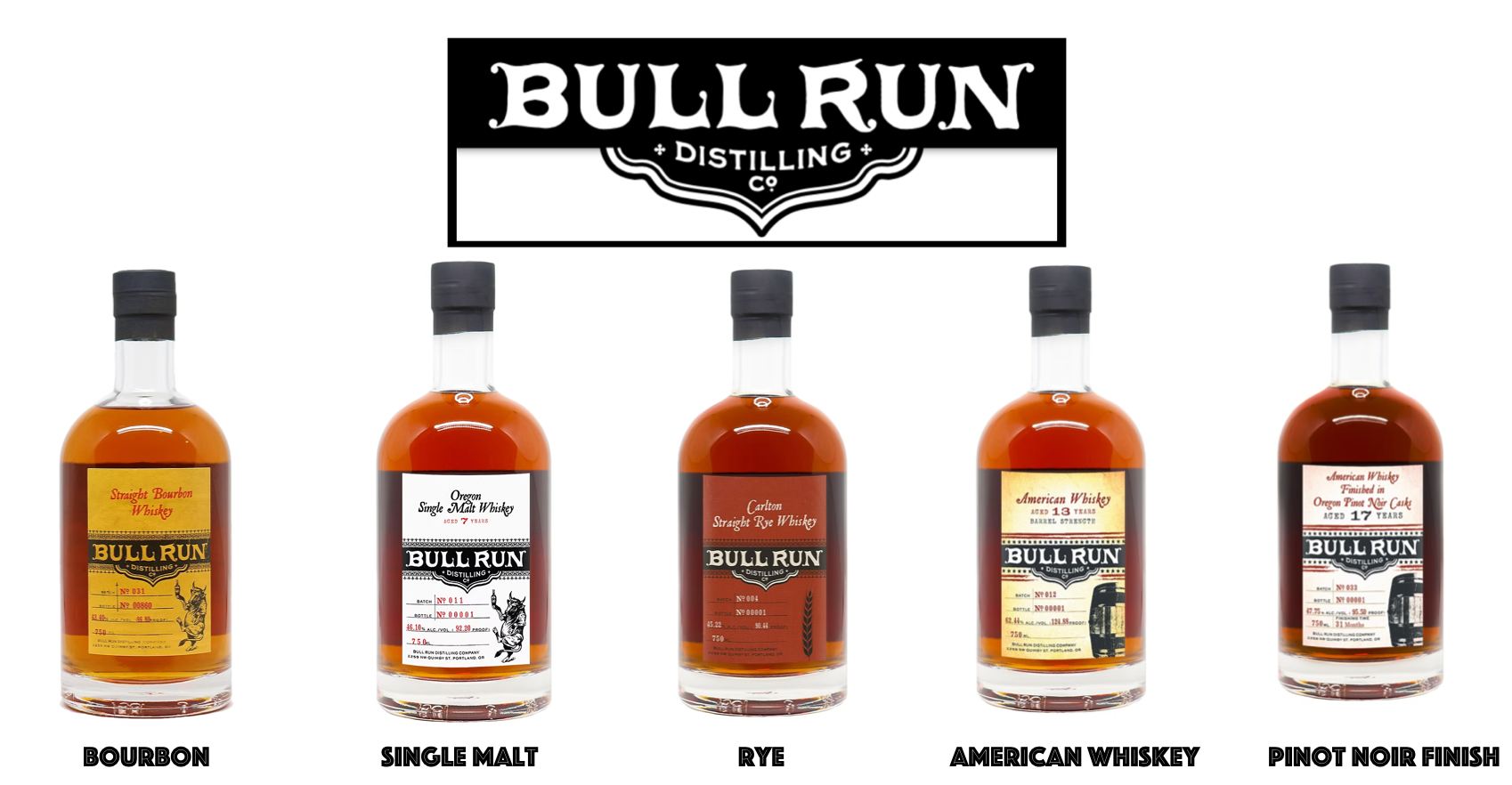
In 2010, Medoff sold his interest in House Spirits and started Bull Run Distilling Company with business partner Patrick Bernards. The move allowed him to concentrate on aged spirits, particularly whiskey. Bull Run was soon equipped with two custom 800-gallon pot stills, giving Medoff substantially greater production capacity than many small distillers possessed at the time. The name connected the company directly to the Bull Run Watershed, Portland’s principal water source and an ingredient that reinforced Medoff’s determination to give the whiskey a sense of Oregon place. The centerpiece spirit of Bull Run quickly became Bull Run Oregon Single Malt Whiskey. Made from 100 percent malted barley from Oregon’s Klamath Basin and Bull Run water, the whiskey was fermented with ale yeast and matured in new charred American oak. The whiskey matured for at least five years, allowing the malt, oak and fruit characteristics created during fermentation to develop together. It was neither an attempt to duplicate Scotch nor a malted-barley version of Kentucky bourbon; Bull Run presented it simply as an Oregon whiskey shaped by local grain, water and climate. Bull Run also developed a merchant-bottling program that became increasingly important to the company. Medoff selected mature whiskey produced elsewhere, then blended, aged or finished it under Bull Run’s direction. Its straight bourbon has used a high-rye mash bill of 65 percent corn, 25 percent rye and 10 percent malted barley, generally aged four to six years. Rather than conceal the merchant-bottling side of the operation, Bull Run made barrel selection, blending and finishing part of its whiskey identity.
In 2015, Medoff expanded the company’s sourced bourbon and rye program and increasingly concentrated on blending and secondary maturation, using his access to Pacific Northwest wine barrels as an advantage. Bull Run’s American Whiskey finished in Oregon Pinot Noir casks became one of its most recognizable expressions, with some releases spending many additional months in wine barrels after already reaching substantial age. The wine-barrel program tied Medoff’s whiskey back to another part of his beverage background. Bull Run’s first finishing experiment used Chinato vermouth barrels from Cana’s Feast, and the success of its Pinot Noir-finished whiskey eventually led the distillery to work with more than two dozen local wineries. Bull Run later opened a second tasting room in Carlton, in the heart of Willamette Valley wine country, and became part of the Wine Country Whiskey Trail. For Medoff, Oregon wine barrels were not simply exotic finishing vessels; they provided another way to make the whiskey reflect the region where Bull Run operates.
Medoff’s place in Oregon whiskey rests on longevity as much as any single bottle. He was making whiskey when the state had only a handful of serious distillers, then he helped establish one of Oregon’s formative craft distilleries. Later, he served as the first president of the nation’s first craft distillers guild, and then built Bull Run around an explicitly Oregon approach to whiskey. Through locally malted barley, Bull Run water, new American oak, sourced mature bourbon and rye, and finishing barrels obtained from Pacific Northwest wineries, Lee Medoff has spent nearly three decades exploring what Oregon can contribute to American whiskey. Bull Run is the result of that continuing work: not a rejection of established whiskey traditions, but an effort to build another tradition alongside them.
Sources:
Bull Run Distillery official website, bullrundistillery.com
Whisky Advocate, “Crafting a Whiskey Culture”, whiskyadvocate.com
Portland Monthly, “And Now, Meet Your Makers”, Kaitlin Johnson, May 2009, pdxmonthly.com
Seattle Weekly, “From Oregon with Love”, October 9, 2006, seattleweekly.com
Seattle Post-Intelligencer, “Artisan Distilleries Are the New Toasts of Oregon,” April 29, 2007, seattlepi.com
Distillery Row, “Bull Run Distillery”, distilleryrowpdx.com
Breaking Bourbon, “Bull Run American Whiskey 11 Year (Batch 006)”, Jordan Moskal, March 8, 2021, breakingbourbon.com
Contributed by Tracy McLemore, Fairview, Tennessee