Peter Mackie

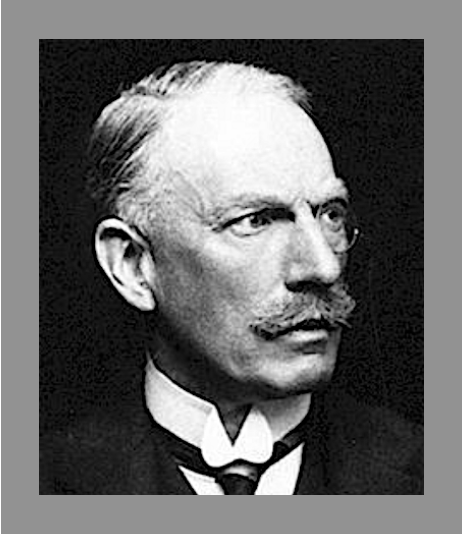
Peter Jeffrey Mackie was born on 26 November 1855 at St Ninians, near Stirling, into a household where whisky was not an abstraction, but a working fact. His father, Alexander Mackie, was involved in distilling, and the family’s connections ran outward into the trade networks that moved spirit from remote places into city markets.
In 1878, at age 22, Mackie joined his uncle’s firm called James L. Mackie & Co., and was sent to Lagavulin distillery in Islay to learn its ways. For a young man with ambition, Islay was an education that no textbook could duplicate. Lagavulin’s character of peat smoke, maritime air, oiliness, and depth was something you learned by watching mashing and fermentation, by listening to stills work, by knowing how casks behaved in a damp coastal climate, and by understanding that “style” was the cumulative result of hundreds of small, daily decisions. By the late 1880s, young Mackie had progressed from apprenticeship into ownership-level responsibility. In that same period, the business part of the Scotch world was changing quickly. Blended Scotch was becoming not merely a way to use diverse stocks, but an individual product category with global reach. It was consistent, brandable, scalable, and it had, by then, been discovered by the rest of the world. Mackie became one of the era’s defining personalities in that transition. He was part of the move toward blending, with Lagavulin at the heart of the recipe, an approach that would become central to the future of his company.
The firm’s activities consolidated further around 1890, when the Lagavulin-linked business interests were brought together under the Mackie umbrella and the company began blending what became ‘White Horse’ whisky. Wasting no time, in 1891, Mackie registered the “White Horse” brand name. The whisky was smoky at its core because of the peaty Lagavulin influence, and it soon helped define what many drinkers came to expect from a premium blended Scotch.
In 1895, Mackie’s business became a limited company and he served as chairman for the remainder of his life. The appointment was not happenstance—chairmanship suited Mackie’s temperament. He was widely known for forceful opinions and relentless drive. Contemporaries and later chroniclers even prescribed a nickname: “Restless Peter.” He was not only a salesman and blender, but also a strategist who relentlessly sought control of every aspect of the distillery, from malt and grain to the pipeline from distillery gate to export order. Eventually, that strategy pushed him beyond Islay, and Mackie & Co. became involved with distillery ownership elsewhere, including the Speyside distillery at Craigellachie, in which the company first became a partner but later took full control. The goal was to secure spirit for blending at scale, and to protect the brand from shortages or price leverage by outside suppliers.
Mackie’s story is also inseparable from one of Scotch whisky’s most famous rivalries: Lagavulin’s entanglement with neighboring distillery Laphroaig. For a short period, Mackie’s company acted as Laphroaig’s sales agent, during which time he leased Laphroaig distillery and attempted to copy its style. Several legal battles ensured between the two distilleries and in 1908, Peter Mackie officially lost the battle. In his irritation, he built a second distillery on the site of Lagavulin, named Malt Mill. There, he tried to reproduce the same characters of Laphroaig, but failed. Malt Mill became one of whisky history’s great “what-ifs”: a deliberate act of industrial competitiveness born from commercial frustration that still fascinates collectors and historians, because it shows how personal and yet how businesslike Scotch could be at the same time.
Though obsessively driven and a competitive perfectionist, Mackie did not confine his energy to whisky. He travelled extensively and wrote on political themes such as tariff reform and imperial federation. He also served in senior roles in the Scottish Unionist Association, including chairman in the early 1920s. He was a major landowner, and he financed projects beyond distilling, including an anthropological expedition to Uganda. His philanthropy drew attention and recognition followed. In the 1920 Birthday Honours, Mackie was created a baronet by King George V, and was thereafter officially known as Sir Peter Mackie, 1st Baronet. It was an establishment marker for a man who had helped professionalize and internationalize Scotch whisky in the decades when brands became empires..
In December 1889, Mackie married Jessie Lockett Abercrombie who was 9 years his junior. The couple had three daughters: Lillas Mackie, Jessie Isobel Mackie, and Mary Jeffrey Mackie. Sir Peter also had an only son, James “Logan” Mackie, who was killed in December 1917 at the age of 24 at Zeitoun Ridge near Jerusalem during the First World War. To honor his son, ‘Logan’ was the name Mackie attached to one of the company’s blends, an unmistakable sign of how closely he intertwined family identity and brand architecture.
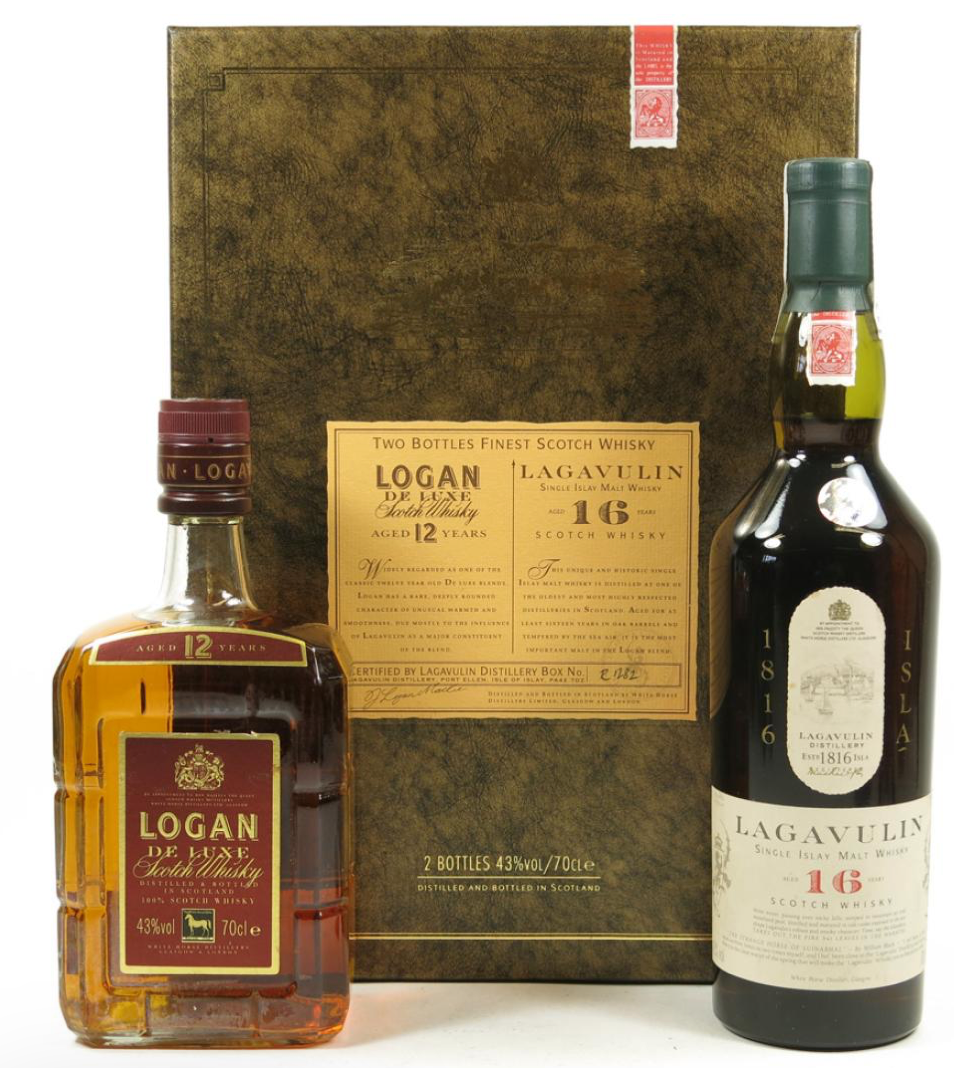
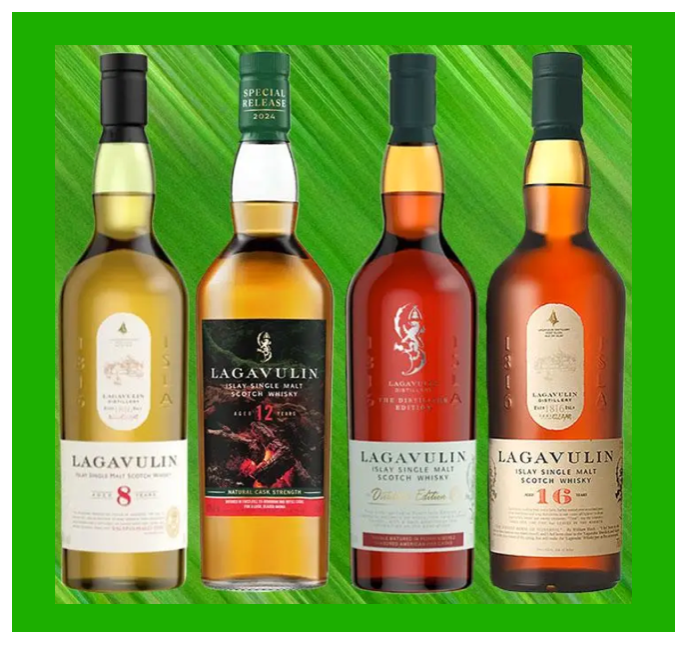
Mackie died at Corraith in September 1924. In the wake of his death, the firm was renamed White Horse Distillers Ltd., and within a few years it was absorbed into the larger consolidation currents that shaped 20th-century Scotch. Currently, both White Horse and Lagavulin are owned by spirits conglomerate Diageo. Both continue to thrive, and both Lagavulin’s and White Horse’s smoky fingerprint, built around Islay character, remains an enduring part of Scotch whisky’s global story.
Sources:
Scotch Whisky, “Whisky heroes: Peter Mackie”, Gavin D. Smith, 10 Nov 2015, scotchwhisky.com
Diageo Bar Academy, “Our Brands: White Horse”, diageobaracademy.com
The London Gazette, page 3638, 5 July 1889
vLex Court of Session, “Union Bank v Campbell”, 30 November 1928
The Scotsman, “How the First World War took its toll…”, Joseph Trotter, 7 Nov 2018
Ayrshire Family History Society (PDF), “Ayrshire Notes, Spring 2025”
Contributed by Tracy McLemore, Fairview, Tennessee USA