Ryan Maybee



Ryan Maybee has built a career by treating the bar as both a classroom and a stage. In the modern revival of J. Rieger & Co., his public role has often been described in terms that sound half playful and half literal: the person who keeps the history close while also designing what ends up in the glass. That dual identity as both researcher and host, classicist and experimenter, didn’t arrive as a branding decision. It grew out of a long apprenticeship in Kansas City hospitality, where a curious bartender could move, step by step, into wine, spirits, education, consulting, and eventually a distillery reborn.
Born December 5, 1977, Maybee started work young. He recalled wanting a car at sixteen and being told to get a job. So his first restaurant role was bussing tables, and he said he never really left the industryafter that. Those early jobs weren’t glamorous, but they set a rhythm for Maybee that service work was daily discipline, and hospitality is a skill you get better at only by repeating it. His professional break came in 1999, when he joined the opening staff at Pierpont's at Union Station inside Kansas City Union Station. He was 21 at the time and bartending there while paying his way through community college. The restaurant’s clientele and deep cellar pushed him toward wine and spirits not as a hobby, but as a practical way to do the job better. Over the next several years at Pierpont’s, he moved from novice to a leadership role in the wine program, eventually holding the title of sommelier. He has been credited with creating Pierpont’s signature cocktail, “The Library Ladder,” and developing an unusually expansive cocktail program there.
That combination of wine seriousness paired with cocktail curiosity became his calling card. His formal credentials accumulated alongside the shifts: certification through Court of Master Sommeliers; the Certified Specialist of Wine designation through the Society of Wine Educators; and later advanced-level coursework while pursuing a master’s certificate through Beverage Alcohol Resource. He also began entering competitions, winning the Martini Gras Bartending Competition in 2002, and was named Bartender of the Year by a regional restaurant association in 2003, later becoming a finalist in an international sherry cocktail competition.
At some point, knowledge stopped being something he collected and started becoming something he sold. After leaving Pierpont’s, he took a role as a fine-wine specialist with Major Brands, a job he later described as a way to learn import logistics, retail realities, and how restaurants actually build lists that people will buy from. But the larger pattern in his story is that he didn’t stay satisfied as an employee. By 2006, he had opened JP Wine Bar & Coffee House as co-owner and general manager. That wine bar, however, wasn’t the end goal. Maybee points to a 2006 visit to Milk & Honey, one of the modern craft-cocktail movement’s most influential rooms, as a turning point that clarified what he wanted to build next. He had already been drawn to classic cocktails; the visit started to sharpen the idea into a plan.
In 2007, he formalized the consulting side of his work by launching RoundTable Marketing and Consulting, focused on wine lists, cocktail menus, staff training, and bar/restaurant consultation. That same year he partnered with beverage educator Doug Frost to create the Greater Kansas City Bartending Competition, an annual showcase that positioned Kansas City bartending as something competitive and worth watching. It was a local institution-building move: not only making drinks, but helping shape the talent pipeline and the standards by which the city judged itself.
The bar that most defined his public reputation arrived in 2009, when he opened Manifesto, a speakeasy-style room built around classically structured cocktails and a controlled, reservation-driven experience. In interviews from the period, he talked about keeping recipes rooted in classic “lineage,” favoring restraint over chaos, and using reservations less as theater than as a way to protect hospitality in a small space. The bar quickly pulled national attention, landing on major lists and being recognized in the cocktail press. In 2010, he expanded upward, literally, partnering with chef Howard Hanna to open The Rieger Hotel Grill & Exchange in the space above Manifesto. The two venues operated as a paired statement. That pairing also put Maybee in the path of a deeper historical project.
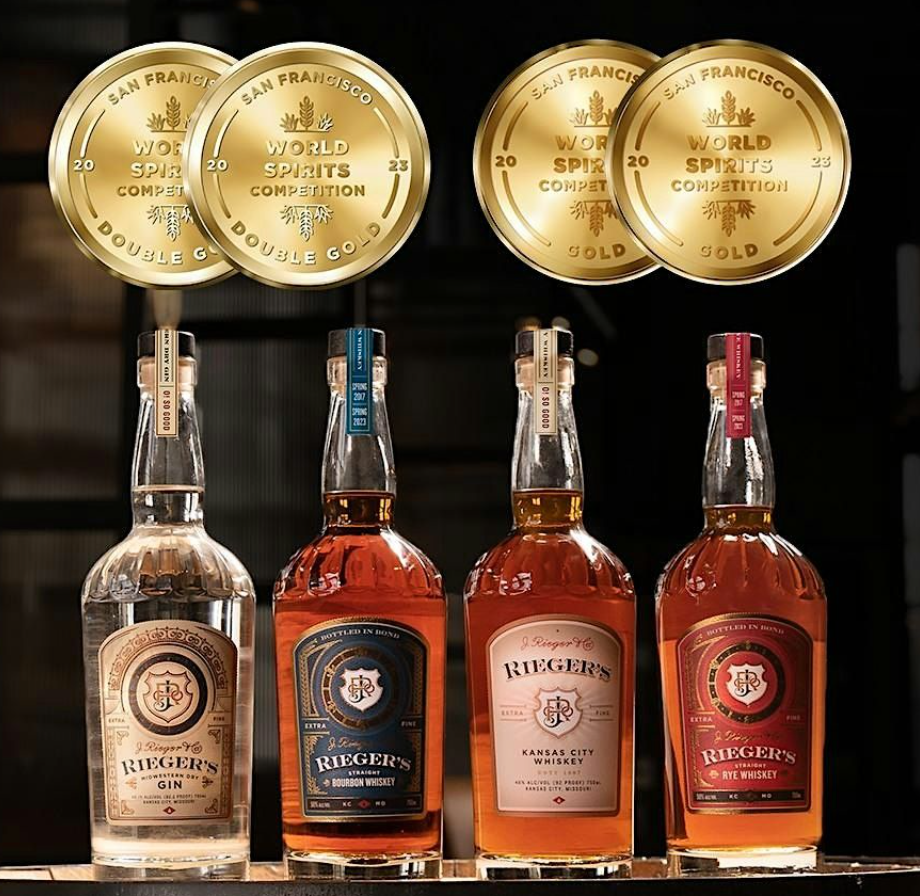
In 2010, Maybee met Andy Rieger at the restaurant and ended with the two beginning serious conversations about reviving the old family whiskey name. The legacy they were reaching for belonged to Jacob Rieger and the pre-Prohibition firm sometimes rendered as Jacob Rieger & Company. In 2014, the revival became real: Maybee and Rieger co-founded the modern J. Rieger & Co. distillery, bringing a dormant Kansas City whiskey story back into production-era life. From there, Maybee’s work shifted from building rooms to building a house style. J. Rieger & Co.’s own biography of him emphasizes his role in product development and in translating the brand’s history for visitors, while working closely with the distilling team and acting as a kind of interpreter between archives and cocktails.
In 2019, Maybee added another chapter with the opening of The Hey! Hey! Club, a basement bar inside the distillery complex that he has described as an evolution of Manifesto’s approach. When the pandemic era forced major changes ending in Manifesto’s unfortunate closing, his focus narrowed further onto Rieger’s distillery campus and the programs he could build there.
Despite the success of J. Rieger’s revival, Maybee’s greatest skill is not his whiskey palate, his résumé, or even his ability to build businesses, it is his instinct for translation. He understands how to take something old and explain it in a language that modern drinkers can understand without stripping away its soul. In product development, that means guiding whiskey toward flavors that feel timeless rather than trendy. In the tasting room, it means telling stories that place visitors inside the brand’s long arc, not just at its latest chapter. After decades of moving within roughly the same circles, consulting, and shaping other people’s programs, Maybee has found himself in a role that feels unusually complete. He is no longer just advising from the outside. He is helping determine what the whiskey will be, how it will taste, and what it will stand for. The dormant name he helped revive is once again part of Kansas City’s working fabric, not a footnote in a history book. In that sense, Ryan Maybee has helped give a piece of the city its voice back.
Sources:
MarketWatchMag, “Kansas City King”, Sally Kral, 08 October 2021, www.marketwatchmag.com
Difford’s Guide, “Ryan Maybee”, www.diffordsguide.com
CreativeMornings, “Ryan Maybee-The Impact of Moments”, 24 February 2017, www.creativemornings.com
Eater, “Ryan Maybee on His Kansas City Speakeasy Manifesto”, Erin DeJesus, 01 April 2014, www.eater.com
MIKCExplore, “Around Town: Ryan Maybee”, Grace Pritchett, 27 September 2019, www.mikcexplore.com
inkansascity.com, “2021 Innovators & Influencers Honoree: Ryan Maybee”, Katie Van Luchene, 01 July 2021
Contributed by Tracy McLemore, Fairview, Tennessee